
A frozen fruit recall first announced in July, linked to illnesses in more than a dozen people, has now been widened to cover an additional berry product distributed to more states.
Frutas y Hortalizas del Sur S.A., based in San Carlos, Chile, is expanding its recall to include one lot of 10-ounce Great Value frozen Organic Triple Berry Blend over concerns the product may be contaminated with E. coli.
The recalled frozen berries were sent to select Walmart locations across 16 states: Alabama, Arkansas, Florida, Illinois, Indiana, Kentucky, Louisiana, Minnesota, Mississippi, Missouri, North Carolina, Ohio, Oklahoma, South Carolina, Texas and Wisconsin.
Consumers are being asked to check for lot code 6040 01-6 on the packaging. The affected berries carry a “best if used by” date of February 9, 2028.
The initial frozen fruit recall, announced July 3, involved 10-ounce bags of Frozen GreenWise Organic IQF Blueberries that had been distributed to Publix supermarkets in Alabama, Florida, Georgia, Kentucky, North Carolina, South Carolina, Tennessee and Virginia.
Publix later broadened that action to include all lots of GreenWise Organic Frozen Whole Blueberries and GreenWise Organic Frozen Whole Mixed Berries, covering both 10-ounce and 48-ounce bag sizes.
Those recalled Publix frozen berry products also list February 9, 2028, as their best-by date.
The FDA said information gathered by the CDC and the Florida Department of Health shows 17 people have been infected with the outbreak strain of E. coli in two states, Georgia and Florida.

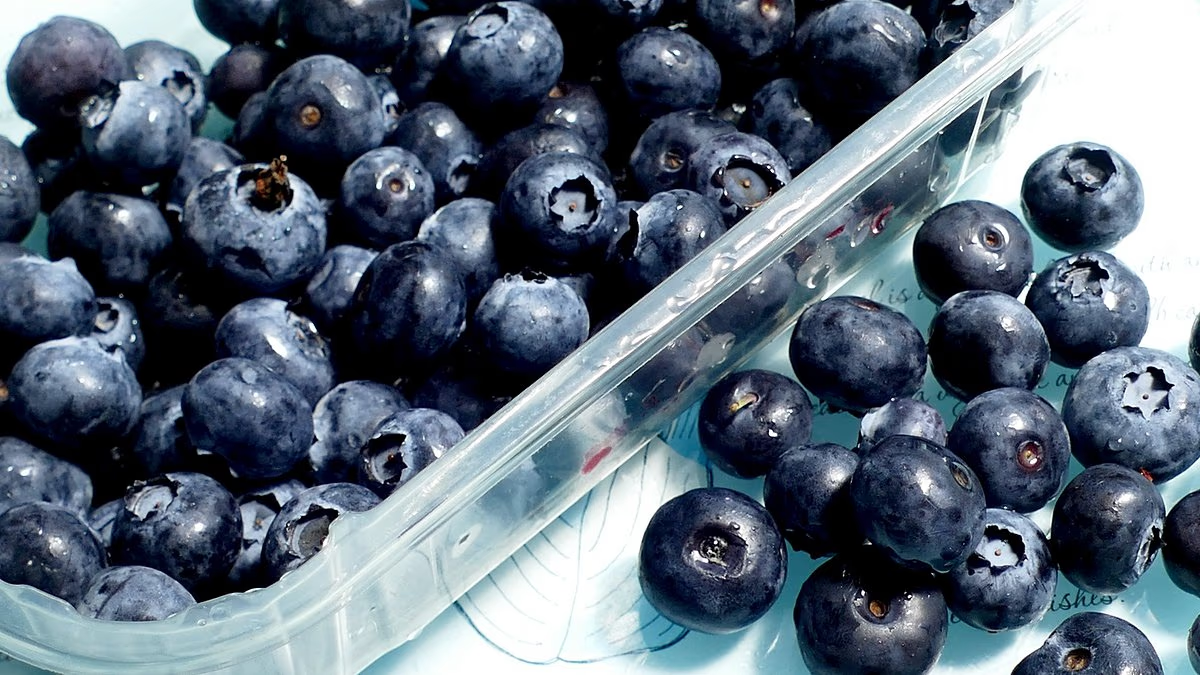
The fear of contamination is over E.coli O145:H28, a potentially deadly strain of the bacteria that is more likely to cause bloody diarrhea and more severe symptoms (stock image)

Frutas y Hortalizas del Sur S.A., San Carlos, Chile, is adding one lot of 10-ounce Great Value frozen Organic Triple Berry Blend to its July recall


The original recall from July 3 included bags of frozen GreenWise blueberries. Later in July, Publix issued a recall of all lots of GreenWise Organic Frozen Whole Blueberries and Whole Mixed Berries
Eleven of 13 cases interviewed reported eating frozen blueberries. There have been six hospitalizations and no deaths reported.
Officials are urging consumers with the recalled products in their possession to not consume them and immediately discard or return them to the place of purchase.
The fear of contamination is over E.coli O145:H28, a potentially deadly strain of the bacteria that is more likely to cause bloody diarrhea and more severe symptoms.
Those infected with the strain also have a higher risk of suffering from hemolytic uremic syndrome (HUS), a lifelong kidney complication.
Children under five years old and people with weakened immune systems are most at risk from the infection.
Frutas y Hortalizas del Sur said in the notice that it is working with health agencies regarding the recall.
It was not clear how the fruits became contaminated, but this can happen if they are treated with water that contains animal feces.
E.coli bacteria stop growing at temperatures below 45.5F (7.5C), but can survive being frozen and are able to withstand temperatures below -112F (-80C).

The above map shows where the recalled products were distributed to

The above map shows the states where illnesses have been reported
Once back in a warm environment, the bacteria are reactivated and start to grow – potentially causing an infection.
E.coli is a Shiga toxin-producing bacteria that typically sickens people between two and eight days after exposure.
Most patients develop bloody diarrhea and vomiting, as well as stomach cramps, but recover within a week. In more severe cases, some develop a fatal kidney disease called HUS.
HUS is a type of kidney failure that can occur in anyone but is most common in children under five, the elderly and people with compromised immune systems.
Symptoms include easy bruising, decreased urine and a pale appearance. A kidney transplant may be necessary in severe or life-threatening instances.
About 90,000 Americans and at least 1,500 Britons are sickened with E.coli every year, while around 100 people die from the infection in the US and UK annually.
However, cases are vastly undercounted because most people recover without complication and do not get tested for the bacteria.


