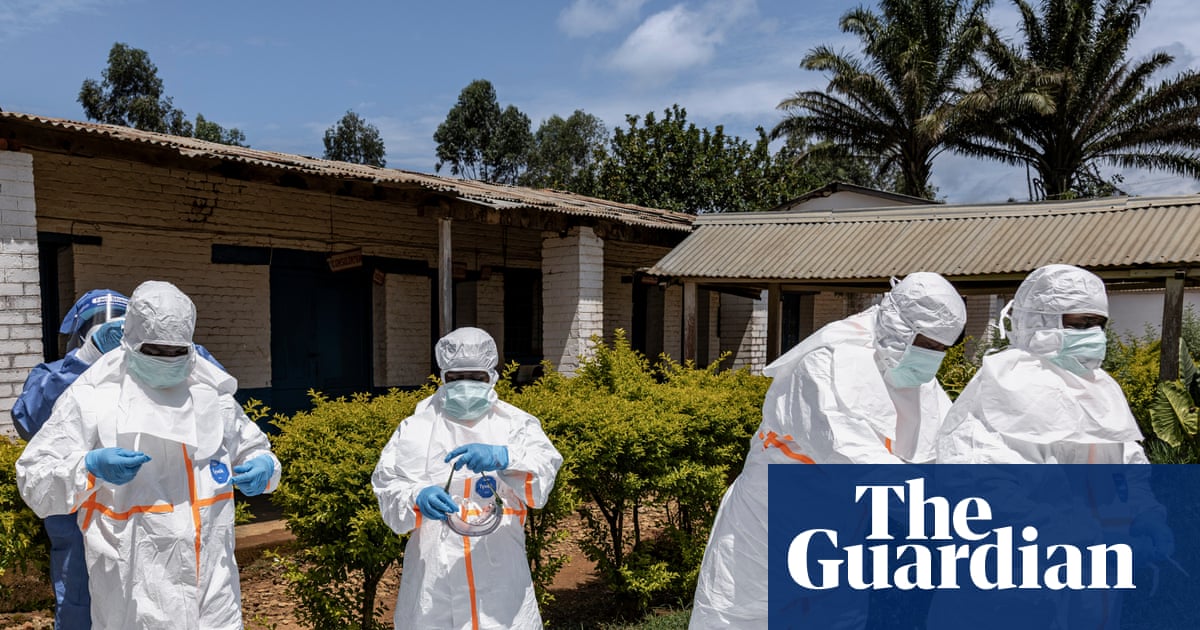

Aid organizations and healthcare professionals in the Democratic Republic of Congo are sounding urgent alarms, urging the international community to unite in response to a pressing crisis.
The country is grappling with a resurgence of the Ebola virus, and there is mounting anxiety over whether its already vulnerable healthcare system can manage an outbreak that experts believe is more widespread than the official case count suggests.
“The rapid escalation of this Ebola outbreak is deeply concerning,” stated Rose Tchwenko, the DRC country director for Mercy Corps, on Thursday. “There’s a tangible risk of broader transmission, and immediate regional and global assistance is imperative.”
Hama Amado, a field coordinator for the aid organization Alima in the city of Bunia, noted that the virus is advancing and affecting numerous regions. “There’s a need for collective action,” he informed the Associated Press. “We are far from declaring that the situation is under control.”
A week ago, the DRC announced its 17th Ebola outbreak. This viral disease, which has a mortality rate ranging from 25% to 90%, spreads through bodily fluids or contaminated materials and can lead to severe organ damage, blood vessel impairment, and potentially intense internal and external bleeding.
Since the death of the first recorded victim in Bunia, Ituri province’s capital, on April 24, nearly 750 suspected cases and 177 suspected deaths have been documented. The virus began spreading after mourners at a funeral in the nearby town of Mongbwalu came into contact with the deceased.
Hospitals and other healthcare facilities have quickly become overwhelmed. Trish Newport, an emergency programme manager at Médecins Sans Frontières, said a team had identified suspected cases over the weekend at Bunia’s Salama hospital but found no available isolation ward in the area. “Every health facility they called said: ‘We’re full of suspect cases. We don’t have any space,’” she said on social media. “This gives you a vision of how crazy it is right now.”
Several factors are impeding the aid response, including the strain of the virus, for which there is no approved treatment or vaccine, the remote and conflict-scarred location of the outbreak, and local funeral customs at odds with strict disease-control practice. All this is set against the backdrop of big shortfalls in aid budgets, driven in large part by the Trump administration’s decision to slash foreign aid.
According to a study by the International Committee of the Red Cross (ICRC) earlier this year, more than half of health facilities surveyed in North and South Kivu provinces – where cases have also been reported – suffered physical damage or destruction and nearly half had reported significant staff departures since January 2025 due to conflict and insecurity.
Two incidents this week laid bare some of the aggravating factors. On Tuesday, at least 17 people were killed in an attack by the Allied Democratic Forces (ADF), a militant group operating in eastern DRC and parts of Uganda, on several villages near the town of Mambasa in Ituri. “We are facing a double war: one of weapons and another of the disease outbreak,” said Zawadi Jeanne, a woman from the town who lost her brother and uncle in an ADF attack a month ago.
On Thursday, a crowd set fire to a treatment centre in Rwampara, near Bunia, after authorities refused to give them the dead body of a victim they wanted to bury themselves.
The process of burying the bodies, which can be highly contagious, is handled by authorities for containment of the disease, but some families prefer traditional burials, which involve washing and touching the body and have in previous outbreaks been proven to be key drivers of the disease’s spread. The incident highlighted the struggle that authorities in the DRC can face in enforcing safe burials.
Batakura Zamundu Mugeni, a local customary chief who was present at the scene in Rwampara, told Agence France-Presse that authorities were working with health officials to track down any patients who might have fled, as well as contact cases. He blamed the unrest on “young people who do not grasp the reality of the disease”.
On Friday the province banned funeral wakes and said burials must now be conducted only by specialised teams. It also prohibited the transport of dead bodies by non-medical vehicles and limited public gatherings to a maximum of 50 people.
Instructions to avoid physical contact more generally are hampered by a strong culture of expressing affection through touch. “We live in a society where shaking hands is on the menu every day,” said Jackson Lubula, who lives in Bunia. “With this disease, anything is possible. A small mistake can cost you dearly, so I decided to wash my hands with soap every time after each greeting.”
Reports from across the affected areas add to the impression that the virus has been spreading unnoticed. A rapid needs assessment carried out by ActionAid in the Bunia, Nizi and Nyankunde areas found that nearly a third of schools had registered at least one suspected Ebola case or close contact.
People in Rwampara said the disease struck suddenly, and that early symptoms were mistaken for illnesses such as malaria. Botwine Swanze, who lost her son, told a reporter for Associated Press: “He told me his heart was hurting. Then he started crying because of the pain. Then he started bleeding and vomiting a lot.”
Dr Núria Carrera Graño, a clinician with ICRC who has provided services in two previous Ebola outbreaks, described the situation in the DRC as a humanitarian, political and security crisis resulting from cumulative and unfortunate events.
She said responders should use lessons from the past outbreaks on the importance of international cooperation and coordination. “We don’t have time to lose,” she said.
To control the outbreak, the DRC government is working with medics who have experience in handling the disease.
Dr Richard Kojan, an intensive care clinician with Alima who has provided services in several Ebola outbreaks, said there were many similarities between that outbreak and this one, including late discovery, insufficient resources for responding, and the lack of a vaccine at the outset.
“The outbreak is out of control,” he said from Kinshasa, the DRC’s capital, earlier this week before a trip to Ituri to support colleagues on the ground.
In the absence of a vaccine and approved treatment for the Bundibugyo strain of the virus, Kojan said, medics were working to optimise the standard of intensive care for patients and put in place surveillance and contact tracing for suspected cases.
“If they are admitted to the treatment centre early, the viral load will be low in their samples, and then with optimised care, they will have a high probability of surviving,” he said.
The Alima team is also deploying a portable treatment unit called Cube, a transparent plastic structure that allows interaction between patients and their relatives and medics without the need to wear personal protective equipment. Kojan came up with the concept after his experience with Ebola in the 2014-16 outbreak.
As the virus spreads, increasing numbers of people in Bunia are discovering that they have friends and relatives who have fallen vicim, fuelling their anxiety.
“The mere thought of the name ‘Ebola’ scares me,” said Jeanne, who has a nephew in a health facility in Rwampara. But she remains optimistic.
“God is the one who knows what’s ahead,” she said. “I tell myself that the disease will spread but not to an alarming level. We can just hope for the best.”