
WASHINGTON – A growing dispute over transparency is pitting the Pentagon against Congress, as lawmakers from both parties accuse a senior Defense Department official of withholding key information about the U.S. military’s priorities.
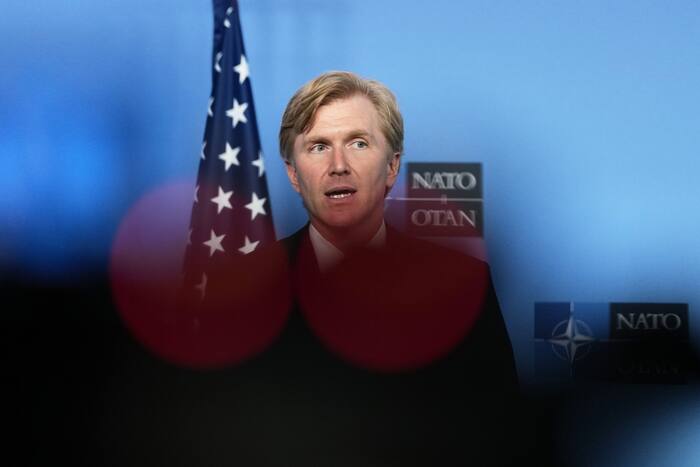
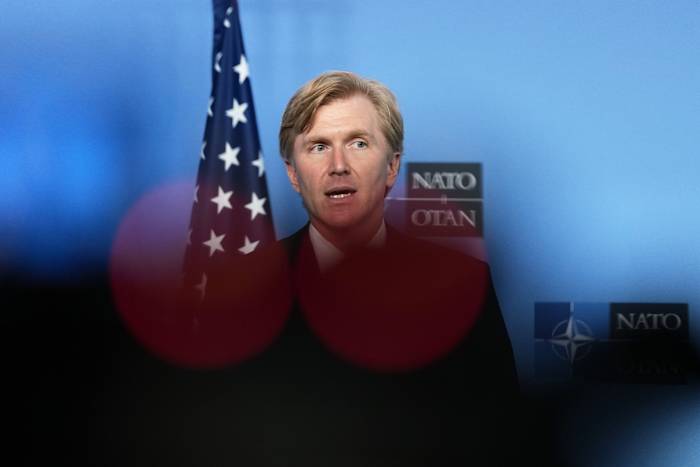
Several senators said they left Thursday’s classified briefing frustrated after Defense Undersecretary for Policy Elbridge Colby did not deliver the expected update on the Trump administration’s National Defense Strategy.
Lawmakers also said Colby’s responses fell short on issues including the war involving Iran and reports that President Donald Trump could deploy troops to polling locations during November’s midterm elections. Colby acknowledged that discussions about using the National Guard were underway.
Sen. Jacky Rosen, a Nevada Democrat who serves on the Senate Armed Services Committee, said Colby “was not forthcoming” and failed to meaningfully respond to lawmakers’ concerns.
Sen. Kevin Cramer, a North Dakota Republican and committee member, characterized the session as an exercise in “just sort of dodge and punt.”
“It’s very peculiar to have somebody come in for a congressionally mandated update and not have a statement,” Cramer said.
Colby, whose approach has drawn both support and criticism on Capitol Hill, was supposed to brief senators on how the Pentagon is carrying out the National Defense Strategy. The sweeping document, released in January, outlines the administration’s “America First” approach, including a preference for limiting overseas intervention and reassessing long-standing strategic partnerships with European allies.
The annual National Defense Authorization Act requires the undersecretary to provide the Senate Armed Services Committee with a classified implementation briefing by Sept. 15.
“It was not what we had expected,” said Sen. Mike Rounds, a South Dakota Republican on the committee.
“Let’s just put it that way,” Rounds added. “They owe us a report, and we did not get the report.”
Democratic Sen. Mark Kelly of Arizona said he questioned Colby about the strategy for the war in Iran and the decisions that have contributed to what Kelly called a “munitions deficit.” Military specialists estimate that defense contractors could need roughly three years to rebuild supplies of some advanced weapons, including missile interceptors used for defense.
“You walk out with more questions than when you went in, and for me, that was the case today,” Kelly said.
During the briefing, senators directly asked Colby whether he had discussed deploying the National Guard to provide security at polling places on Election Day. Colby said he was aware of conversations about the possibility but emphasized that he was not directing the matter.
“Never once said ‘yes’ or ‘no,’” Cramer said.
Speculation about a military presence at polling sites has intensified as the midterm elections approach. Sen. Elissa Slotkin, a Michigan Democrat, recently asked Defense Secretary Pete Hegseth and Gen. Dan Caine, chairman of the Joint Chiefs of Staff, to confirm that troops would not be sent to polling places.
In a letter to Slotkin last month, Caine said there were “no plans to send Federal military personnel or Federalized members of the National Guard to polling places during the 2026 elections.”
Still, not every senator who attended Thursday’s classified session viewed Colby’s performance negatively.
Sen. Jim Banks, an Indiana Republican, called the briefing “constructive” and “substantive,” saying it addressed all of his questions.
Sen. Roger Wicker, a Mississippi Republican who chairs the Senate Armed Services Committee, declined to discuss whether he was satisfied with the classified briefing.
“You understand,” he told reporters.


