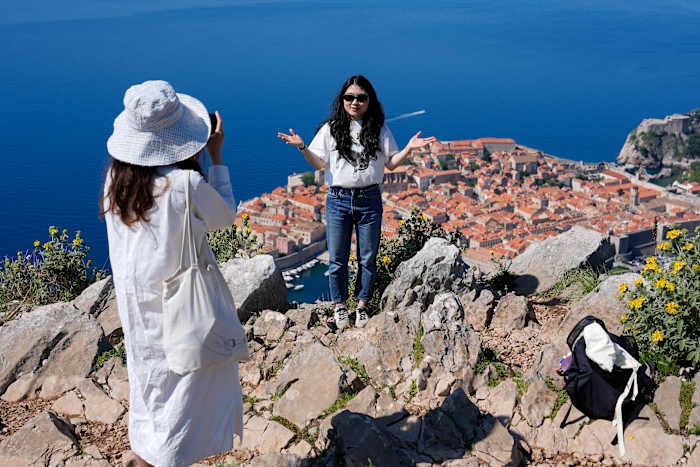


DUBROVNIK – Although summer has yet to arrive, Dubrovnik’s historic streets are bustling with tourists from around the globe, hinting at a potentially thriving season ahead. However, this year, a cloud of uncertainty looms over the city.
Unrest caused by the Iranian conflict and escalating fuel costs is casting a shadow over the tourism industry, with Dubrovnik, Croatia’s premier destination on the Adriatic Sea, feeling the effects. Each year, this picturesque city welcomes millions, but current global issues are stirring unpredictability.
Croatia’s economy hinges significantly on tourism as it plays a pivotal role in national income, heavily reliant on visitors from abroad.
While Dubrovnik sees a rise in visitors, authorities caution that there are no guarantees. The ongoing fuel crisis and tensions in the Persian Gulf may lead to higher airfares, potentially slowing down the influx of tourists just as the peak season approaches.
Miro Draskovic, head of the Dubrovnik Tourist Board, pointed out that although the number of American tourists remains robust, Australians—traditionally among the top visitors—are encountering challenges in traveling to Europe.
“The situation is undoubtedly challenging, and we are closely monitoring developments daily,” Draskovic shared with The Associated Press.
So far, things are looking good. Dubrovnik airport has recorded a 13% rise in visitors over Easter compared to the same period last year. Its bustling atmosphere and boats ferrying tourists around testify to the city’s lasting appeal.
The UNESCO-protected heritage city is known for its rich medieval history, seafront location and churches and palaces within its stone walls. Dubrovnik’s popularity soared after it served as a filming location for the hit TV series “Game of Thrones.”
Compared to other regions in the country, Dubrovnik could be harder hit if the fuel crisis deepens because of its location at the southern tip of Croatia’s Adriatic Sea coastline. Around 80% of visitors come to Dubrovnik by plane.
Marina Ruso Mileusnic, a spokeswoman for the city’s airport, which is connected to some 70 airports around the world, said “we are very cautious about the upcoming season.”
Predictions for the weeks and months ahead have varied.
In early April, the head of the International Energy Agency Fatih Birol warned in an interview with the AP that Europe has just weeks of jet fuel supplies and could face the biggest energy crisis ever.
This week, however, European Union’s Transport Commissioner Apostolos Tzitzikostas said there is “no actual evidence” of shortages in the 27-nation bloc as officials urged people to plan their holidays without fear.
Singapore businessman Ramon Padiernos agreed. The crisis in the Middle East meant he had to swap his favorite carriers Emirates and Qatar Airways for Turkish Airlines, but he still made it to Dubrovnik.
“We feel the impact maybe of oil prices but I think everybody just goes on with their lives and enjoy their holidays,” he said. “I think it is best for the world to see the lighter side of it, rather than focusing on the issues that we cannot control.”
Apart from impacts on tourism, the energy crisis has also contributed to a rise in inflation in Croatia to 5.8% in April, one of the highest in the EU.
The country recorded nearly 22 million tourist arrivals last year. Out of some 110 million overnight stays in 2025, Dubrovnik alone had 4.28 million, according to the national tourism board.
Draskovic said hopes are high that things soon will get back to normal. Until then, he said, “we can only work on day to day basis to get the best possible season we can.”
___
Jovana Gec contributed. to this report
Copyright 2026 The Associated Press. All rights reserved. This material may not be published, broadcast, rewritten or redistributed without permission.