

HAVANA – For nearly 30 years, Cuba’s Danza Voluminosa captivated audiences in esteemed locations such as the National Theater with its 2,000-seat capacity. Under the direction of Juan Miguel Mas, the ensemble broke new ground by focusing exclusively on dancers with larger physiques, a pioneering effort that was documented by Canadian filmmakers.
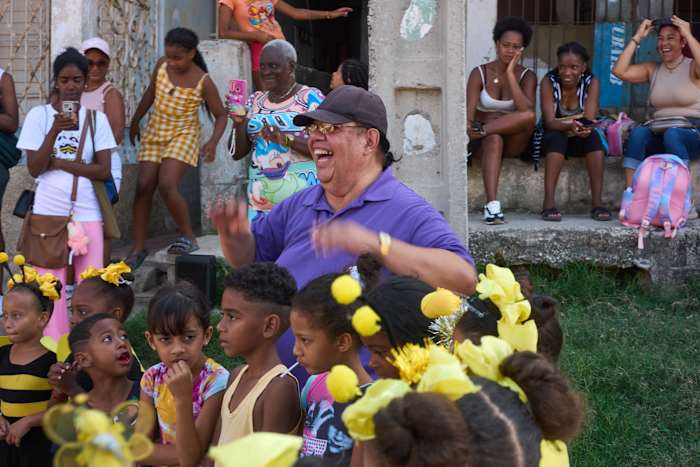
Currently, the 60-year-old Havana native, once celebrated on grand stages, has shifted his focus. He now dedicates his time to conducting dance workshops and classes for children, as well as organizing local performances within his community.
Mas, like countless others in Cuba, is grappling with one of the island’s most severe economic downturns in recent memory. His everyday existence is disrupted by relentless power outages, water shortages, escalating expenses, and limited transportation options.
For those in the arts, the challenges are even more pronounced. The cessation of performances, dwindling production budgets, and a significant exodus from the cultural sector have compounded their struggles. Mas recently learned that his teaching position at the National Theater of Cuba has been put on hold.
“The future of the arts is complicated and grim,” remarked Michel Hernández, an essayist and arts journalist. He pointed out how Cuba’s once accessible, state-sponsored cultural venues have declined drastically, reducing options for artists to just a few costly private spaces.
Nevertheless, Mas remains undeterred.
“I am very interested in staying in Cuba,” he told The Associated Press on a recent Saturday as he prepared for a rehearsal with children from a nearby community. “Were I to emigrate, I would lose contact with that ‘Cubanness’ that exists here, with the audience, the people, the folks next door.”
Transforming a street corner into a dance stage
Born in Havana in 1965, Mas trained as a dancer and choreographer under the tutelage of Laura Alonso, a renowned ballerina, and Ramiro Guerra, the father of contemporary dance on the island. He also studied with the Cuban-American dancer and choreographer Lorna Burdsall, who encouraged him to persevere despite the discrimination he faced from dance schools because he weighed 160 kilograms (352 pounds).
He made his debut in 1996 with his own company, Danza Voluminosa (or Voluminous Dance), which remained active until 2024 and provided a home for dancers whose bodies diverged significantly from the industry’s prevailing aesthetic norms. He also worked as an actor and in 2025 he starred in “Cherri,” a fictional film based on his own life experiences.
These days, to supplement the modest income he makes working with children, Mas leases a small area of his home for business use and hosts weekend garage sales featuring curated recycled clothing, tableware and household goods.
Since his sister and teenage nephew relocated to Spain last year, he has lived alone and managed his expenses by shopping at a local farmers’ market just two blocks away. Conveniently, he also accesses subsidized medications at a state-run pharmacy directly across the street.
On a recent morning, water bottle in hand to ward off the heat, Mas walked six blocks to the lively Marianao district, where a crowd of 30 children and their mothers awaited his arrival.
The group suddenly transformed a street corner into a stage and for a full 90 minutes, the air filled with music as the little ones performed their songs and showed off their dance moves dressed as bees and other colorful characters.
Against all odds, Mas highlighted the importance of staying connected to his community.
“It’s about bringing the knowledge of art to these children and lifting them out of a reality defined by conflict,” he said.
___