

REYKJAVIK – Icelandic voters have turned down a proposal to reopen talks on European Union membership, more than 10 years after the country last walked away from accession negotiations, national broadcaster RUV reported Sunday.
The result is expected to quiet, at least for now, one of Iceland’s most persistent political debates, a decade after a euroskeptic administration halted the country’s EU membership process.
According to RUV, the “No” side won with 52.8% of the vote, while 47.2% backed restarting negotiations. Reykjavik, the capital, was the only region in the nation of roughly 400,000 people where a majority supported the proposal.
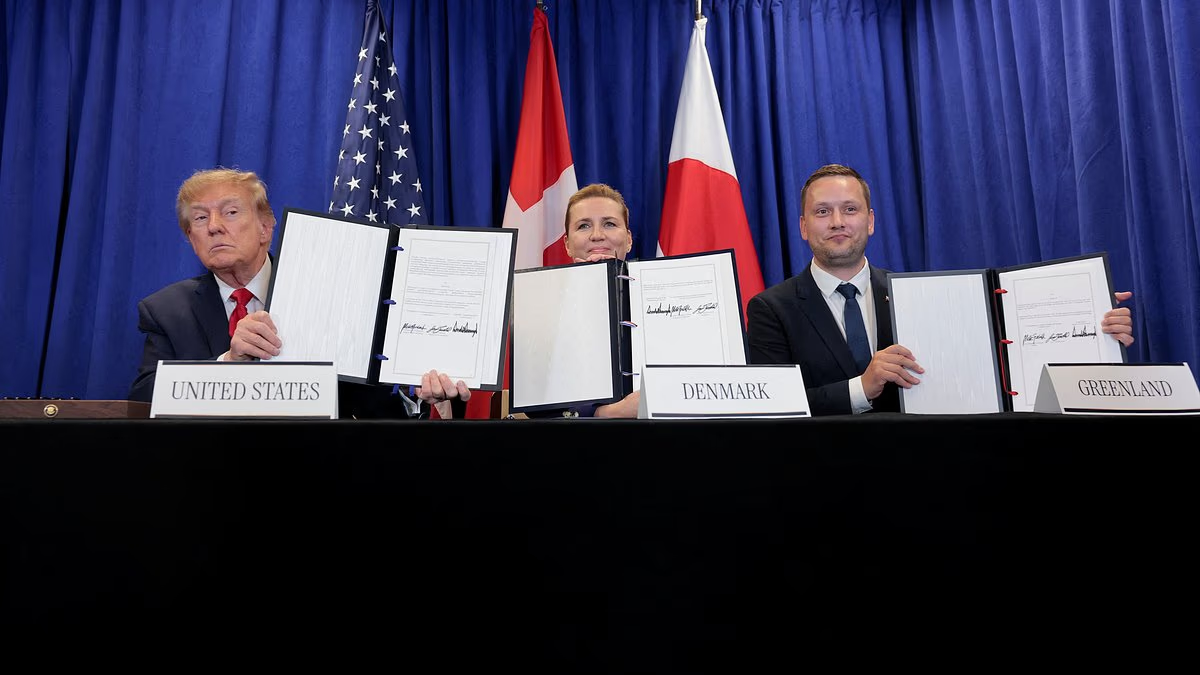
Saturday’s referendum unfolded against an unusual geopolitical backdrop: repeated remarks by U.S. President Donald Trump about taking control of nearby Greenland. Those comments pushed some Icelanders toward the argument for closer European unity. While Iceland is already a NATO member, supporters of renewed EU talks said deeper ties with European neighbors could offer added reassurance if similar pressure were ever directed at the volcanic island.
Iceland’s left-leaning coalition government, which came to power in 2024, brought the EU referendum forward from next year after Trump mistakenly referred to Iceland four times while discussing his ambitions regarding Greenland.
For the approximately 265,000 eligible voters, the question was direct: Should Iceland begin accession negotiations with the European Union again?
The overnight count delivered a tense political drama. The “Yes” camp moved ahead early, only for the momentum to shift toward opponents as more ballots came in. By daybreak, just a few hundred votes divided the two sides, but the gap widened as results arrived from parts of the country where resistance to EU talks was stronger.
Those opposed to European Union membership focused heavily on Iceland’s fishing industry and the country’s existing advantages as part of the EU single market and the Schengen free-travel area, without what they view as the sovereignty costs of full membership. They also argued that Iceland would have limited influence in the much larger European Parliament and could benefit more by negotiating independent trade agreements, including deals with countries such as China.
Backers said EU membership would lower inflation and interest rates, and the euro would bring more stability than Iceland’s volatile króna. They said it was also in the nation’s interest to get closer to its European neighbors to tackle issues that don’t respect borders, such as climate change.