

WASHINGTON – President Donald Trump’s proposed agreement to end hostilities with Iran is facing significant backlash from within his own party. Some Republicans argue it doesn’t go far enough to hold Tehran accountable and misses a crucial chance to curb a long-standing adversary in the Middle East.
The deal, which President Trump described as “largely negotiated,” has left many lawmakers, former Cabinet officials, and conservative pundits questioning if the current terms will make the conflict seem “pointless.”
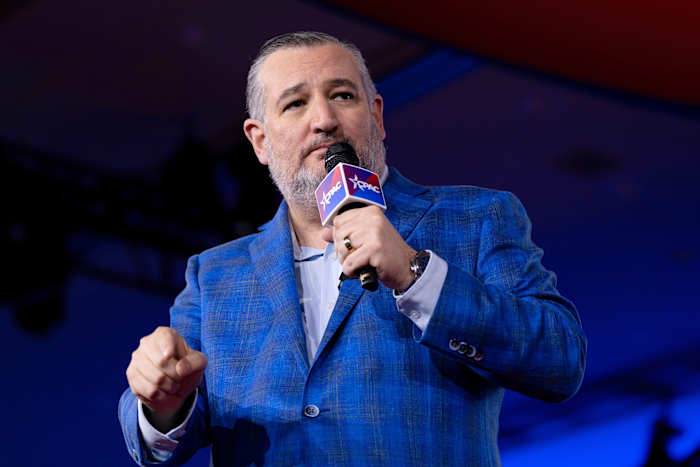
Senator Ted Cruz of Texas expressed that the president’s move to engage with Iran is the “most consequential” action of his second term and urged him not to relent.
“If this leads to an Iranian regime—still led by Islamists who chant ‘death to America’—receiving billions, enriching uranium, developing nuclear weapons, and controlling the Strait of Hormuz, it would be a disastrous mistake,” Cruz stated on the social media platform X. His comments followed Trump’s discussions with leaders from Israel and other U.S. allies in the region.
Senator Lindsey Graham of South Carolina, a Trump ally, criticized any agreement that allows Iran to remain a dominant force in the region with the capacity to disrupt Gulf oil infrastructure.
Meanwhile, Senator Roger Wicker, Chairman of the Senate Armed Services Committee, expressed skepticism about a proposed 60-day ceasefire, labeling it a potential “disaster.”
“Everything accomplished by Operation Epic Fury would be for naught!” said Wicker, R-Miss.
Trump says it will take time to ‘get it right’
Trump, who has said he only makes good deals and detests being seen as not having the upper hand in any negotiation, dismissed objections to a deal that he said was not “even fully negotiated yet.”
“So don’t listen to the losers, who are critical about something they know nothing about,” he said on his social media platform.
Trump said the deal he and his representatives are working out is “THE EXACT OPPOSITE” of a nuclear pact that Iran agreed to under the Democratic Obama administration. Trump pulled out of that agreement and has been trying to iron out a new one.
“Both sides must take their time and get it right. There can be no mistakes!” Trump said.
He added that a U.S. military blockade of Iranian ports would remain “in full force and effect until an agreement is reached, certified, and signed.”
Some support for Trump came from Capitol Hill, too.
GOP Sen. Rand Paul of Kentucky, often a thorn in the president’s side, defended the White House’s approach.
“War virtually always ends with negotiations,” Paul wrote on X. “Critics of President Trump’s peace negotiations should give President Trump the space to find an American First solution.”
Under the proposal, the war would come to an end and Iran would reopen the strait and give up its stockpile of highly enriched uranium, with the details and timelines to be worked out during a later 60-day window, regional officials told The Associated Press on Sunday.
Critics air objections as details trickle out
Polls show the war, which began when the United States and Israel attacked Iran on Feb. 28, is unpopular with the American public and has cost U.S. taxpayers at least $29 billion, as of this month. Thirteen service members have been killed during the operation.
Trump initially said the war would be over in four weeks to six weeks, but the standoff continues. Iran’s closure of the strait, through which about 20% of global energy supplies transit, has jolted the world economy and sent prices for gasoline and other goods climbing.
Mike Pompeo, one of Trump’s first-term secretaries of state, asserted on Saturday that the emerging deal seemed to him to be the same as the Obama-era one from which Trump withdrew.
“Not remotely America First,” Pompeo said on X, prompting a profanity-laced rejoinder from Steven Cheung, the White House director of communications.
John Bolton, a national security adviser in the first term who has become a critic of the president, said the emerging plan details seemed to favor the Iranian government.
“If news reports about the impending Iran deal are correct, the ayatollahs will have won a significant victory,” Bolton wrote Sunday on X. “They will be back on the road to nuclear weapons, supporting global terrorism and repressing their own people.”
Rubio says a nuclear Iran is ‘not going to happen’
Secretary of State Marco Rubio pushed back on Sunday during a diplomatic mission in India, telling reporters at a news conference that no president has been stronger against Iran than Trump.
“His commitment to that principle that they’ll never have a nuclear weapon shouldn’t be questioned by anybody,” Rubio said. “And the idea that somehow this president, given everything he’s already proven he’s willing to do, is going to somehow agree to a deal that ultimately winds up putting Iran in a stronger position when it comes to nuclear ambitions is absurd. That’s just not going to happen.”
Republican Rep. Thomas Massie of Kentucky, a Trump antagonist who had pushed legislation to restrain the president’s ability to wage war against Iran, told NBC’s “Meet the Press” on Sunday that while the terms are not yet fully known, “if Lindsey Graham and Ted Cuz are crashing out last night, I’d say it’s probably a pretty good deal.”
Massie will leave Congress in January after incurring Trump’s wrath and losing his GOP primary last week to a Trump-backed challenger.