

PLYMOUTH, Mass. – Jurors in the Lindsay Clancy trial are set to resume deliberations Friday for a seventh day after signaling they remain deadlocked, with the jury foreperson telling the judge that one juror is not following the court’s instructions on reasonable doubt.
The unusual revelation came Thursday in a note sent to the judge, offering the most direct indication so far of what may be preventing the panel from deciding whether the Massachusetts mother is criminally responsible for the deaths of her three children.
The jury has twice informed Judge William Sullivan that it cannot reach a unanimous verdict. In response Thursday, Sullivan questioned each juror individually in private, then repeated his instructions on reasonable doubt before directing the panel to continue its deliberations.
___
EDITOR’S NOTE: This story includes discussion of suicide. If you or someone you know needs help, the national suicide and crisis lifeline in the U.S. is available by calling or texting 988.
___
Clancy’s attorney, Kevin Reddington, asked Sullivan to remove the juror, saying the individual had refused to abide by the judge’s legal instructions. Prosecutors opposed the request, and Sullivan ultimately declined to dismiss the juror.
“I don’t feel it is proper for me to side with one side or the other of the deliberations,” Sullivan said. “I don’t feel it’s appropriate for me to say, ‘I agree with one juror or the 11.’ I have asked if they are able to follow my instructions. They swore earlier that they could.”
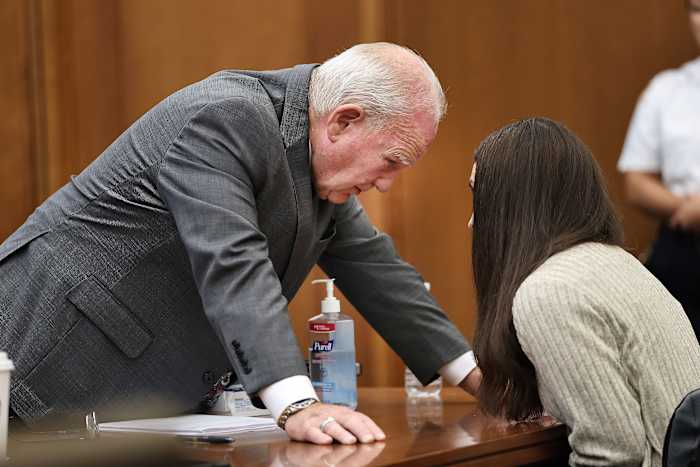
At one point and for the first time in the trial, Clancy was brought to join a sidebar conversation with the judge. Paralyzed from the waist down after her suicide attempt, Clancy uses a wheelchair, which Reddington pushed to the front of the courtroom.
“She has a right to know what’s going on,” he later told reporters.
Clancy, a 36-year-old former labor and delivery nurse, doesn’t deny strangling her children in the basement of their home in 2023 before trying to take her own life. Her attorney argues that postpartum psychosis led to her actions, while prosecutors say she knew what she was doing when she killed Cora, Dawson and Callan Clancy, ages 5, 3 and 8 months.
The prosecution argues she deliberately sent her then-husband on errands to get him out of the house, and prosecutors have questioned the seriousness of her suicide attempt.
Clancy’s livestreamed trial has generated intense interest, with reporters and spectators packing the courtroom. The case has also sparked deep public divisions over her culpability and the issues around maternal mental health after childbirth.
If the jury ultimately can’t agree on a verdict, the judge could declare a mistrial. Prosecutors would then have to decide whether to put Clancy on trial again, drop the charges or try to negotiate a plea deal with her lawyer.
If the jury decides Clancy was criminally responsible for her actions, it could convict her of either murder or manslaughter. If she is acquitted, a judge could still order her confined to a mental health facility if an evaluation determines that she poses a danger to the public.