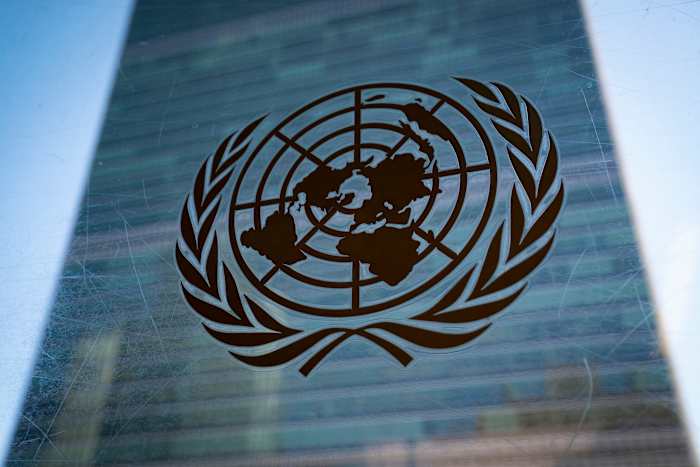


The recent United Nations conference, spanning four weeks and aimed at reviewing the treaty designed to curb the spread of nuclear weapons, concluded on Friday without reaching an agreement. The talks ended in deadlock as the United States and Iran engaged in a heated exchange over Iran’s controversial nuclear program.
Despite efforts to reach common ground, Vietnam’s U.N. Ambassador Do Hung Viet, who presided over the conference, declared that consensus among the 191 signatories of the Nuclear Nonproliferation Treaty (NPT) remained elusive. Although he refrained from naming specific nations responsible for the impasse, the failure marks the third consecutive unsuccessful attempt to forge a unified final document under the NPT, a critical component of global nonproliferation and disarmament efforts.
At the previous treaty review in August 2022, it was Russia’s refusal to agree to a final document that led to a deadlock, primarily due to its invasion of Ukraine earlier that year and the contentious issue surrounding Russia’s control of the Zaporizhzhia nuclear power plant in Europe.
In the lead-up to the ongoing conflict with Iran, tensions escalated significantly over Tehran’s nuclear ambitions. The conflict erupted following U.S. and Israeli airstrikes on February 28, with former President Donald Trump asserting that the military action was intended to prevent Iran from acquiring nuclear weapons. Iran, while advancing its uranium enrichment to near weapons-grade levels, maintains that its nuclear activities are solely for peaceful, civilian purposes.
The rift between the U.S. and Iran was evident from the outset of the review conference on April 27. The United States accused Iran of disregarding its treaty obligations, while Iran countered that American and Israeli attacks on its nuclear infrastructure were in violation of international law.
As a signatory of the NPT, Iran is obligated to allow inspections of its nuclear sites by the U.N.’s International Atomic Energy Agency. However, Iran has denied inspectors access to several sites that were targeted in U.S. airstrikes last June, further complicating the already fraught international relations surrounding its nuclear program.
In speeches at the end of the conference, the United States called Iran a “prolific treaty violator” and said it had spent the conference “shirking accountability for its grotesque violations.” Iran accused the U.S. and its allies of conducting a “relentless campaign” to legitimize their “unlawful attacks” on the country and its nuclear facilities.
Daryl Kimball, executive director of the Washington-based Arms Control Association, said the conference “showed that rhetorical support for the NPT is strong, but the foundations of the NPT are cracking due to inaction, inattention, and intransigence on the part of the major powers.”
“Much more enlightened, engaged, and pragmatic leadership and diplomacy will be needed to guard against the growing risks of an unconstrained nuclear buildup, threats to resume nuclear testing, and the risk of a nuclear-armed Iran,” Kimball said.
Britain’s Rebecca Johnson, founding executive director of the Acronym Institute for Disarmament Diplomacy, had harsh criticism for both the U.S. and Russia, the two largest nuclear powers, which she said “double down on nuclear threats, blame others and try to undermine or ignore the NPT’s nuclear disarmament commitments and related agreements.”