
Share this @internewscast.com

() President Donald Trump and Education Secretary Linda McMahon scored a major victory Monday in their push to shift education funding and policy decisions to the states.
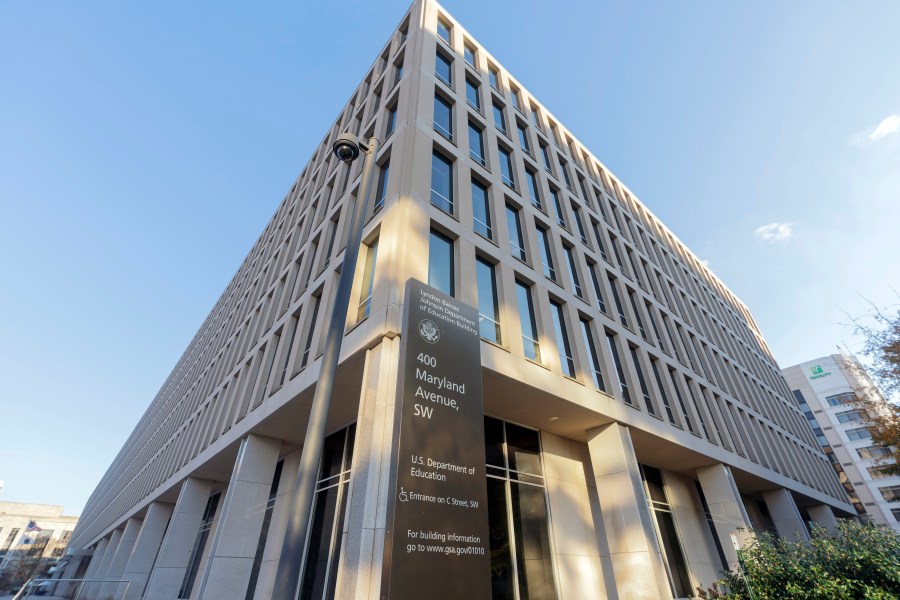
After months of legal back-and-forth, sparked by Trump’s March executive order to dismantle the U.S. Department of Education, the Supreme Court on Monday reversed earlier lower court rulings that had temporarily blocked layoffs.
While not a final ruling, the Supreme Court issued an order that allows the Trump administration to move forward with significantly reducing the number of Department of Education employees.
“We want to bring education back to the states, take the federal government out of it,” Trump said Tuesday morning.
If the Supreme Court rules in favor of allowing the Trump administration to completely dismantle the department, there will be a major restructuring of how education is funded and who makes the decisions on education policy.
“Today marks a victory for education! We’re one step closer to returning education to the states.” McMahon posted on X.
Reductions to the federal workforce to continue
The move follows a Supreme Court ruling last week that allowed the Trump administration to proceed with plans to eliminate thousands of positions across several federal departments, including Housing and Urban Development, State and Treasury.
The Department of Education started the year with more than 4,000 employees and has already begun to see major cuts to its workforce. In March, the administration announced plans to lay off more than 1,300 employees.
The continued downsizing would reduce the number of employees to about half the size of when Trump took office, leaving the department with limited capacity to operate. However, only Congress has the ability to get rid of the department completely.
Understanding the federal role in education
The Department of Education has a variety of functions, most notably it oversees federal student aid, allocates funding to support K–12 schools and enforces civil rights laws in education, including protections against discrimination.
Rep. Elise Stefanik, R-N.Y., senior member of the House Committee on Education and the Workforce, said, “education decisions are best made first by parents, then by local communities, then by local school boards.”
Stefanik has been a stark proponent of tackling antisemitism in schools and believes leaving education decisions to the states will improve this situation.
“New York State’s Department of Education has perpetuated antisemitism,” Stefanik said.
Democrats respond
Representative Pete Aguilar, D-Calif., expressed his dismay with the decision, echoing what many Democrats see as cost-cutting on the backs of children.
“They want to systematically dismantle the education systems in our communities and the funding we rely on for that,” said Aguilar.