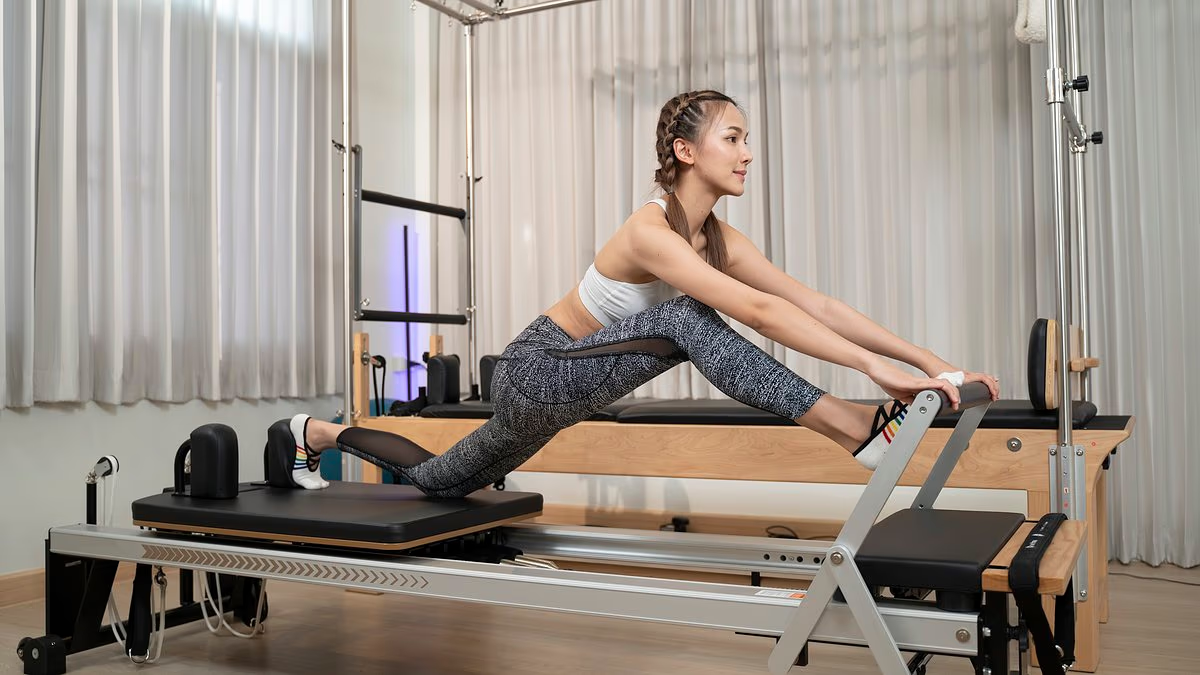

Hot yoga, padel and Hyrox may have dominated the fitness conversation, but 2026 belonged to Reformer Pilates. Studios dedicated to the machine-based workout appeared across town centres and high streets, making what was once seen as an exclusive practice far more accessible. Reformer Pilates has quickly built a reputation for developing strength, improving mobility and promoting a clearer, calmer mind.
Yet as high-intensity fitness trends continue to influence the way people train, the fundamental principles of Pilates can easily be lost. Nikkii Behrens, founder of Rare Street Pilates, has practised Reformer Pilates for more than a decade and cautions against treating every class as a test of endurance. Constant muscle soreness, chasing sweat and using exercise to punish yourself all move away from what Pilates is designed to achieve.
According to Behrens, meaningful progress comes from precision, controlled movement, correct alignment and allowing the body enough time to recover. Building a strong foundation and adapting a workout to your ability on any given day is more beneficial in the long term than forcing yourself through fatigue or pain.

Constant soreness and treating exercise as self-punishment go against the central principles of Pilates.
Persistent aches, disappointing results or a growing sense of dread before class could all suggest that your Reformer routine needs to be reassessed. Behrens warns that poor technique and excessive intensity may even increase the risk of injury. These are the five warning signs that your Reformer Pilates workout could be doing more harm than good.
“A degree of muscle fatigue is normal, especially when you are learning a new movement or increasing your activity. But being continually sore and exhausted is not proof that you are training more effectively. If you are not recovering fully between classes, your total workload may simply be too demanding. Rest is an essential part of building strength, so avoid treating recovery as something to ignore. If you are dreading each session, look at the type of class, its difficulty and whether it is genuinely suitable for you.”
2. You believe every workout must be tougher than the one before.
“Fitness culture often presents progress as lifting heavier weights, attempting more difficult exercises or simply doing more repetitions. In Pilates, improvement is better measured by stronger control, greater accuracy, increased mobility and the ability to perform a movement with quality.”
“In many cases, slowing an exercise down and maintaining control can be considerably more demanding—and more useful—than adding another spring.”

Nikki says that moving slowly and maintaining control can make an exercise considerably more challenging.
3. You’re feeling pain instead of ordinary muscular effort
Behrens stresses that the sensation of muscles working is not the same as pain, and persistent pain should never be dismissed. “Ongoing discomfort in the lower back, neck, shoulders, hips or knees should not be regarded as a normal part of Reformer Pilates,” she says. “It may point to incorrect technique, unsuitable resistance or an exercise that does not suit your body at that time. A skilled instructor should offer a modification rather than tell you to ignore the pain and continue.”
4. You are not adapting your workout to how you feel that day
“Your ability and energy levels will not be identical every time you enter the studio. Sleep, stress, recovery, your menstrual cycle, pregnancy, the postpartum period and perimenopause or menopause can all affect what your body needs. Those signals matter more than an app notification telling you it is time to attend a class. Listening to your body does not mean avoiding challenge; it means recognising when to work harder and when reducing the intensity is the more intelligent choice.”
5. Exercise has begun to feel like a form of punishment
“This may be the clearest warning sign of all. If you book a class because you feel guilty about eating, become anxious when you miss a session or judge its success only by calories burned, how much you sweat or how exhausted you feel afterwards, it is time to reconsider your relationship with exercise.”
“Movement should support your health, strength and long-term wellbeing—not become another method of punishing your body.”

Exercise should support health, strength and longevity rather than become a way to punish yourself.
The most common mistakes people make during Reformer Pilates
Behrens says, ‘One of the biggest misconceptions is that a good reformer class should leave you drenched in sweat or barely able to walk the next day. Sweat is primarily your body’s cooling mechanism; it isn’t a measure of how effective a workout was and the same applies to soreness, which isn’t a reliable scorecard for progress.
‘People can become obsessed with making exercises look more advanced before they have mastered the foundations. Pilates is about control and quality of movement, and a beautifully executed basic exercise can be much more valuable than an advanced variation performed with poor alignment and momentum.’
She says she encourages clients not to view Pilates as their entire movement prescription.
‘Reformer Pilates can be fantastic for strength, control, mobility and stability, but ideally it sits within a broader lifestyle that includes walking or cardiovascular exercise and, depending on the individual and their goals, additional resistance and weight-bearing exercise,’ says Behrens.
‘Ultimately, the goal shouldn’t be to finish every class feeling destroyed and I certainly want my clients and students to leave feeling like they’ve challenged their body intelligently. The best training isn’t necessarily the training that takes the most out of you – it’s the training your body can adapt to, recover from and keep doing consistently.’