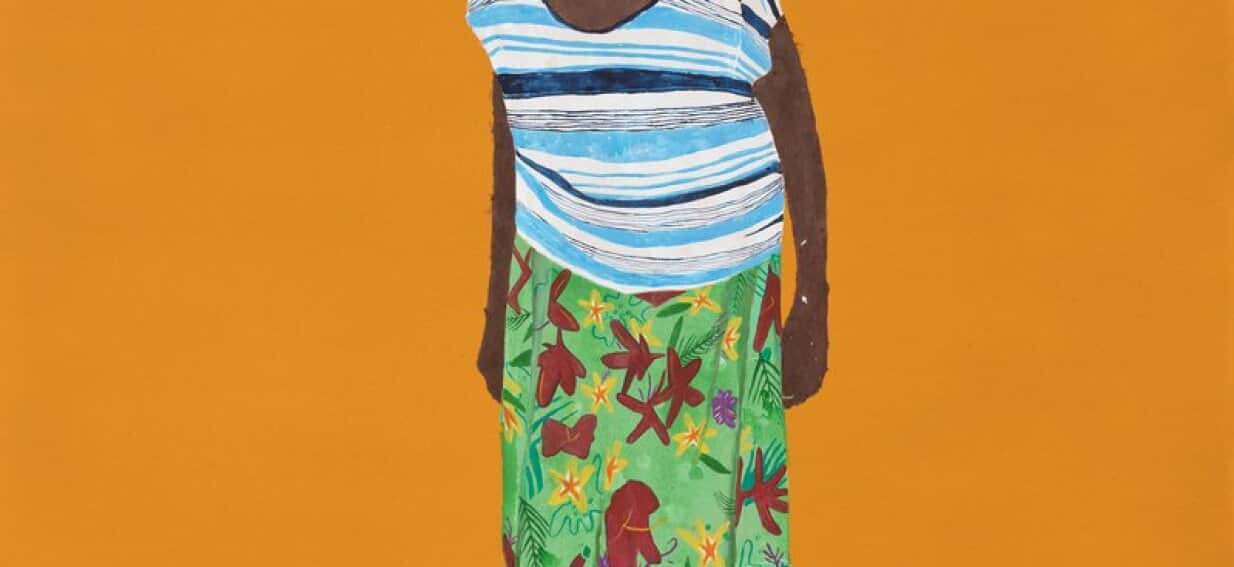
Australia’s most esteemed art accolade has been awarded to a portrait of Pitjantjatjara Elder, senior artist, and traditional healer, Iluwanti Ken.
The 2026 Archibald Prize, accompanied by a $100,000 award, has been secured by Melbourne-based artist Richard Lewer, who created the life-size painting.
Lewer explained that his decision to paint on such a grand scale was driven by the desire to ensure the subject’s presence resonates directly with viewers, capturing what he terms her “quiet authority.”
Expressing his pride in the achievement, Lewer acknowledged both Iluwanti and his own accomplishment.
“Winning the Archibald Prize is a profound honor for me,” he stated. “I’m particularly thrilled that this recognition shines a light on Iluwanti, which was my intention from the start with this portrait.”
“Iluwanti is an incredibly beautiful woman, and spending time with her and painting her on her ancestral land was a true privilege,” he added.
“I hope this work recognises her role as a healer, artist and custodian of the knowledge she carries and so generously shares,” Lewer said.
Lewer’s piece was selected from 1034 entries for the portrait competition and is one of 59 finalist works on display at the Art Gallery of New South Wales.
The artist described how he painted a yellow ochre ground to evoke the heat, light and warmth of Ken’s Country, while the floral skirt she features in the piece was shown to reflect her vitality and love of bright colours.
The work was painted following time spent on Country with Ken in the Aṉangu Pitjantjatjara Yankunytjatjara (APY) Lands of South Australia, where she lives and works.
Lewer’s piece reflects Ken as an artist, with flecks of paint on her arm.
Her own art was recognised this year, when she was named as a finalist in Wynne Prize.
Lewer said he drew inspiration from Ken and her work in creating the winning portrait.
“Iluwanti paints with an urgency I recognise,” he said.
“Her work depicts the walawuru tjukurpa, the story of the eagles.
“Birds appear in her drawings, paintings and ceramics as teachers of care, protection, provision and resilience, particularly for women and children.
“These lessons shaped how I approached this portrait.”
This year was the sixth time Lewer had been a finalist in the award.