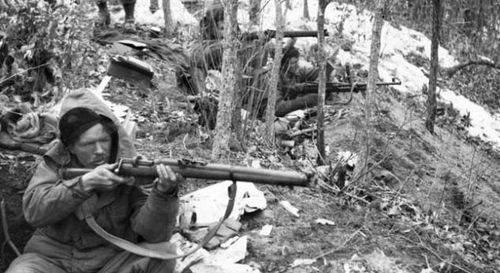

In April 1951, Australian forces became part of a United Nations coalition dispatched to South Korea in response to an assault by North Korea, later joined by China, marking the onset of the Korean War.
A few weeks on, the Chinese military unleashed a rapid offensive in the Kapyong Valley, aiming to reclaim Seoul, a critical city located merely 60 kilometers away.
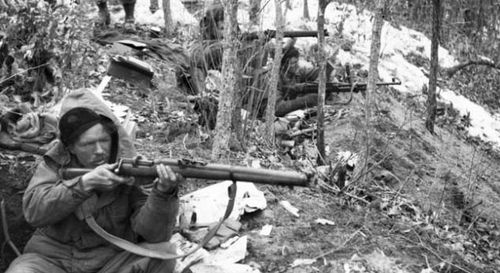
Their advance was thwarted by a significant barrier: the hills that provided a vantage point over an essential roadway were held by the 3rd Battalion Royal Australian Regiment (RAR) on one flank and Canadian troops on the other.
These units, bolstered by forces from the United States, New Zealand, and the United Kingdom, endured the ferocious Chinese assaults for over two grueling days.
Though the UN contingent, comprising roughly 2,800 soldiers, was well-prepared with artillery and tanks, they faced the daunting task of withstanding an onslaught from around 20,000 Chinese troops.
The Australian and Canadian defenders battled against relentless waves of enemy forces, engaging in intense and brutal close-quarters combat both day and night.
Commanders later ordered a strategic withdraw, but their heroic actions helped the UN forces achieve a decisive victory. Seoul was saved from falling once again into communist hands, and would not be threatened again for the remainder of the war.
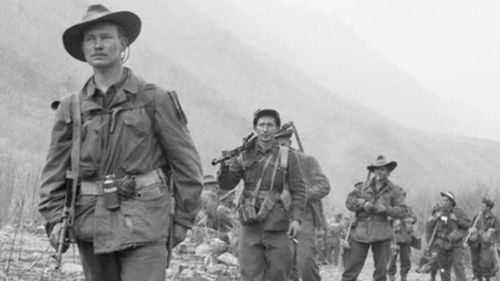
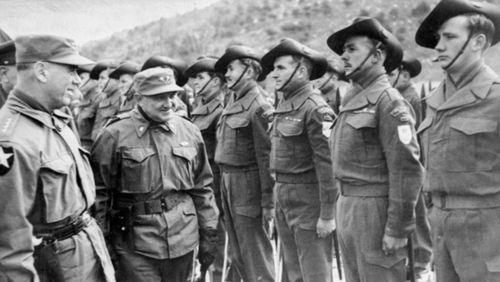
The Australian and Canadian battalions were each awarded a United States Presidential Unit Citation for their part in the battle.
Australian War Memorial senior historian Craig Tibbitts says the Battle of Kapyong is one of the most famous actions in the country’s military history.
“The Allied force (27 Commonwealth Brigade supported by US tanks and air support), held key high ground in the path of the Chinese offensive and managed to hold it against overwhelming numbers long enough to make a difference.”
He says it was the most important battle for Australian troops in Korea.
However the battle came at great cost: The Australians had 32 men killed, 59 wounded and three taken prisoner; the Canadians suffered 10 fatalities and 23 wounded; the New Zealanders lost two men and three Americans were also killed.
Historians calculate Chinese army casualties to be 2000 to 5000 killed during the battle.
Overshadowed by longer, more costly battles waged in Vietnam and the Middle East since the 1950s – Korea is often regarded as the ‘forgotten war’.
In all, 17,000 Australian soldiers, sailors and air crew served in the conflict, with 339 killed and 1216 wounded. 
Earlier this year, the Royal Australian Mint issued a special 50-cent coin to commemorate the 75th anniversary of the Battle of Kapyong.
NEVER MISS A STORY: Get your breaking news and exclusive stories first by following us across all platforms.


