
Share this @internewscast.com
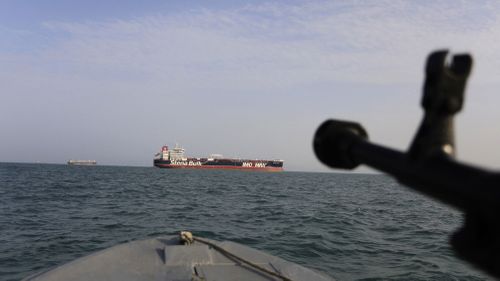
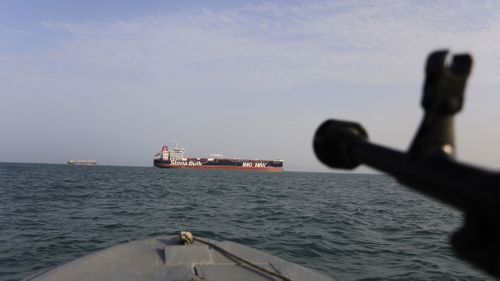
The United States is increasingly prioritizing the reopening of the Strait of Hormuz, a vital waterway, as soaring oil prices fuel inflation concerns worldwide. However, the task is fraught with challenges, according to former naval commanders familiar with the region.
These seasoned experts, who have served in the waters near Iran, describe the undertaking as daunting, reports the Associated Press. They explain that both military and commercial vessels would be highly vulnerable due to the limited maneuverability within the strait’s narrow shipping lanes.
“Deploying warships or civilian ships into the Strait of Hormuz under current conditions would be tantamount to a suicide mission,” stated retired French Vice-Admiral Pascal Ausseur.
He further noted that reaching a ceasefire agreement with Iran would mitigate the risk from suicidal to merely dangerous, allowing for the potential deployment of military vessels. “At that point, escort missions could be initiated,” Ausseur added.
The US Defense Intelligence Agency has mapped out Iran’s capability to target the entire Strait of Hormuz and its surrounding areas with anti-ship cruise missiles, which are derivatives of Chinese technology.
Iran can reach all of the Strait of Hormuz and its approaches with anti-ship cruise missiles that it developed off Chinese-made weapons, according to mapping by the US Defense Intelligence Agency.
It can also target vessels with longer-range missiles, drones, fast attack craft and naval mines, which it used during the Iran-Iraq war.