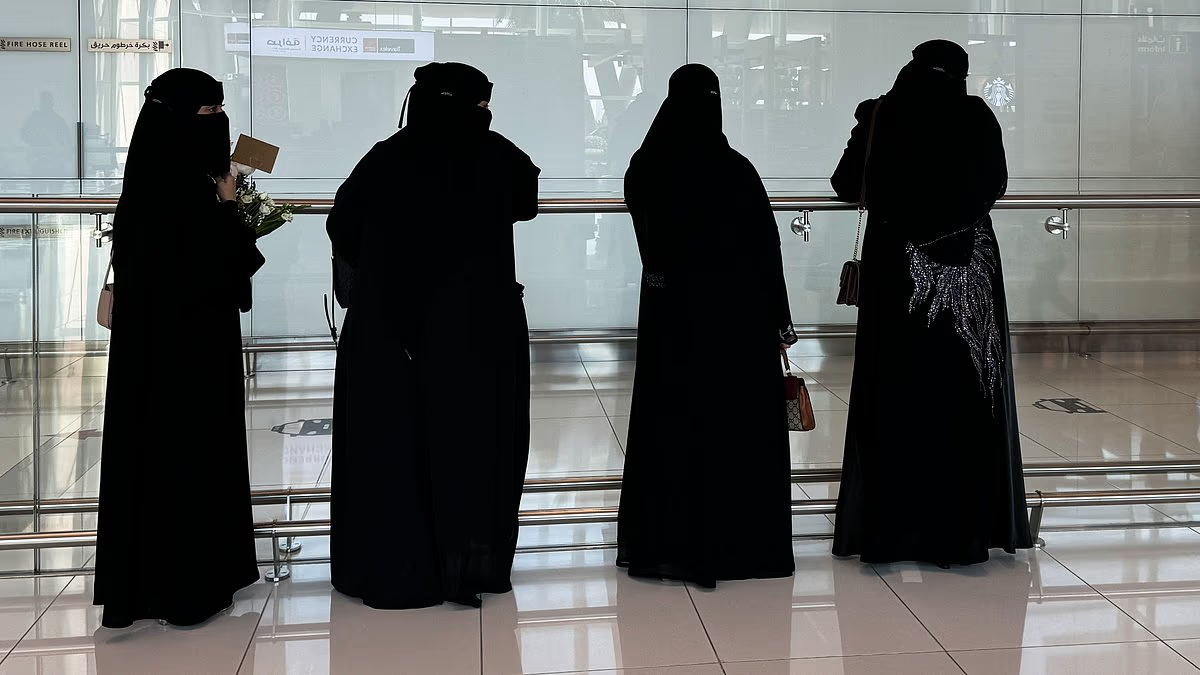

Pakistani women are allegedly being persuaded by their husbands to leave Australia for what they believe are family holidays, then abandoned overseas without their passports or any means of returning home, according to a prominent women’s safety advocate.
The warning follows the charging of two men in separate alleged exit-trafficking cases within the space of two days last week.
Muhammad Bilal Khan, 35, of Sydney, was charged with exit trafficking after allegedly convincing his wife to travel to Pakistan for a holiday earlier this year. Police allege he then kept her passport and left her stranded in the country.
The following day, the Australian Federal Police revealed that a second Pakistani man had been charged over an alleged attempt to force a woman and her two young children out of Australia through Melbourne Airport in June.
According to police, the man threatened the woman in an effort to compel her to travel to Pakistan.
Yasmin Khan, who leads the Bangle Foundation, a volunteer service supporting south Asian women experiencing domestic abuse, said she had heard similar allegations repeatedly. In some cases, she said, women were sent “back home” and expected to work as unpaid servants.
“We’ve got a lady in India at the moment. They went on a pilgrimage and, on the way back, she was told they were going to stop in to see the family’s parents. Now she’s stuck there and can’t get home, while he’s back in Sydney enjoying life,” Ms Khan told Our News Outlet.
“I’ve got another woman with four children whose husband is trying to send her overseas to live at his parents’ home. She says there’s not a thing she can do — she can’t drive, she can’t speak the language and she has no money.
“He told her his parents were getting old and needed someone in the house to look after it. And there you have five servants coming from Australia.”

Pakistani women are allegedly being drawn out of Australia under the guise of family holidays before being abandoned overseas without passports or a way to return home.

Women’s safety advocate Yasmin Khan said she had seen Pakistani and Indian women allegedly exit-trafficked by their husbands, sometimes to serve elderly in-laws.

A Pakistani national living in Melbourne was arrested last week after allegedly attempting to exit-traffic a woman and her two young children from Australia.
Ms Khan said exit trafficking could affect people from any background or community, but the Queensland-based Bangle Foundation had repeatedly encountered cases involving Pakistani and Indian women.
“You’re coming from a culture that says, ‘Don’t talk about this outside the family. Don’t air our dirty laundry,’” she said.
“It’s the culture, not the religion. Across south Asia there is a mix of Sikh, Muslim and Hindu communities, and many old, deeply entrenched customs influenced by Hindu culture remain.”
“Muslim people can adopt this culture too — a culture that says women should be submissive — because they have lived in those societies for centuries.”
Ms Khan said women raised in Australia might have access to Western education and feminist ideas, but those perspectives were not always available to relatives overseas or reflected in Pakistani and Indian television.
She also said some men used alleged exit trafficking as a “last resort” after a relationship had broken down.
“There may be a separation, and suddenly the woman can claim half the property,” she said.
“She can claim finances, superannuation and insurance. That is another reason some men do this: they believe the family justice system is weighted in favour of women.”

In 2021, a Sydney man was the first person in Australia to be convicted of exit trafficking after he was caught on CCTV threatening a woman and her child onto a flight to India from Sydney

Lina Garcia Daza, who leads the Australian Red Cross’ Support for Trafficked People Program, said the service has seen a 140 per cent increase in exit trafficking referrals from 2024
EXPLORE MORE: France’s Student Riots: Communists, Unions and Global Propaganda
She now warns women who fear they may be trafficked out of Australia to always carry their passports and those of their children, and to make copies of them.
‘You’ve got to look out for your own safety – and it’s not against thieves and murderers in the street, but your own family, your own husband. This is the tragedy of it all,’ she said.
Ms Khan’s comments come as reports of exit trafficking out of Australia hit an all-time high, with the AFP investigating 420 reports of human trafficking in the 2024-25 financial year alone.
These included 75 reports of exit trafficking, up from 35 in the previous financial year, with 64 per cent of the allegations involving a family member or intimate partner of the perpetrator.
Of those reports, 24 involved victims aged under 18.
‘We believe the increase in reports is just the tip of the iceberg and shows that more Australians are attuned to the indicators of human trafficking and are comfortable reporting to the authorities. However, we believe there are more cases out there,’ an AFP spokesperson told Our News Outlet.
‘Human trafficking does not discriminate, and victims could come from any age, gender, culture, religion or socioeconomic group.
‘Some people may be at a higher risk of becoming a victim due to vulnerabilities such as poor socioeconomic background, language barriers, unregulated visa status, and a lack of awareness or understanding of Australian laws.’

The AFP believes the increase in reports is ‘just the tip of the iceberg’
Lina Garcia Daza, who leads the Australian Red Cross’ Support for Trafficked People Program, said the service has already received 36 referrals this year for people who’ve been exit trafficked – a 140 per cent increase from 2024.
‘In the history of the program, people have been trafficked to a range of countries, particularly in the Middle East, South East Asia and Western Africa,’ Ms Daza said.
‘Exit trafficking can occur across a range of countries and regions, depending on the circumstances of the individual and the purpose of the trafficking. But it may be associated situations like false marriage, family violence and coercive control.’
Ms Daza said the program, which offers financial assistance, accommodation and referrals for legal, migration and medical support to people experiencing modern slavery, has seen women ‘lose control of the outside world’ after they’d been trafficked.
‘Don’t convince the person to not to travel, because that’s not always possible, with the context of the family,’ she advised.
‘Help them identify the numbers of the Australian consulate and the embassy, before their departure, so they have that handy. From what we’ve seen, people lose the ability to have connection to the internet.
‘Referral pathways are very critical because these people may only have one opportunity to seek help or disclose what is happening to them.’
She added: ‘We all have a responsibility to educate ourselves on how modern slavery happens in Australia because the reality is is that it does happen, it’s just hidden in plain sight.’
If you think you might be experiencing modern slavery, including exit trafficking, or could be at risk, call the Australian Federal Police (AFP) on 131 237 from Australia. Try to call before you leave Australia. It will be a lot harder to help once you’re overseas.
If an Australian needs urgent consular help, they can call the 24-hour Consular Emergency Centre at +61 2 6261 3305 from overseas or 1300 555 135 in Australia.
Victims and victim-survivors of human trafficking and modern slavery can access support regardless of whether they choose to participate in a criminal investigation.


