
Renowned as one of the most lucrative film series in history, the James Bond franchise has captivated audiences across generations with its thrilling espionage adventures.
However, in a surprising twist of fate, a prominent British film studio once turned down the opportunity to produce the Bond films. Newly discovered documents reveal that the studio deemed the series ‘unsuitable for the big screen’ and unlikely to succeed.
At the time, Ian Fleming’s 007 novels were dismissed as being ‘too far-fetched to form a compelling movie narrative.’
These dismissive remarks originated from Elstree Studios’ readers department in the late 1950s, a team responsible for evaluating books and scripts for cinematic potential.
This miscalculation proved massive, as the Bond series has since amassed over £5 billion in box office revenue.
These internal assessments, never meant for public eyes, have surfaced 64 years after Eon Productions released the first Bond film, Dr. No, in 1962.
They were saved from a bin during a clear out at Elstree Studios in Borehamwood, Herts, by an amateur historian nearly 50 years ago.
But they remained unseen as he just kept them at his home until they were uncovered last year during a house clearance.
Their contents have only now been revealed after they were sold by Glasgow-based Carter Rare Books for an undisclosed five-figure sum.
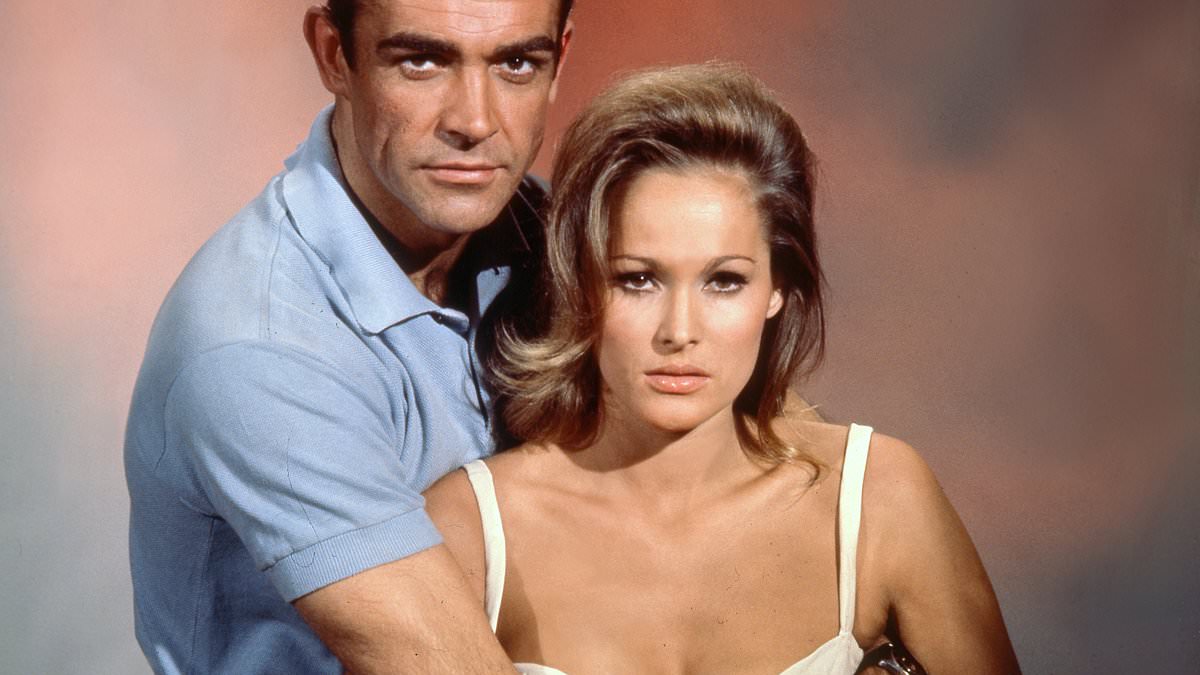
Sean Connery and Ursula Andress on the set of Dr. No which a studio reviewer described as: ‘basically very old-fashioned Fu Manchu stuff’ when the book was assessed in 1957

Ian Fleming wrote 14 Bond books which have sold over 100million copies worldwide
In all there are eight book reports on Fleming’s famous novels. Dr No received particularly cutting feedback when it was assessed in 1957.
The unnamed reviewer wrote: ‘In spite of its modern trimmings – ballistic missiles, naked girls, etc – this is really basically very old-fashioned Fu Manchu stuff.
‘It has the merit of a lovely West Indian setting, but I did not find the hero’s adventures convincing and I fear that the story trembles too much on the edge of the ridiculous to make a worthwhile screen plot.’
Thunderball fared little better when it was reviewed in 1960 as it was said to have ‘defects certain to show up more disastrously on the screen’.
The reviewer wrote: ‘Pretty much the same mixture as before, plus a few modern ‘props’ in the way of nuclear bombs and atomic submarines. […] Suspense sags for long stretches […]
‘All through the main story, this excessive use of modern gadgetry proves no substitute for character and invention: it registers as padding.
‘These defects would be certain to show up more disastrously on the screen. I feel this story would not produce a successful film.’
A report on For Your Eyes Only states: ‘Writing apart, these stories do not seem useful movie material.
‘The plots and main situation are as fantastic and improbable – more so in some cases – than those of the cheapest routine thrillers.
‘Only Mr Bond’s style saves the stories – and even were this to be translated into screen terms, we should still have just another secret service thriller in the case of two or three of the stories.’
Of the novel Diamonds are Forever, it was said: ‘Fleming’s smooth style occasionally trips up with the over-unusual simile designed to arrest and startle the reader.
‘Also, in order to tickle jaded palates, he goes all out for the unusual locale, and in this book jumps from the Saratoga race-track to a frontier ghost town just outside Las Vegas, laying on too much local colour altogether.’
The Bond reports were part of a remarkable archive containing thousands of pages of reports on books and scripts which were sold jointly by Carter Rare Books and Neil Pearson Rare Books.
Thomas Carter, who is based in Glasgow, said: ‘Elstree Studios had a very well-oiled machine in the form of a readers department who would receive books and scripts to go through, watch plays and would be scouring what came out to try and find the next big thing.
‘The reports were very detailed with a synopsis so the upper management didn’t have to read through the books and scripts.
‘There were eight separate reports on Ian Fleming books and none of them were positive.
‘They said it was basically a two bit spy novel, and that all the gadgets and different locations were to cover for the fact there was not actually a plot.
‘They didn’t get it at all and thought it was absolutely atrocious.
‘These were internal documents not meant for general consumption and it is fascinating to think what Ian Fleming’s reaction would have been to them.
‘Elstree made the Star Wars and Indiana Jones films so they knew how to pick winners but with the Bond films they left billions of pounds on the table.
‘A lot of the readers were accomplished scriptwriters themselves and perhaps there was an element of snobbery there.
‘The reports show how badly you can drop the ball and they did that eight times.’
Fleming worked for Britain’s Naval Intelligence Division during World War Two and helped to plan Operation Goldeneye.
Post-war, he became the foreign manager in the Kemsley newspaper group, overseeing correspondents across the world.
His special contract allowed him winter holidays in Jamaica which he spent writing.
His first Bond novel, Casino Royale, was published in 1953.
In total, Fleming wrote 14 Bond books which have sold over 100million copies worldwide. He died in 1964.