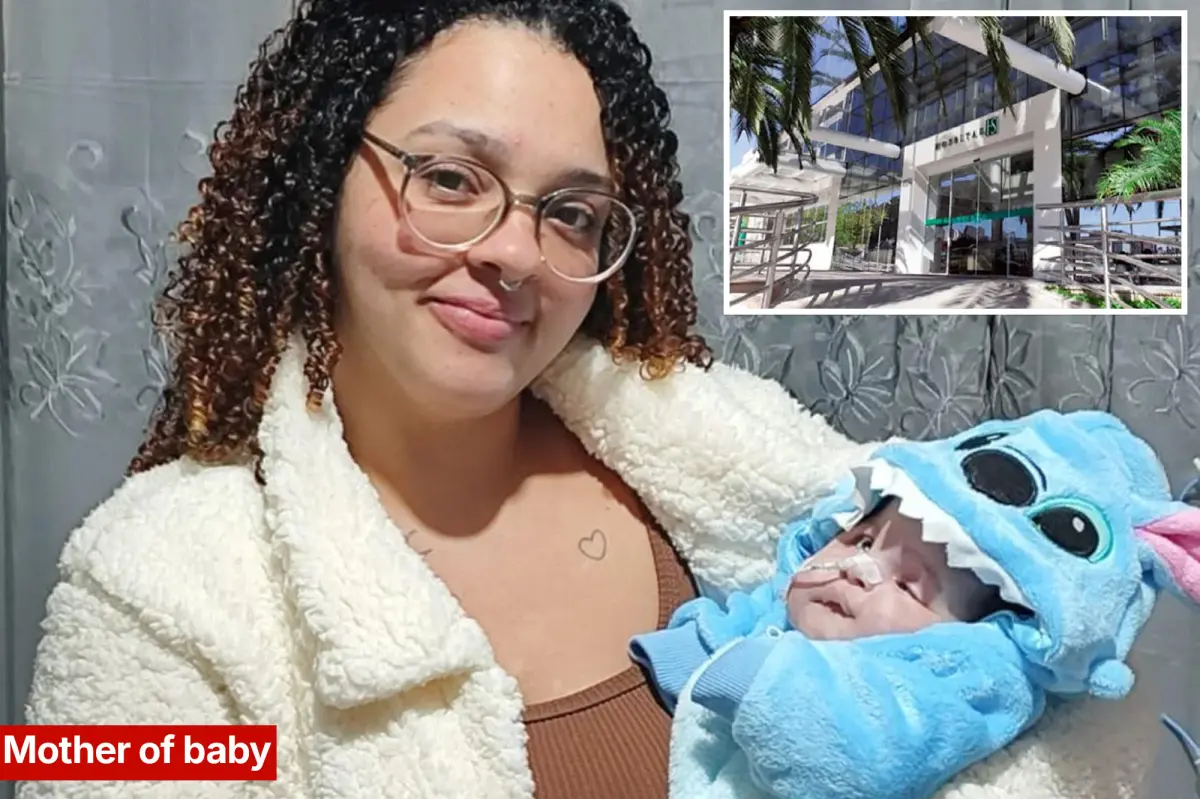

Brazilian authorities are investigating the deaths of eight children at a private hospital in São Paulo after parents alleged that their children developed infections and died from sepsis.
The São Paulo Civil Police received complaints concerning children who died at Salvalus Hospital, including newborns and children as old as 12, the state’s Public Security Secretariat said Wednesday.
The deaths reportedly began in January, although the cases were formally brought to the authorities only this week.
“The police are conducting investigations, including interviewing healthcare professionals and witnesses, and a full analysis of medical records, in order to clarify the causes of death,” the Public Security Secretariat said.
Brazilian newspaper Metropoles reported Friday that it had examined the death certificates of 16 children who died at the hospital this year.
Among them was Alice de Andrades, who died on April 3, just three days after her first birthday, Metropoles reported.
Alice’s mother, 29-year-old Leticia Ferreira, told the online news outlet G1 that her daughter had Dandy-Walker syndrome, a rare congenital brain disorder. Alice was admitted to Salvalus in November 2025 for a procedure to place a feeding tube in her stomach.
Ferreira said Alice was in good health when she entered the hospital and was expected to spend roughly a week recovering in intensive care. After the procedure, however, the child developed breathing problems. Ferreira said that during an attempt to remove Alice’s breathing tube, a stomach stitch opened, allowing fluid to leak. Alice was taken for surgery, suffered cardiac arrest and was found to have fluid in her lungs.
Doctors later performed heart surgery after discovering that Alice had a ventricular septal defect, another congenital condition. Her health improved for a time, but she eventually suffered a head injury that required an operation to drain fluid from her brain.

In February, doctors detected KPC bacteria in Alice’s brain. The bacteria can produce an enzyme that makes infections particularly resistant to antibiotics.
Alice suffered two cardiac arrests on the day before her death. According to Metropoles, her death certificate cited Dandy-Walker syndrome, hydrocephalus, acute respiratory failure, infectious ventriculitis and sepsis of pulmonary origin as causes or contributing conditions.
Ferreira said the investigation into other children’s deaths at Salvalus Hospital has given her some comfort.
“We are now left with this expectation of wanting justice for our children, of investigating the cases, of understanding what really happened,” she said. “I can only wait and hope that justice will be done.”
Hapvida, part of the Notre Dame Intermedic group, said in a statement that Salvalus Hospital treated more than 1,000 children in 2026.
“The assessments carried out so far indicate distinct clinical histories, with no common infectious origin identified among the cases examined,” the company said.
Eduarda Gomes, a lawyer representing 30 mothers whose children died at the hospital, told G1 that the facility had not provided sufficient answers and was attributing the deaths to the children’s underlying medical conditions.
“We hope that all of this will be investigated, that the authorities will truly seek out those responsible, and hold the doctors and the hospital accountable,” she said.


