Thanksgiving travel was thrown into further turmoil Tuesday after a technical failure temporarily halted departures from one of the busiest airports in the United States.
The Federal Aviation Administration ordered the ground stop at Chicago O’Hare International Airport during the afternoon, citing an equipment outage.
The restriction began at 4:06 p.m. ET, forcing aircraft to remain at their departure gates, and was lifted shortly after 5 p.m.
The FAA then introduced a ground delay expected to continue until 1 a.m. ET Wednesday. Delays linked to the malfunction had reached 47 minutes.
The disruption came during one of the busiest travel periods of the year, with nearly six million Americans expected to fly for Thanksgiving. More than one million travelers are projected to pass through O’Hare.
It was the airport’s third ground stop since November 13, when a communications failure within the FAA prompted a nationwide halt to departures. Tuesday’s incident was the second O’Hare stoppage this month tied to an equipment problem.
The FAA had already warned that November 24 was likely to be the busiest day of the Thanksgiving travel period, with approximately 52,000 flights scheduled across the country.
The ground stop also prevented flights bound for O’Hare from leaving their origin airports. The restrictions covered traffic managed by two major FAA facilities: the Chicago Center, known as ZAU, and the Minneapolis Center, or ZMP.

Chicago O’Hare International Airport was placed under a ground stop after an equipment failure, marking the second outage of its kind there in November

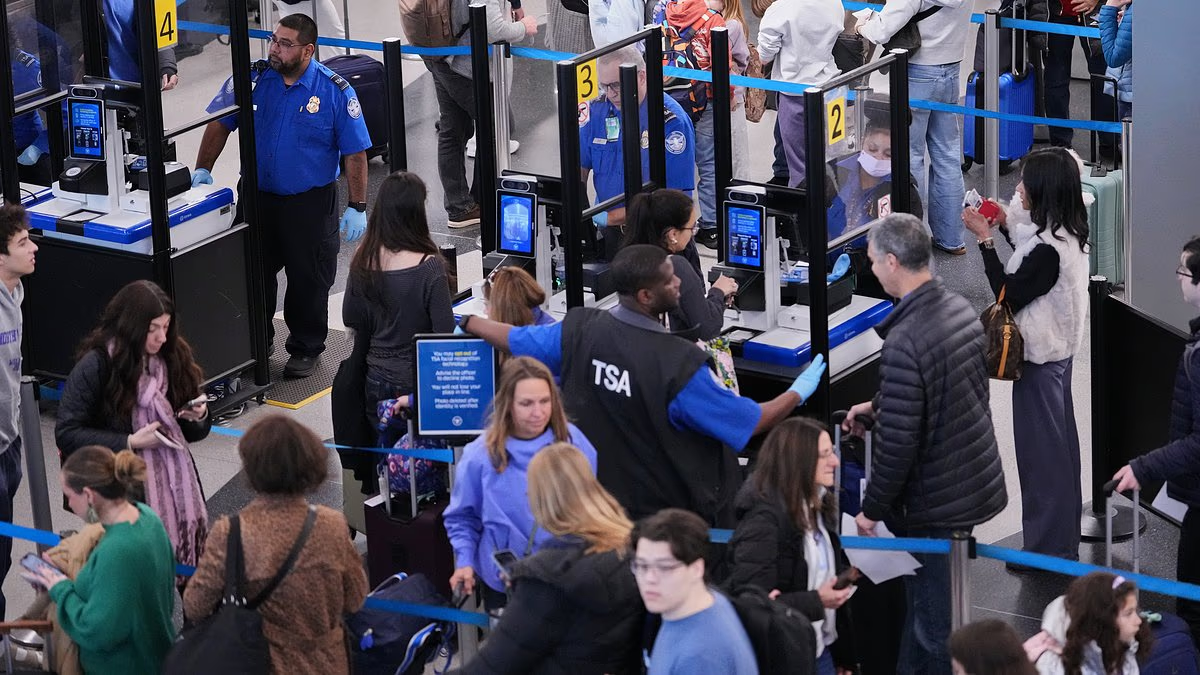
Travelers queue inside Chicago O’Hare International Airport
The FAA said Tuesday’s disruption was caused by a technical problem involving ground surveillance radar and aircraft-tracking equipment.
Air traffic controllers rely on the system to track planes and vehicles moving across airport runways and taxiways.
O’Hare is a major hub for United Airlines and American Airlines, serving routes throughout the United States as well as international destinations.
Because so many passengers connect through Chicago, interruptions at the airport can trigger delays far beyond the local area and disrupt onward travel.
Figures from the Chicago Department of Aviation show that O’Hare recorded 860,015 takeoffs and landings in 2025—roughly one aircraft movement every 37 seconds. That represented a 10.8 percent increase over the previous year.
The airport also handled 84.8 million passengers in 2025, ranking sixth worldwide for passenger traffic while remaining the world’s busiest airport by aircraft movements.
United Airlines is expected to serve nearly 640,000 passengers at O’Hare between November 19 and December 1, a five percent increase compared with the same period last year.
Monday brought another ground stop at O’Hare, this time because of staffing shortages, disrupting the opening of Thanksgiving travel week.

The FAA replaced the ground stop with a ground delay expected to remain in place until 1 a.m. ET Wednesday. Passengers are seen traveling through the airport Tuesday
That order lasted from 11:40 a.m. to 1:15 p.m. ET and affected flights heading to Chicago from several airports around the country.
The latest problems came less than two weeks after Chicago became the focal point of a nationwide aviation disruption that brought flights to a standstill because of failing communications equipment.
On November 13, departures across the United States were grounded for more than four hours. The FAA later said outdated telecommunications equipment was responsible.
The systems reportedly became overwhelmed during a routine upgrade, affecting radio communications and radar data feeds.
Transportation Secretary Sean Duffy blamed aging infrastructure, saying it “didn’t meet the moment.”
The Tuesday and Wednesday before Thanksgiving are traditionally among the busiest travel days of the holiday week.
With O’Hare still dealing with an equipment failure, worsening weather is also expected to create additional flight disruptions on Wednesday.
A powerful nor’easter could bring serious coastal flooding and knock out power lines from North Carolina to Maine between Wednesday night and Thursday night.