
Saudi Arabia has temporarily shut a key oil pipeline after it was struck by drones launched from Iraq, raising fresh concerns that global energy prices could climb even higher.
The kingdom, the world’s biggest crude oil exporter, halted operations on the pipeline following the drone attack, which officials in both Baghdad and Riyadh said originated in Iraq, where Iranian-backed militias are active.
In response to the strike, Iraq dismissed a military commander on Saturday.
The shutdown has intensified fears of a renewed jump in global fuel prices, with crude oil this week climbing back above $100 a barrel. US President Donald Trump, however, sought to calm markets on Saturday, saying “everything will work out just fine.”
The 745-mile East-West pipeline crosses the Arabian Peninsula and has allowed Saudi Arabia to avoid a growing shipping bottleneck in the Strait of Hormuz, where tanker movements have slowed sharply during the six-month war between the US and Iran.
Saudi Arabia’s Energy Ministry said the pipeline had been closed as a precautionary measure.
In recent months, the line has carried between 4 million and 5 million barrels of oil per day, equal to roughly 4 to 5 per cent of global supply, according to analysts and ship-tracking firms.
Responsibility for the strikes was not immediately clear.

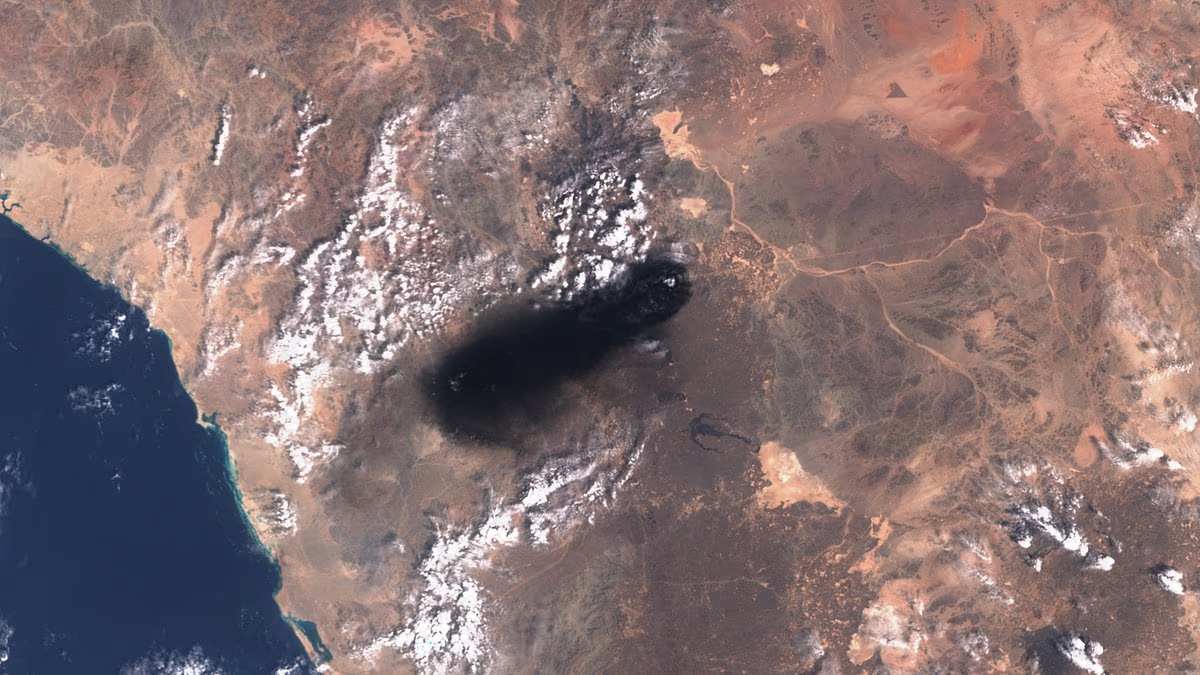
A satellite image shows black smoke rising from an area of Saudi Arabia’s East-West oil pipeline south of Medina, Hejaz Region, Saudi Arabia September 10, 2026
Satellite imagery showed plumes of black smoke rising from a section of the pipeline south of Medina.
Saudi Arabia’s Foreign Ministry said the attack caused some injuries and damage, which officials were still assessing, but it did not specify whether oil exports had been affected.
Asked on Saturday whether he could help restore traffic through the Strait of Hormuz amid the latest concerns over Saudi Arabia, Trump replied that everything would “work out just fine.”
‘Everything will work out just fine,’ Trump said, speaking in Dublin after meeting Irish President Catherine Connolly.
The closure of the pipeline came just hours after Yemen’s Iranian-backed Houthi Rebels captured the strategic island of Mayun at the southern entrance to the Red Sea, opening a new front in the Iran war.
The capture of the tiny island was confirmed by a senior military official with Yemen’s internationally recognised government and by a Houthi official.
Saudi Arabia, the world’s largest oil exporter, has increasingly relied on the Red Sea to get its crude to market as an alternative to the Strait of Hormuz, where Iran has been striking ships.
Houthi efforts to close the 17-mile Bab el-Mandeb channel have made that route more complicated.
In a statement Friday, the Houthi armed forces boasted of gains along the coast without mentioning the island, Mokha or the Bab el-Mandeb Strait.
They vowed ‘escalation for escalation’ in the confrontation with Saudi Arabia, while declaring that ‘maritime navigation is safe for all companies except for Saudi vessels.’
Still, markets are nervous, and experts have described the Houthis as highly unpredictable.
The Houthis have been attacking Saudi shipping on the Red Sea since declaring a blockade in July, as well as hitting oil infrastructure inside Saudi Arabia.
The rebels said they acted in response to the kingdom’s yearslong blockade of Houthi-held parts of Yemen.
Saudi Arabia struck the airport in the port city of Mokha after the Houthis seized it Thursday, a Houthi broadcaster said. There were no reports of damage or deaths.
A senior military official with Yemen’s internationally recognised government told the AP they were stunned that the Saudi air force did not try to prevent the capture of Mokha, about 50 miles from the strait.
He assessed that Saudi Arabia didn’t get a green light from the U.S. to embark on a large-scale air campaign.

File image: Yemen’s Houthi rebels march during a mobilization campaign in Sanaa, Yemen, Thursday, Sept. 10, 2026

The Bab al-Mandeb Strait connects the Red Sea with the Gulf of Aden and is used as an alternative to the Strait of Hormuz, which Iran has effectively shut down
The official, who spoke on condition of anonymity because he wasn’t allowed to speak to the media, also blamed ‘lack of coordination’ between Yemen’s army and multiple allied militias, saying it gave the Houthis ‘a priceless opportunity.’
Shipping through the Bab al-Mandeb Strait had fallen by about 60% since the Houthis began attacking some ships there in late 2023 and expressing solidarity with Palestinians in Gaza.
Shipping increased this year as Saudi Arabia sought alternatives to the Strait of Hormuz, but renewed Houthi threats have ‘curtailed’ that activity, according to Lloyd’s List Intelligence.
That has forced Saudi Arabia to find yet another alternative, sending its oil north out of the Red Sea to the Mediterranean, either via the Suez Canal or a pipeline through Egypt, a far longer route for its clients in Asia.
The Houthis have threatened that route as well, striking a Saudi vessel in the north of the Red Sea in late August.


