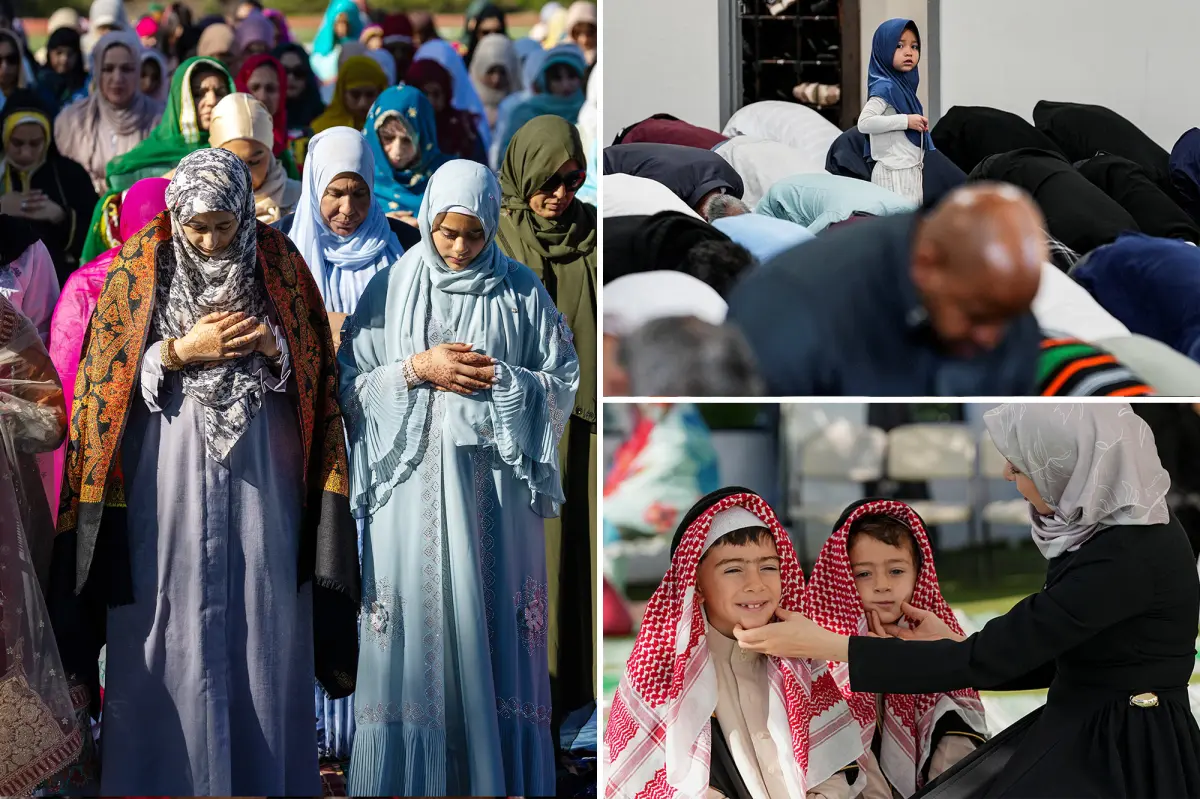

A proposal to make two major Muslim observances official California holidays is approaching the final stage in the Legislature before it could be sent to Gov. Gavin Newsom for consideration.
Assembly Bill 2017 would add Eid al-Fitr and Eid al-Adha to the list of state holidays, allowing state employees to use holiday credits to take those days off.
“California is home to one of the largest and most vibrant Muslim communities in the country,” said Assemblymember Matt Haney (D), who authored the bill.
“AB 2017 is about making sure Muslim Californians are seen, valued, and treated with the same dignity as every other community in our state.”
The measure would also allow public schools and community colleges to recognize the holidays and include instruction about their significance.
The bill cleared the state Assembly in late May with a 64-1 vote and is now awaiting a vote by the full state Senate.
Lawmakers have until the end of the legislative session, expected this coming Monday, to advance the proposal to the governor’s desk.
Eid al-Fitr, often translated as the “Festival of Breaking the Fast,” celebrates the end of Ramadan, when Muslims fast daily from dawn to sunset. Eid al-Adha, or the “Festival of Sacrifice,” honors the Prophet Ibrahim’s willingness to sacrifice his son in obedience to Allah.
Both dates revolve around the Islamic lunar calendar, meaning every year, the two holidays fall on different dates of the year.
Download The California Post App, follow us on social, and subscribe to our newsletters
If the bill is enacted, the two holy days add on to a growing list of community-specific holidays the state has recognized, including Diwali and Lunar New Year.
Muslim groups in the state have urged passage of the legislation, noting California has more than a million Muslim residents.
“Muslim students often face a no-win situation: attend school and miss communal prayers and religious practices or observe their faith and risk falling behind academically,” said the Council on American-Islamic Relations, California.
“Even when absences are excused, students can miss instruction and feel excluded from their peers.”
Despite the overwhelming bipartisan support for the holiday measure, the California Family Council has expressed skepticism, describing the bill as a pathway to “celebrating Islamic theology in schools.”
The council said it has no problem with taking the days off but with the fact schools could teach about them.
“No California statute authorizes public schools to hold exercises celebrating the meaning of Christmas, Easter or Good Friday,” the council said. “The asymmetry is written into the law.”