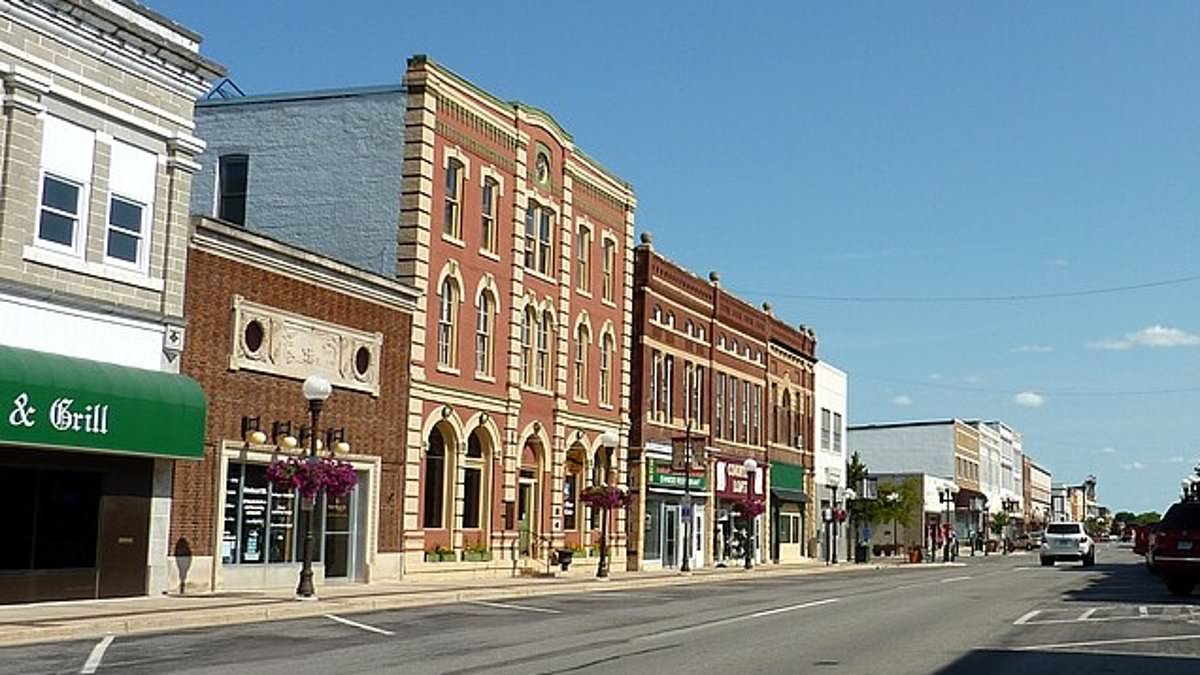

A quaint Minnesota town, New Ulm, was recognized as America’s least diverse community in 1980, with research indicating that nearly all of its residents were white and of German heritage.
Over 40 years later, New Ulm continues to stand as one of the nation’s least diverse towns, even as demographic shifts have transformed much of the state known as the Land of 10,000 Lakes.
Located roughly 100 miles from Minneapolis, New Ulm earned its title from a California State University study, which revealed that 99.2 percent of its population was white at the time.
Today, that percentage remains high at 93 percent, significantly above the diversity levels seen in many other Minnesota cities.
Currently ranking as the 15th least diverse city in the United States, New Ulm’s population is still predominantly composed of descendants from the original German settlers.
Jeff Howison, a senior research analyst at the Minnesota State Demographic Center, remarked to the Star Tribune, “New Ulm is not the least diverse in the USA, but it’s up there.”
Describing the city as a ‘very homogenous place by national standards’, Howison noted that New Ulm trails behind state and national averages for its diversity.
‘They’re somewhat out of step with the larger demographic trends,’ Howison said.
The picture-perfect Minnesota town of New Ulm was crowned America’s least diverse community in 1980 – and residents say the hub’s German roots have helped it maintain its traditions to this day
The town’s was named America’s whitest in 1980, and its picture-perfect layout still resembles old American town from decades ago
When the demographics study was conducted in 1980, New Ulm’s 99.2 percent white population compared to 96 percent for the rest of Minnesota.
However, today the state’s demographics are around 76 percent white, compared to New Ulm’s 93 percent.
Across the nation, demographics in the 2020 census show 56 percent of the US population is white, non-Hispanic.
New Ulm is known for its strong ties to its German heritage, and on its own website, it describes itself as ‘the most German town in America.’
Tourist attractions include an annual Oktoberfest celebration and a number of German breweries.
It is named for the German city of Ulm by German settlers who founded the city in 1854, and many families have remained in the city for generations since.
Darla Gebhard, a historian whose family has lived in New Ulm since the 1870s, told the Star Tribune that the heritage runs so deep, ‘You didn’t need English in New Ulm’ for much of its history.
‘Within families, everyone spoke German,’ Gebhard said of her childhood in the Minnesota town.
With New Ulm losing its status as the whitest place in America, the new city with that title is St Mary’s, Pennsylvania.
Like New Ulm, the city is also known for its high percentage of German heritage residents.
New Ulm, above in 1975, was crowned America’s whitest town over four decades ago
Much of New Ulm’s architecture and its tourism hotspots are nods to the town’s German heritage and culture
New Ulm is known for its German roots, and its tourism industry relies on its annual Oktoberfest events and German breweries

The Mayor of New Ulm, Kathleen Backer
In Minnesota, New Ulm’s demographics fell from 99.2 percent white to 93 percent from 1980 to 2020 – a far smaller shift than other Minnesota cities.
During that time, the town of Willmar went from 98.5 percent white to just 58.9 percent, a dramatic change in its demographics.
The town of Marshall also fell from 97 percent white to 73.5 percent, and Northfield from 97.3 percent to 74.4 percent.
Gebhard said the key to New Ulm retaining its traditions is its links to German culture, which still fuels much of its tourism industry.
‘Why do we cling to our German identity today? It’s because it is worth money,’ Gebhard said. ‘It’s a business.’