
Australian drivers are set to face higher fuel bills from next month, with the federal government confirming the end of its temporary cut to fuel excise.
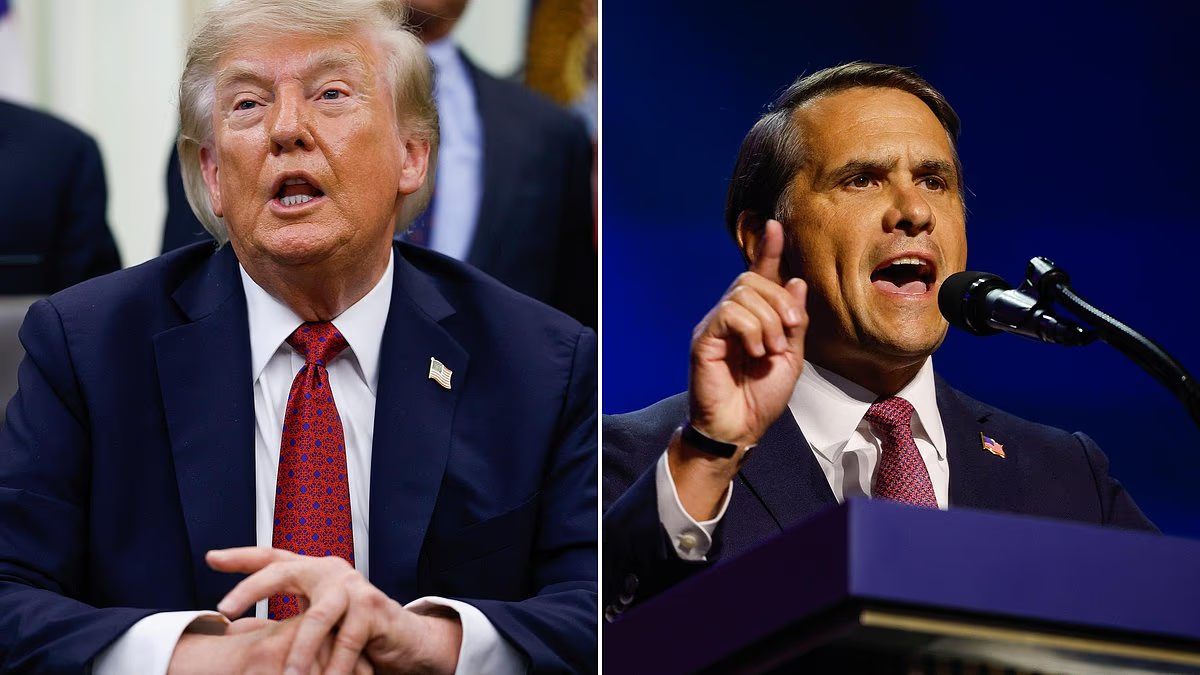
Energy Minister Chris Bowen said the measure, introduced as a cost-of-living relief policy, will expire at the end of the month as planned. That change will add 32 cents per litre back onto the price of fuel for motorists.
Speaking to reporters on Saturday, Mr Bowen said the government had consistently described the excise reduction as a short-term measure. “We’ve been very clear, this was a temporary reduction in the excise that was always intended to be temporary,” he said.
He added that while the Prime Minister and Treasurer would continue to monitor economic conditions, the government’s position had not changed. “The Prime Minister and Treasurer have been clear, they will always examine the latest information, but our intention is for it to come off at the end of the month,” Mr Bowen said.
Australia’s standard fuel excise on petrol and diesel stands at 52.6 cents per litre. On April 1, it was cut to 20.6 cents per litre in response to the economic fallout linked to the Iran war.
The reduction had always been scheduled to end with the close of the financial year. Despite the conflict in Iran continuing, the government has indicated it will not reverse course on restoring the full excise rate.
Peter Khoury, from the NRMA, told Daily Mail that Aussie motorists could expect unleaded petrol to be about $2 a litre from July 1, while diesel will jump back up to $2.50 a litre.
‘We expected them to reintroduce it. They never intended to extend it. They did say that they would measure the situation closer to the deadline though,’ Mr Khoury said.
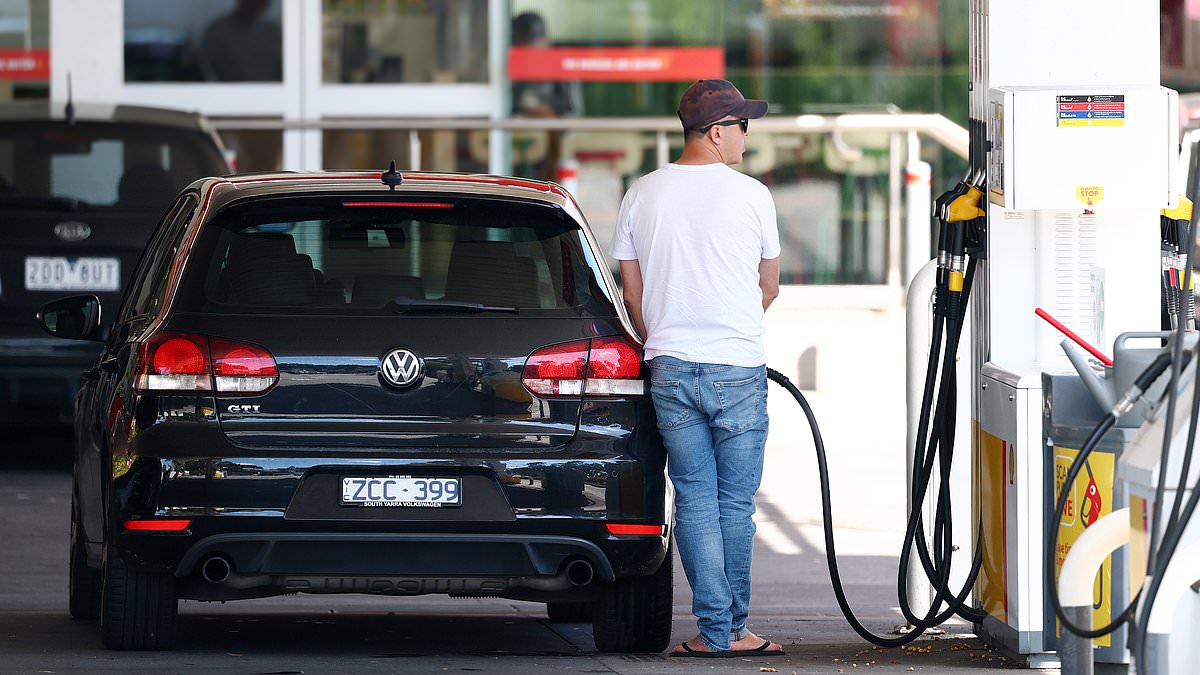
Aussies will soon feel the pinch when they go and fill up their car
Energy Minister Chris Bowen said the halving of the fuel excise would come to an end at the end of the month
The closure of the Strait of Hormuz in the Middle East has had the greatest impact on fuel prices in Australia since March
The temporary fuel excise cut, followed by an additional 10.9 per cent rebate after the states and territories agreed to forgo windfall GST revenue, has cost the federal budget close to $3billion since April 1, which is money that won’t be spent on roads in the future.
Despite the predicted end of the fuel excise cut, it won’t help Aussies living through a cost-of-living crisis.
The temporary halving of the excise also helped to lower headline inflation, which spiked to 4.6 per cent in March, before it dropped to 4.2 per cent.
The Strait of Hormuz, through which 20 per cent of the world’s energy is transferred, is currently operating under a restricted and contested ‘partially open’ state due to the ongoing conflict between the US and Iran.
The closure of the Strait of Hormuz in March caused global oil prices to surge about 40 per cent higher than average.
The price of oil has fallen of late, but Mr Khoury said Australian government policies weren’t the solution to bringing fuel prices back to normal.
‘We won’t see meaningful relief until the war ends,’ he said.
Bowen took a shot at the opposition, saying they implemented ‘scaremongering’ tactics as Aussies worried about fuel supplies a few months ago.
‘First they said there would be shortages around Easter and then a couple of weeks ago the shadow minister said there would be shortages in June,’ Bowen said.
Peter Khoury said Aussie motorists could expect unleaded petrol to be about $2 a litre from July 1, while diesel will jump back up to $2.50

Aussies were struggling with surging fuel prices in March before the cut was brought in
‘We are now in June and we have record amounts of fuel in this country. While the government has been ensuring fuel supplies, the Liberals have been scaremongering but they have got basic facts wrong.’
In April, when pressed on whether the government would extend the cut beyond June 30, Bowen remained tight-lipped.
‘Let’s see,’ he told reporters at the time.
‘We’ve said it’ll be three months. Obviously, we’ll see how we’re going in three months.’