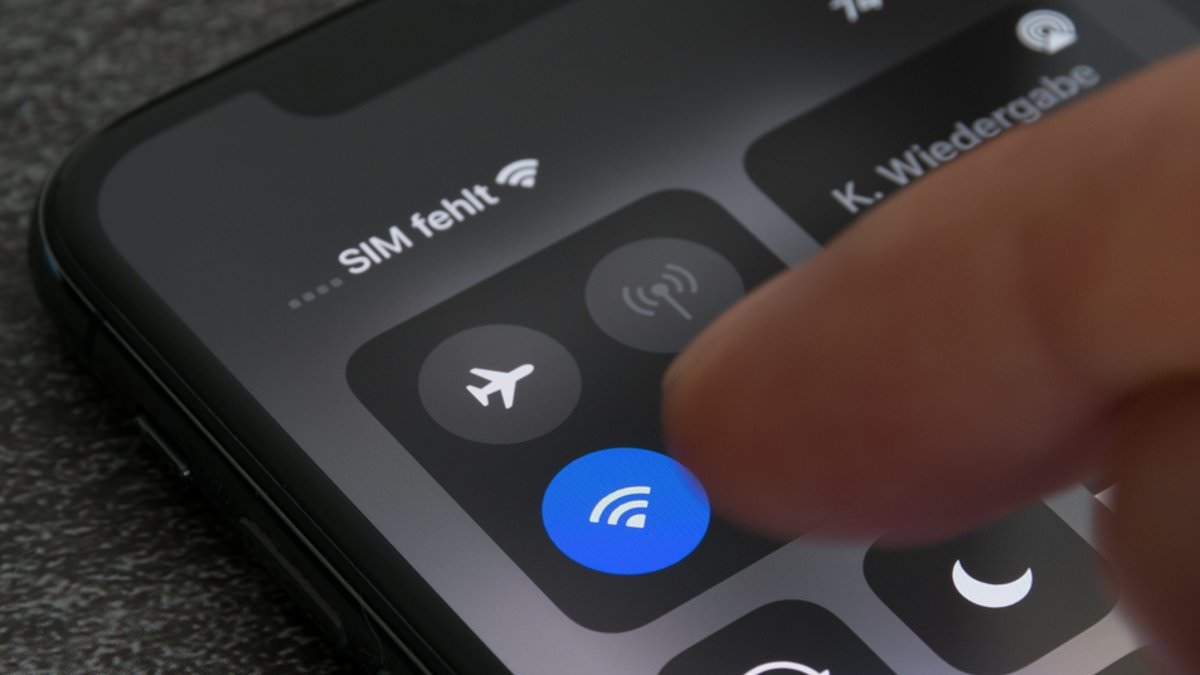

With the aim of cutting down on mobile data costs, many people frequently connect to public Wi-Fi networks. However, Google has issued a warning indicating that this common practice might jeopardize your security.
In a recent advisory, the tech giant urges smartphone users to “steer clear of public Wi-Fi whenever feasible.”
Google highlights that these networks often lack encryption, making them vulnerable to cyber attackers. Thus, any data shared over public Wi-Fi could be at risk.
Entering sensitive details, such as banking information or login credentials, while using these networks could inadvertently expose you to cybercriminals.
Cybersecurity experts widely support Google’s cautionary stance, particularly when handling sensitive online information.
Dr. Manny Niri, a senior lecturer specializing in cybersecurity at Oxford Brookes University, concurs that Google’s recent warning is indeed “sensible.”
‘Public Wi-Fi can be risky because many of these networks aren’t encrypted,’ Dr Niri told the Daily Mail.
‘This means that hackers on the same network could attempt to intercept data or even set up fake Wi-Fi hotspots to deceive users.

Google is telling smartphone users to avoid using public Wi-Fi because ‘these networks can be unencrypted and easily exploited by attackers’ (file photo)
Goggle issued the warning in its new 10-page ‘Behind the Screen’ advisory document for October 2025, which offers tips to avoid ‘text-based scams’.
It tells readers to ‘keep an eye on your bank accounts and credit report regularly’ as they may be the first signs you’ve been compromised by public Wi-Fi.
The tech giant adds: ‘Always install the latest OS updates and security patches from your device manufacturer.’
Oliver Buxton, cyber expert at security firm Norton, agrees that free public Wi-Fi can leave you vulnerable to online threats and cyberattacks.
‘Many public Wi-Fi hotspots are unencrypted networks that transmit data in plain text, making it vulnerable to cybercriminals with the right tools,’ he said.
‘Hackers on the same network can intercept your online activities, including banking information, login credentials, and personal messages.’
Another danger is ‘malicious hotspots’ in public places that trick users into connecting by mimicking legitimate Wi-Fi names.
‘For instance, if you were staying at the Goodnight Inn and wanted to connect to the hotel’s Wi-Fi, you might mistakenly select ‘GoodNight Inn’ (with a capital N) instead of the correct network,’ Buxton said.

Free public Wi-Fi is available virtually everywhere – airports, restaurants, coffee shops, libraries, public transit, hotel rooms, you name it. But while these networks are convenient, they could leave you vulnerable to online threats and cyberattacks (file photo)
‘By doing so, you risk connecting to an “evil twin” network set up by cybercriminals to access your internet traffic.’
Jake Moore, tech expert and security advisor at ESET, agreed that people ‘should at least double check they are on the genuine public network and not a fraudulent copycat network before going online’.
Public Wi-Fi is ‘not as much of a threat as it used to be’, but it’s not completely zero-risk’, he added.
‘The blanket of ‘avoid public Wi-Fi altogether’ is often overblown advice,’ Moore told the Daily Mail.
‘However, to be careful if you are privacy and security aware, I would still advise people disable auto-connect which prevents surprise joins to fake networks automatically.
‘Some incidents in the past have stem from users auto-joining rogue Wi-Fi networks.’
According to Dr Niri, when it comes to Wi-Fi the level of risk ‘depends on what you’re doing and how your phone or laptop is set up’.
‘Using a VPN, visiting only secure (https) websites, or switching to mobile data is much safer than using open Wi-Fi,’ he said. ‘If you must use public Wi-Fi, it’s best to avoid logging into important accounts, such as banking or email, and always keep your software up to date.’
Meanwhile, Professor James Davenport, an IT expert from the University of Bath, said he does use public Wi-Fi, but is ‘skeptical when using it’.
‘I don’t do high-value work, such as internet banking, on them,’ Professor Davenport told the Daily Mail.
But Dr Abel Yeboah-Ofori, associate professor in cybersecurity at University of West London, simply said ‘Google is right’.
‘Using public Wi-fi is one of the most dangerous vulnerable spots cyber criminals can exploit,’ he told the Daily Mail.
Elsewhere in the report, Google admits phones and their networks have changed our lives by making it easier to contact loved ones, manage busy schedules and ‘navigate the world around us’.
But that same convenience has created a ‘sophisticated, global enterprise’ for criminals designed to ‘inflict devastating financial losses and emotional distress on unsuspecting victims’.
In the past year alone, scams have drained more than $400 billion (£304 billion) from consumers worldwide, according to the document.
A survey commissioned by Google found 94 per cent of people received a scam text message, which usually feature an unsolicited request for personal information or payment.
Other telltale signs of scam messages include a sense of urgency in the language, poor grammar or spelling, and usual-looking links.
Google says: ‘Most scams rely on one of two tactics: the promise of a reward (‘You’ve won a prize!’) or the threat of a consequence (‘Your driver’s license will be suspended’).
‘To create urgency, these are almost always followed by a strict deadline, pressuring you into acting before you have time to think clearly.’