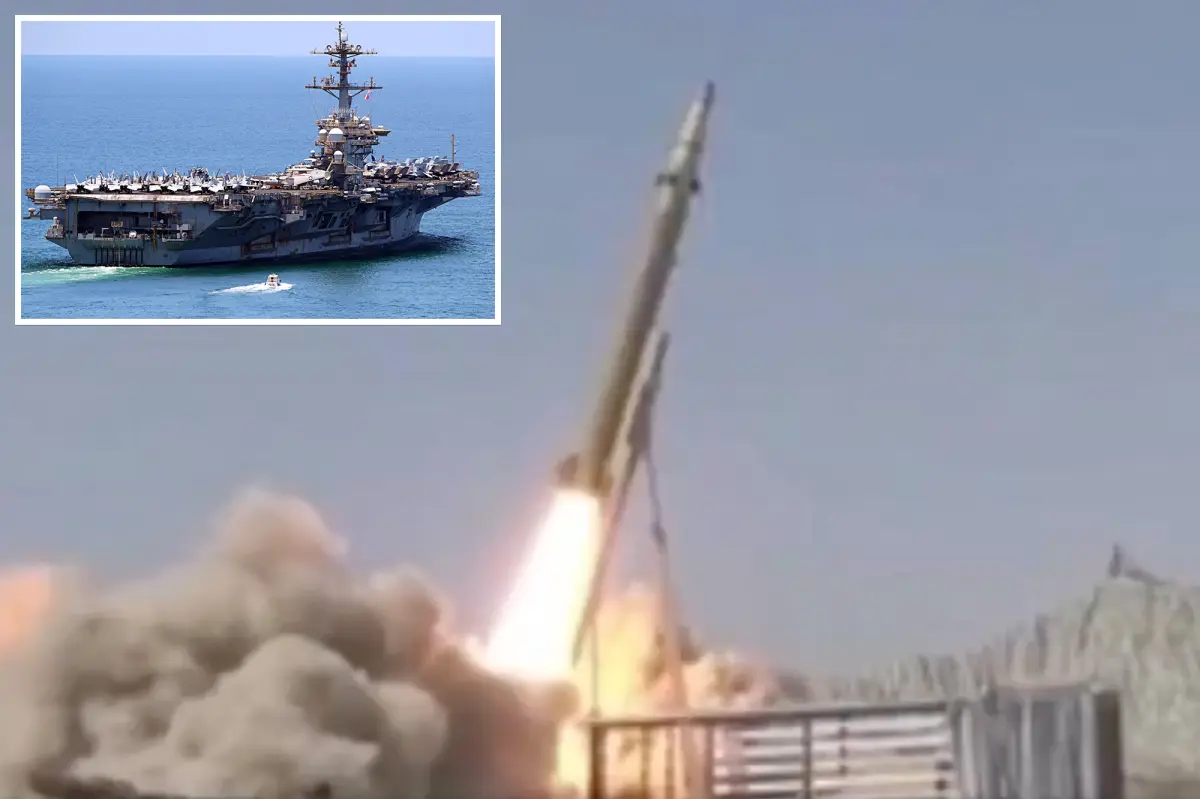

Iran reportedly deployed its new electro-optical missile technology for the first time on Wednesday in what officials described as an attempted strike on US warships, marking a fresh escalation in Tehran’s campaign of retaliation against American military assets in the region.
According to officials, the Islamic Revolutionary Guard launched a series of overnight attacks aimed at US forces in Jordan and at 10 American vessels operating near the strategically vital Strait of Hormuz.
The alleged strike on the ships involved Iran’s electro-optical seeker missiles, The Telegraph reported. The weapons are designed to use cameras and light-based sensors to identify, track and strike targets with a high degree of accuracy.
US Central Command acknowledged the attacks, while officials said both efforts were unsuccessful, including the barrage aimed at Jordan, where Iranian missiles were reportedly intercepted.
The attempted strikes followed earlier US retaliatory action that destroyed five oil tankers near Kharg Island, a major Iranian oil hub tied to the regime’s energy exports.
“In response to the US’s aggressive actions against Iranian oil tankers, armed forces, in accordance with their inherent right of legitimate defence, attacked US military bases and facilities located in Jordan, which continues to support US military attacks against Iran, as well as several US vessels,” it said.
Iran had previously signaled progress on the missile program late last year, unveiling what it called the Qassem Bassir, a medium-range ballistic missile equipped with advanced optical sensors.
At the time, Iranian officials claimed the system could deliver precision targeting without relying on GPS, a feature they said would make the missile more resistant to electronic jamming and harder for defense systems to disrupt.
Mohsen Rezaei, Iran’s newly installed secretary of the Supreme National Security Council, suggested a new “special anti-destroyer” missile debuted in Wednesday’s strike, hailing it as part of his new approach in the country’s defense policy.
It was not immediately clear if the Qassem Bassir weapon was the new missile used to target the US ships in the overnight attack.
The IRGC also warned of imminent strikes on oil tankers and bases in Bahrain and Kuwait, calling on all crew to evacuate the ships immediately.
The surge in tit-for-tat strikes and coinciding strikes on tankers in the region have raised alarms over the safe passage in the Strait of Hormuz, which oversees 20% of the world’s oil transports.
The attacks, coupled with the Iran-backed Houthi rebels’ strike on Saudi oil facilities, caused the price of crude to shoot above $100 per barrel for the first time since July.
With Post wires