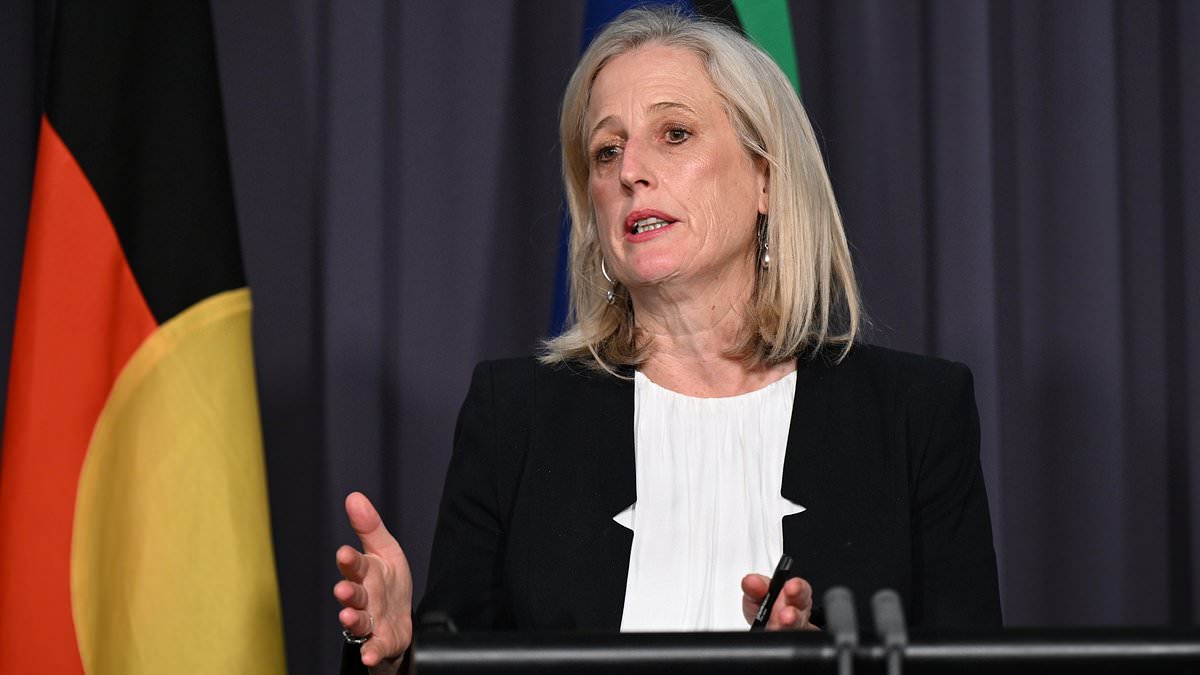

The Albanese government’s aggressive spending on net-zero initiatives has been deemed “not sustainable” by Finance Minister Katy Gallagher, as the administration faces increasing criticism for potentially exacerbating inflation through its financial policies.
Senator Gallagher has indicated that the upcoming budget will not replicate the previous levels of climate-related expenditure, which previously reached into the tens of billions of dollars.
“We’ve made significant investments to support the transition towards net-zero, and it’s clearly progressing,” Gallagher remarked in an interview with The Australian.
She elaborated, “You can observe the tangible benefits of these investments, but replicating the intensity of past budget allocations is not feasible in the long term.”
Despite this shift, Gallagher emphasized that the government remains firmly committed to its environmental goals, specifically the reduction of carbon emissions to 43 percent below 2005 levels by 2030 and to 62 percent by 2035.
According to budget documents, the Labor government allocated tens of billions for climate initiatives during its first term, including a significant $8 billion boost last November to support the new 2035 emissions targets.
It comes as it is expected Labor will unveil a $500 million commitment to help progress its plans to fast‑track environmental approvals.
Gallagher dismissed concerns that government spending was fuelling inflation, describing those accusations as ‘political’, and said the budget would not add stimulus to the economy.
Finance Minister Katy Gallagher admitted government spending on net zero is ‘not sustainable’
Labor committed tens of billions of dollars towards climate action during their first term
The government announced $8 billion in new funding for climate projects in November
‘The budget we’re in now is the same budget, essentially, that saw interest rates being cut last year,’ Senator Gallagher said.
‘It’s got really political, actually, about the role of the budget in driving inflation, or allegations that it can push inflation. I don’t accept that. But I do believe we have a responsible role to play about ensuring that the budget is working alongside monetary policy, and that’s the approach we’ve taken.’
The government is also facing accusations that it could break a key election commitment on negative gearing and capital gains tax reform on Tuesday.
It has all but been confirmed that the Albanese government will announce changes to the CGT discount in the budget to address concerns about intergenerational inequity and housing affordability.
Under rules introduced by the Howard government in 1999, investors who hold an asset, including an investment property or shares, for more than 12 months only pay tax on half the profit when they sell, a policy Pape has previously described as ‘boneheaded.’
Before that, capital gains were indexed to inflation, meaning investors were taxed on real gains rather than receiving an automatic 50 per cent discount.
Treasurer Jim Chalmers is expected to remove the 50 per cent capital gains tax discount for assets held longer than 12 months.
Research from Finder.com.au showed Australians now need to earn around $200,000 a year to comfortably afford a typical house in most capital cities without falling into mortgage stress.
Treasurer Jim Chalmers is expected to remove the 50 per cent capital gains tax discount.
Research from Finder.com.au showed Australians now need to earn around $200,000 a year to comfortably afford a typical house in most capital cities without falling into mortgage stress.

Treasurer Jim Chalmers is expected to remove the 50 per cent capital gains tax discount
Labor previously took plans to halve the CGT discount to 25 per cent to the 2016 and 2019 elections, but both campaigns ended in defeat.
Those losses prompted Anthony Albanese to rule out changes to CGT after he was elected Prime Minister four years ago.
Chalmers has conceded the backflip marks a departure from Labor’s previous pledges, but insisted the government was always transparent about reviewing housing tax settings.
‘The commitment that I give you and I give the Australian people more broadly, is, if we come to a different view, we will explain why,’ Chalmers told Sky News on Sunday.
‘But people know there is an appetite in this government for ambitious tax reform.
‘Part of that is recognising that the status quo in housing and tax and the intersection of those two things is effectively broken because there aren’t enough homes in our local communities.’
Chalmers described the current system as unfair and unsustainable.


