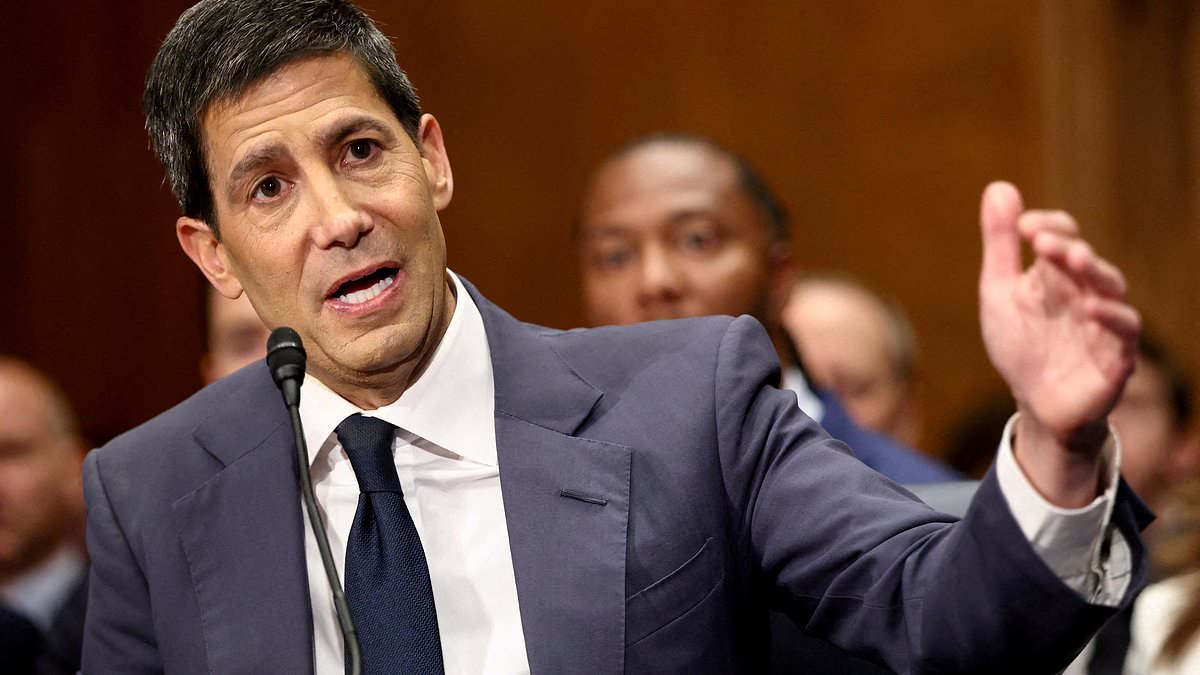

Donald Trump’s selection for the leadership of the Federal Reserve has cleared a major hurdle with Senate approval, marking the start of a transformative period for the U.S. central bank amid escalating inflation and political divisions.
Kevin Warsh secured his position as the 17th chair of the Federal Reserve following a narrow Senate confirmation vote on Wednesday.
Taking over a central bank that has faced consistent political pressure from President Trump, Warsh steps into a role where surging geopolitical tensions are significantly impacting inflation rates.
Warsh succeeds Jerome Powell, whose eight-year leadership was characterized by navigating multiple economic crises and maintaining the Fed’s independence against a backdrop of White House challenges.
The Senate vote concluded at 54-45, predominantly split along party lines. Notably, Democratic Senator John Fetterman from Pennsylvania broke ranks to support Warsh’s nomination.
This vote stands as the most partisan in the history of Fed chair confirmations, highlighting Democratic apprehension regarding Trump’s stance towards the Fed, while Republicans generally favor Warsh’s appointment.
Warsh is widely viewed as more aligned with President Donald Trump, who has long demanded rate cuts, but he is set to take office as inflation pressures intensify due to the US-Israeli war with Iran.
The financier is walking into a Federal Reserve deeply divided over what to do next on interest rates.
Kevin Warsh was narrowly confirmed Wednesday by the Senate to serve as the 17th chair of the Federal Reserve
Several top officials now believe rates may actually need to go UP again – rather than be cut – as inflation continues to spiral.
Inflation jumped to a three-year high in April, according to the latest Consumer Price Index, and now outpaces wage growth.
At least five Fed policymakers have already signaled they want tougher language warning that another rate hike could be on the table in the coming months.
Fresh forecasts due in June are also expected to show the central bank turning more cautious about cutting rates this year.
Back in March, officials predicted there would likely be one rate cut in 2026. But those expectations are rapidly fading as inflation surges and the jobs market remains surprisingly strong.
New government figures released Tuesday showed consumer prices jumped in April at the fastest pace in three years, fueling fears that the cost-of-living crisis is getting worse.
Financial markets now expect the Fed to keep interest rates unchanged for the rest of the year – with some investors even betting the next move could be a rate hike as early as January.
Warsh’s narrow Senate victory also exposed the fierce political battle now surrounding the Federal Reserve.

Fed chairs have traditionally won broad support from both parties, but Warsh scraped through in one of the most partisan confirmation votes in the institution’s history.
Trump has repeatedly pressured the Fed to slash rates and has publicly attacked the central bank for resisting him.
The White House also clashed with former chair Powell for years, including a failed attempt to remove Fed Governor Lisa Cook and a Justice Department investigation into Powell that was later dropped – though officials have left open the possibility it could be revived.
Trump is widely expected to push Warsh to cut interest rates – something the president has demanded for years in a bid to boost the economy.
Warsh has previously signaled he agrees with Trump’s broader view on rates. But during his Senate confirmation hearing last month, he insisted he had made no promises about future rate cuts.
He did, however, pledge to shake up the Federal Reserve and work more closely with the White House on a range of economic issues.
Warsh is also no stranger to clashes inside the Fed. During his time as a Fed governor under former chair Ben Bernanke, he frequently questioned decisions made by top officials, although he stepped down in 2011 before ever formally voting against policy.
At his confirmation hearing, Warsh said he actually welcomed heated internal debates at the central bank, describing disagreements between policymakers as a healthy “family fight” over how best to handle the economy.


