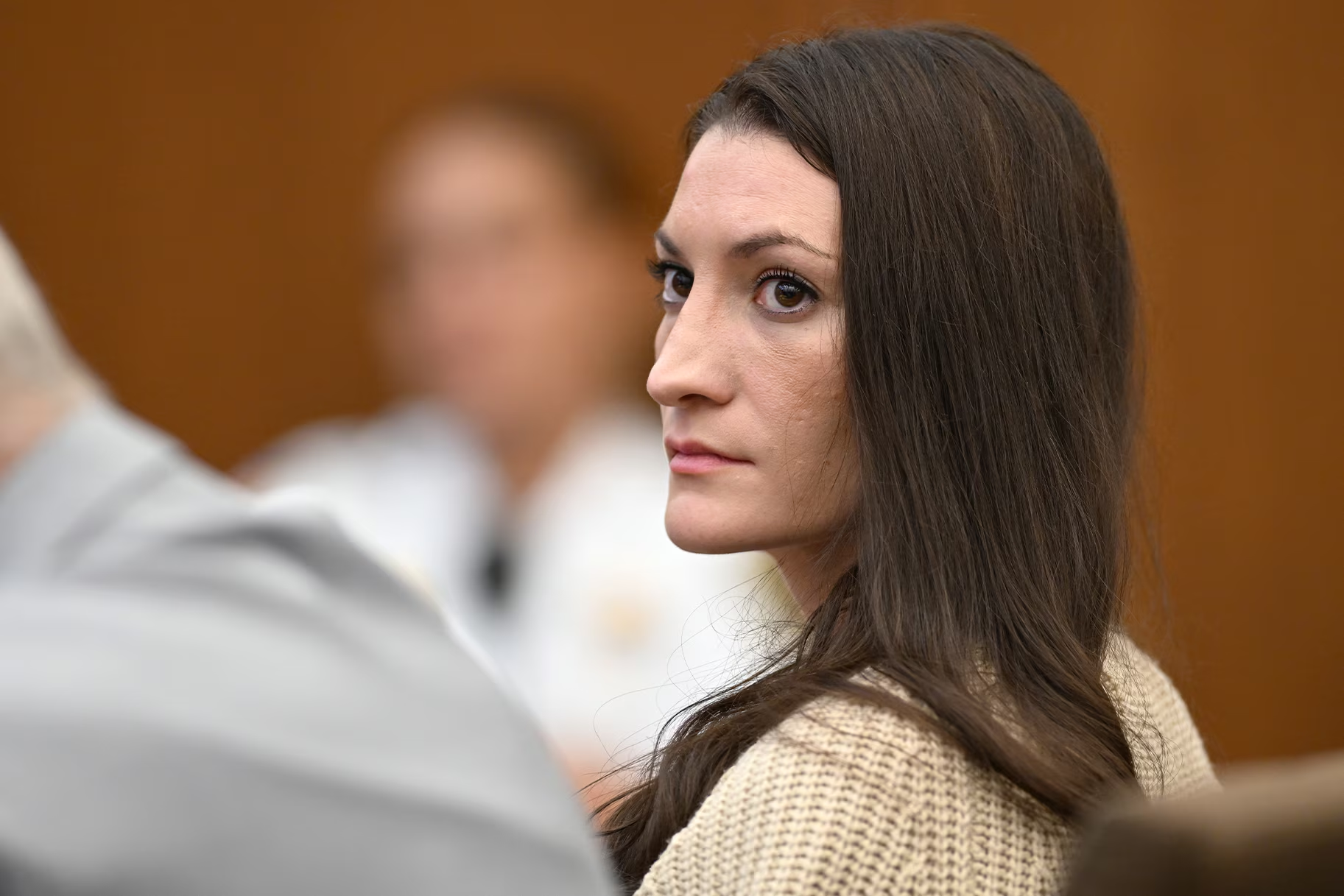

Ahead of her trial in the deaths of her three children, Lindsay Clancy offered a psychiatrist a glimpse into her daily life inside the mental health facility where she has lived for more than three years.
Dr. Avram Mack, a psychiatrist serving as an expert witness for the prosecution, testified on Aug. 21 about the conversations he had with Clancy at Tewksbury Hospital.
Mack told the court that during their April interviews, Clancy was “friendly and cooperative.” He said she described a quiet routine at the psychiatric hospital, one largely spent apart from others.
“Mostly, she described, she stays in bed or on her own,” Mack said, adding that she did not appear to talk much about socializing with other patients. He noted, however, that she did mention some contact with staff, including a therapist she said she had been working with.
Clancy, who is paralyzed from the waist down, also received physical therapy while at Tewksbury Hospital, according to the testimony.
Mack said Clancy told him she had little enthusiasm for that treatment. “She stated she wasn’t very interested in the physical therapy that she was getting there,” he testified. “She wasn’t interested in the food there.”
Her time at the hospital has also included visits from relatives and religious figures. Mack said Clancy reported having visitors “on a not infrequent basis,” and that they sometimes brought food or drinks she was able to have.
Mack also testified that Clancy told him she had little interest in personal grooming or hygiene during her stay at the psychiatric facility.
“Showering is embarrassing. It requires staff to help her, and that’s one way in which she would rather not,” he testified of Clancy, who uses a wheelchair. “It may also be that she described a lack of interest—so, it’s both components.”
Clancy also spoke to her mental state, allegedly detailing her grief over her current situation.
“She described feeling depressed, which she termed situational depression,” the psychiatrist said. “She described feeling—I’m not sure the exact term she used—but feeling miserable, not wanting to be alive.”
Dr. Mack was one of 85 witnesses who testified in the month-long trial. The prosecution and defense presented their closing arguments on Aug. 27, and the jury began deliberations on a verdict.
Clancy is facing three counts of first-degree murder in the 2023 deaths of her and her ex-husband Patrick Clancy’s three children: 5-year-old Cora, 3-year-old Dawson and 8-month-old Callan. While prosecutors contend that Clancy acted “intentionally, rationally, and swiftly” and knew right from wrong, her defense team argues that she was suffering from postpartum psychosis at the time of the killings and therefore is not criminally responsible.
If convicted of first-degree murder, Clancy faces life in prison without the possibility of parole. If she is found not guilty by reason of lack of criminal responsibility, she would instead be committed to a mental health facility.