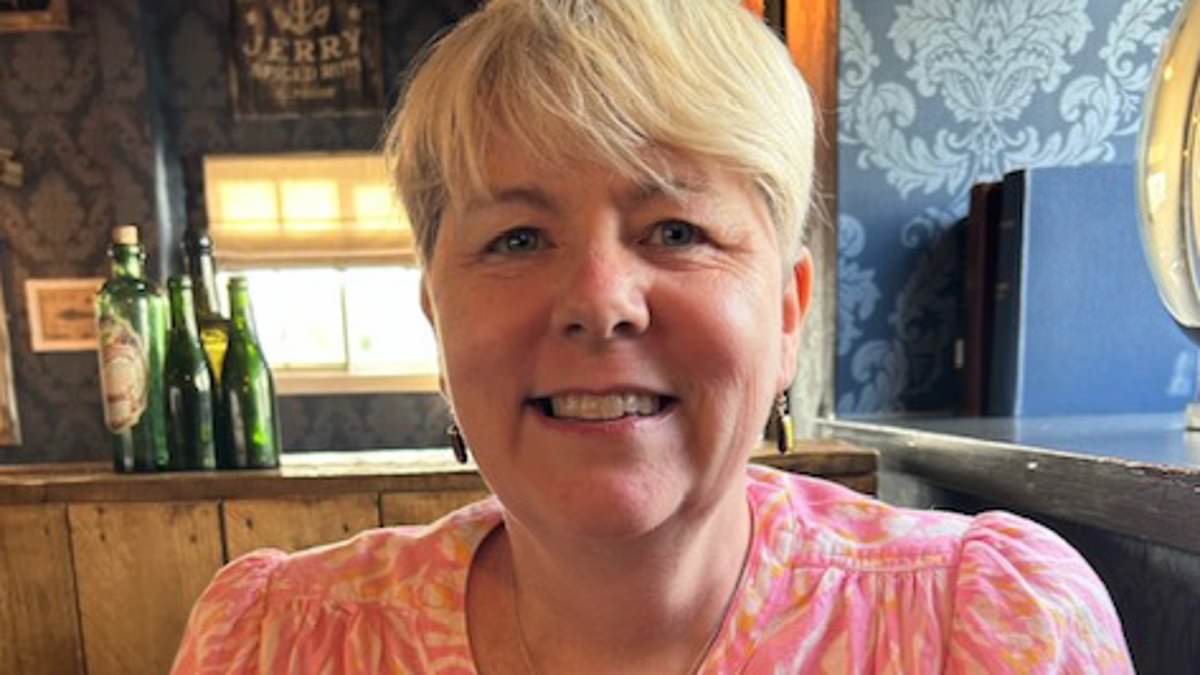

At first, the small bruises scattered across her body seemed harmless. As a woodwork teacher, Elaine Hold thought nothing of it.
‘I was used to banging about, picking up knocks and being a little bit clumsy, so when they appeared, I didn’t really worry,’ she recalls.
At the age of 46, a mother of two from Newcastle, began experiencing breathlessness and fatigue. She went to see her GP, but her blood tests didn’t reveal anything unusual. Her symptoms were attributed to bronchitis, which she had suffered from for years.
In fact, they were warning signs of a rare, aggressive type of blood cancer that kills most patients within five years.
Concerned about her recurring bruises, Elaine’s husband strongly advised her to seek further medical attention.
A new blood test was conducted, and within a day, she received an urgent call from the hospital advising her to pack an overnight bag and not to come alone. The diagnosis was acute lymphoblastic leukaemia. Elaine remembers being informed, saying, ‘I was in complete shock – I actually laughed.
‘Until that moment, I really believed it was just an infection. Treatment started right away, leaving me no time to process it, but over the years it has significantly affected me and my family mentally.’

Elaine Hold’s blood tests came back as clear but she had a rare, aggressive type of blood cancer that kills most patients within five years
Elaine had to resign from her job, and everyday life became frightening. Fearing viruses that could be deadly due to leukaemia, she refrained from going out.
Since then, Elaine has faced her illness successfully being treated and then returning four times. She has undergone chemotherapy, radiotherapy, and even a stem cell transplant. ‘It really took a toll—I’d feel incredibly weak and was often hospital-bound for weeks at a time,’ she shares.
‘Then each time I was told I was in remission, the relief was only ever short lived. I just knew it would return. I have had nearly every treatment available but nothing can rid the cancer for good.’
A stem cell transplant – previously known as a bone marrow transplant – is often used for aggressive blood cancers such as leukaemia.
It works by wiping out the patient’s own diseased bone marrow (where blood cells are made) with chemotherapy or radiotherapy, then replacing it with healthy stem cells.

Elaine’s illness has been successfully treated and returned four times. She’s undergone chemotherapy, radiotherapy and even a stem cell transplant
These usually come from the blood or bone marrow of a donor, and once infused they travel to the patient’s bone marrow, where they grow into normal red blood cells, white cells and platelets – essentially giving the body a new blood-making system free of cancer.
Elaine’s transplant used stem cells donated by her eldest son, who was what doctors call a ‘half match’.
This meant that while some of his immune markers (proteins on the surface of cells that help the immune system distinguish between the body’s own tissue and anything foreign) matched hers, others did not.
Without a perfect match, the new cells are more likely to attack the patient’s body, making the procedure riskier and less likely to cure the cancer completely. But in nine years since her diagnosis, a perfect donor has not been found.
To get through the ordeal of gruelling treatment, Elaine took part in charity fundraising events as well as leading woodwork sessions for widowed men.
Now, the disease has become terminal. At Christmas, doctors told her she could have just months to live.
The latest relapse caused clusters of leukaemia cells to form around her ribs and spine, leaving her with six broken bones and reliant on a wheelchair.
‘Being here today is something of a miracle,’ she says. ‘I’m not sure what the future holds for me or how much of a future I have, but what I do know is I will spend it in happiness. I do not want to waste one moment of this precious time I have been given.’
Acute lymphoblastic leukaemia occurs when rogue white blood cells grow out of control, overwhelming the bone marrow and crowding out healthy cells.
It’s the most common childhood cancer in Britain and thanks to modern treatments more than nine in ten children now survive. But for adults the picture is more sobering – survival rates fall sharply with age.
Around 750 adults are diagnosed every year, out of 10,000 new leukaemia cases. Yet research by charity Leukaemia Care found just 14 per cent of the public can name the four main symptoms.

The latest relapse caused clusters of leukaemia cells to form around her ribs and spine, leaving her with six broken bones and reliant on a wheelchair
‘Early diagnosis is really important in leukaemia, so it’s important patients are aware of the symptoms,’ says Professor Hendrik-Tobias Arkenau, a blood cancer specialist at University College London Hospitals.
Alongside bruising, fatigue and unexplained bleeding, he says patients should look out for sudden weight loss, night sweats and fever.
‘It’s also important patients persevere. Unfortunately, especially for rare cancers, it’s unlikely they’ll get diagnosed first time, so going back to the doctor when things don’t improve or change is key.’
Fiona Hazell, chief executive of Leukaemia UK, adds: ‘Many people aren’t aware of the signs and symptoms until they or someone they know is diagnosed. But early diagnosis saves lives, so we want to make sure more people know to contact their GP to ask for a full blood-count test if they’re worried.’