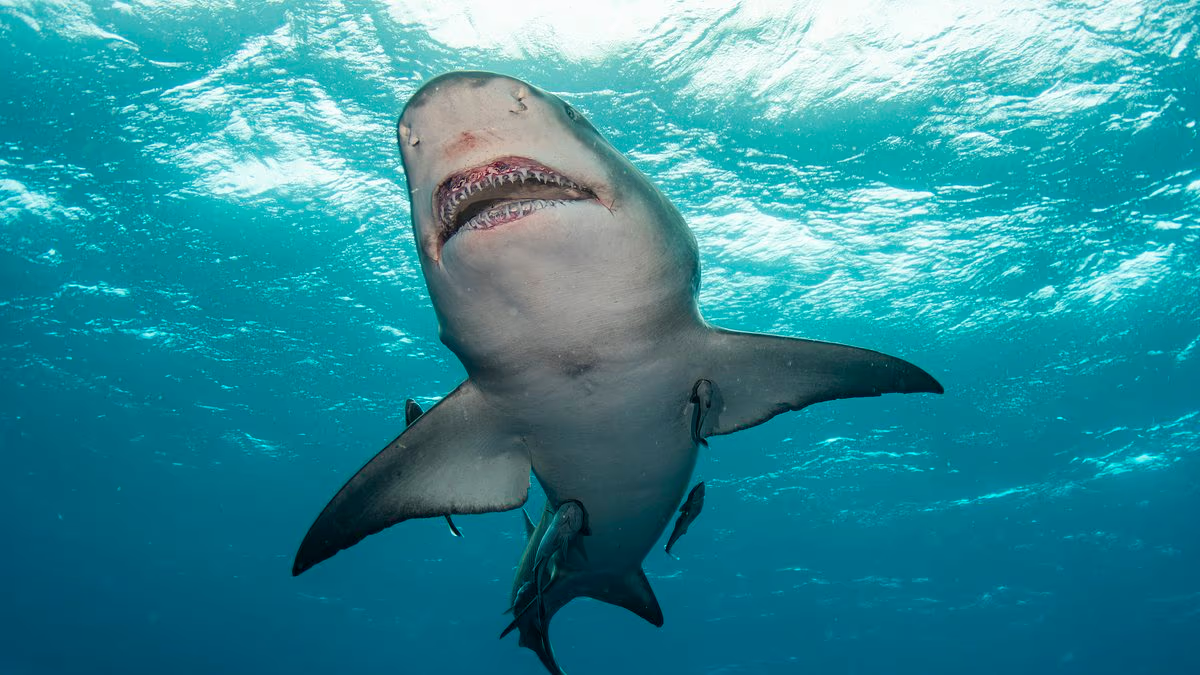

A growing social media craze involving fishermen drawing sharks close to New Jersey beaches for photo opportunities is raising alarm among local officials, who warn the practice could increase the risk of a shark encounter.
Bay Head Mayor Bill Curtis voiced concern after videos surfaced of anglers landing large sharks near the shoreline, including footage of one group pulling an eight-foot bull shark onto the sand to pose for pictures, CBS News reported.
In some cases, fishermen have reportedly used kayaks and drones to take bait roughly 100 yards offshore, drop it into the ocean, and then reel sharks back in toward the beach.
Curtis said his worry is that the bait may be drawing predators into the same waters where families and children are swimming.
‘It’s not illegal to fish here. It’s not illegal to fish for shark, but it is bringing in predators, they’re looking for food and there’s a lot of swimmers here,’ Curtis told CBS News.
He also warned that unused or leftover bait can wash back toward the shoreline, potentially pulling sharks even closer to beachgoers.
The recent activity has coincided with Jersey Shore surf fishermen catching at least four bull sharks and one tiger shark, according to the New York Post.
Curtis told the outlet that he has personally seen people chumming for sharks in broad daylight.

Sharks have become the center of a growing controversy on the Jersey Shore as fishermen use bait to lure the predators closer to land (stock)

Bay Head Mayor Bill Curtis has raised concerns over fishermen using bait to lure sharks close to swimmers along the New Jersey coast (stock)
‘It’s “Jaws” all over again,’ he said.
The mayor said Bay Head had little power to stop the practice because shark fishing and chumming are not themselves illegal.
Instead, the town passed a resolution encouraging fishermen to follow state and federal fishing regulations, while lifeguards continue to watch the water.
There have been shark sightings along the Jersey Shore this summer but no reported attacks linked to the practice.
Shark fishing charter operator Kenny Rosenblatt said most fishermen handled the animals responsibly but acknowledged that some did not.
‘Most, like us, catch and release responsibly, but there are fishermen who don’t do things right,’ Rosenblatt told the Post.
Captain John Schaible also defended the fishermen when he took a CBS News crew about 100 yards offshore to an area where anglers drop bait in roughly 15 feet of water.
‘They are just having fun,’ Schaible said. ‘They’re not killing them. They’re maybe taking a couple pictures with them and letting them go.’

Shark fishing is legal in New Jersey but Curtis has urged anglers to use caution as beaches remain packed with swimmers (stock)
But Curtis said dropping food into the water so close to shore posed an unnecessary risk.
‘Putting food in the water there for the fish to go after is just luring them closer to shore,’ he told CBS.
The backlash has prompted shark fishermen to defend the practice, with a new petition calling on New Jersey officials to protect ‘responsible’ land-based and drone-assisted shark fishing.
A Change.org petition, titled Support Responsible Land-Based Shark Fishing in New Jersey, argues that the sport can coexist with swimmers, surfers and other beachgoers if anglers follow stricter safety measures.
Its proposed rules include no shark fishing while lifeguards are on duty or around active swimmers, immediately releasing prohibited species and using barbless hooks and appropriate shark-fishing equipment.
The petition also supports drone-assisted fishing where legally permitted and calls for sharks to be kept out of the water for the shortest practical amount of time before being released.
‘The actions of a few irresponsible people should not define an entire community of anglers,’ the petition states.
‘We believe New Jersey can establish reasonable standards that allow responsible land-based shark fishing and drone-assisted fishing while protecting swimmers, lifeguards, sharks, other beach users and our coastal environment.’

Fishermen have reportedly used kayaks and drones to drop bait offshore before reeling sharks back toward New Jersey beaches (stock)
The newly launched petition had been shared 176 times as of Wednesday afternoon.
The debate comes as sharks have increasingly been spotted off New Jersey this summer.
New Jersey Fish and Wildlife biologist Greg Hinks told the Asbury Park Press he had been hearing reports of bull sharks ‘every week, almost every day,’ describing the frequency as ‘unprecedented,’ according to the Post.
Schools of squid and sand eels provide sharks with plentiful prey along the coast, while warmer ocean temperatures can allow some species to arrive earlier and stay longer.
Although shark fishing is legal in New Jersey, state and federal regulations place restrictions on which species can be targeted and how they are handled.
New Jersey Fish and Wildlife states that prohibited sharks must be released immediately without being removed from the water. It specifically warns that taking a prohibited species onto the beach to pose for photographs violates federal regulations.
The prohibited list includes white, sand tiger, sandbar, dusky and whale sharks, among other species.

At least four bull sharks and a tiger shark have reportedly been caught by surf fishermen along the Jersey Shore amid the recent trend (stock)
State environmental officials have also warned anglers never to drag a shark they plan to release across dry sand because it can damage the animal’s skin and gills.
Officials advise fishermen to handle sharks in shallow water while keeping their gills wet or cut the line close to the hook if safely releasing the animal proves difficult.
The controversy has particular resonance on the Jersey Shore, which was terrorized by a series of shark attacks more than a century ago.
Five people were attacked over 12 days in July 1916, four of whom died. The attacks have since become closely associated with the story of Jaws.
Curtis said he was not trying to prevent fishermen and swimmers from sharing the shoreline but wanted anglers to exercise greater caution.
‘Common sense and consideration for everybody,’ he told CBS. ‘Everybody can coexist, just be a little careful with what you are doing.’


