
Scotland’s 32 local authorities could be replaced by as few as six regional bodies under proposed SNP reforms, alongside as many as 160 new community authorities. Critics have dismissed the plans as a confusing “dog’s dinner”.
The Scottish Government has published further details of its proposed local government shake-up as part of wider plans to reform the public sector.
Its “opening proposition” would see the existing council structure replaced by between six and ten regional authorities, which would be responsible for major strategic decisions.
Alongside them, between 120 and 160 community authorities could be established to handle matters affecting local areas.
The Government said councillors would still be elected from the existing wards, with representatives serving on both their community authority and the wider regional body.
Alexander Burnett, the Scottish Conservative spokesman for local government reform, condemned the plans as “nothing short of a dog’s dinner from the SNP”.
He said: “John Swinney and his ministers are clearly making it up as they go along rather than being honest with Scots about what they are planning.”
“After securing the easy headlines, ministers are already showing signs that little work has been carried out beyond that.”

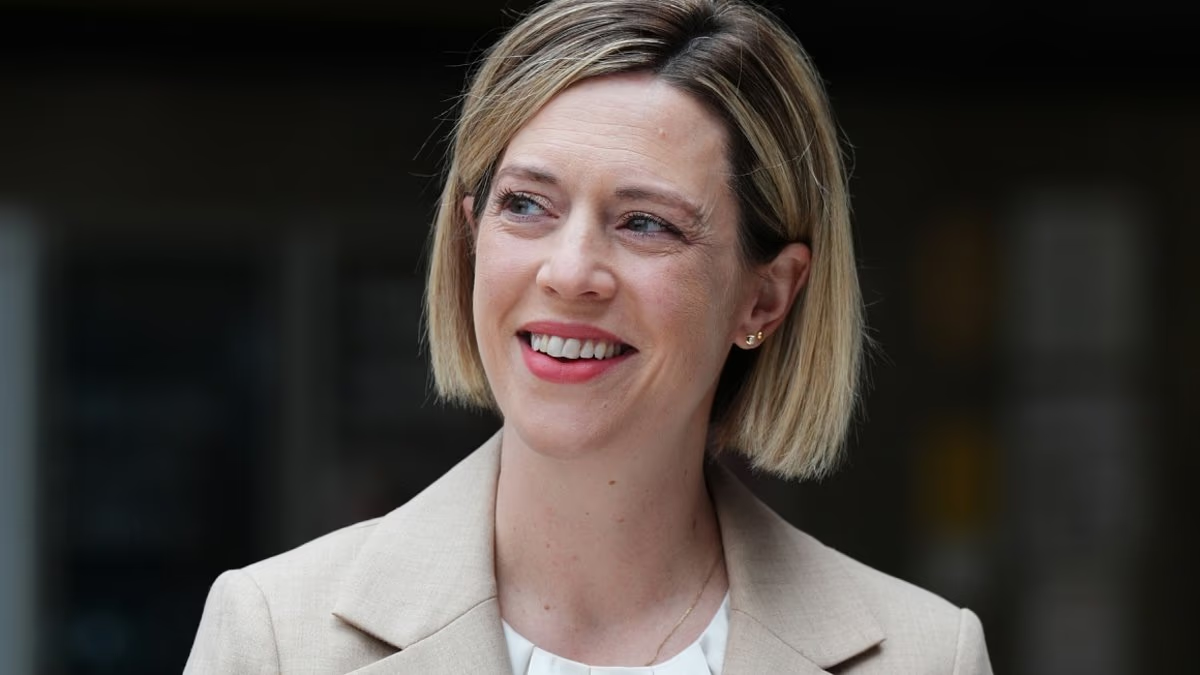
Deputy First Minister Jenny Gilruth said the proposals were designed to open a debate
“Restructuring local government and the delivery of essential council services is far too important to be pursued through half-baked measures.”
He added that the SNP had a “terrible track record” on public service reform and said the Scottish Conservatives would continue pressing Mr Swinney to explain his plans, particularly with local elections due next year.
Under the proposals, the six to ten regional authorities would oversee strategic decisions, while the 120 to 160 community authorities would be tasked with decisions made closer to residents.
The Scottish Government said community authorities would operate within the boundaries of the regional bodies and could be based on recognisable “burgh, county, town, district or island” communities.
Possible examples include Kilmarnock in Ayrshire, Leith in Edinburgh, and Blairgowrie and Rattray in Perthshire, as well as smaller townships, villages and island communities.
Councillors would continue to be elected at ward level and would sit on both the relevant community authority and its associated regional authority.
The Government said the model would strengthen local decision-making and encourage more effective strategic co-operation without requiring another round of elections or adding a separate layer of bureaucracy.
However, Jonathan Carr-West, chief executive of the Local Government Information Unit, described the proposals as “ill-advised and entirely impractical”. He said it was unrealistic to expect councils to hold meaningful discussions and reach an agreement within just 10 weeks.
He argued that the plan appeared unfinished and left major issues unresolved, including the boundaries of the proposed regions and how community authority areas would be defined and determined.
Joe Fagan, Scottish Labour’s local government spokesman, said local services were facing mounting pressure across the country, with too many communities being failed.
“It is clear that change is needed, but it is vital that we get this right,” he said. “The Scottish Government must not rush into another major reorganisation.”

Then First Minister Humza Yousaf with COSLA president Shona Morrison – who said she was engage in constructive dialogue with current SNP leadership
‘Any reforms must be made in partnership with local government and backed up with fair funding for local services.’
Scottish Liberal Democrat local government spokesman Morven-May MacCallum said: ‘Councils should be able to make decisions that are right for their local areas.
‘They should not be subject to another wave of SNP centralisation or cuts, which have already caused so much harm in communities across the country.’
Councillor Shona Morrison, president of local authority umbrella body Cosla, said: ‘Today’s statement gives some clarity to the Scottish Government’s intentions around the future of local government and public service reform.
‘Cosla has been clear that public service reform will only succeed if it is rooted in communities and that any changes to our governance landscape must enhance local democracy and bring decisions closer to communities.
‘Councils will engage with ministers to shape the future of local democracy. We will not support reforms that dilute local democracy or remove accountability from the people we serve.
‘Cosla’s membership will consider these proposals from Scottish Government and continue constructive dialogue on what may be a fundamental restructuring of governance in Scotland.’
Deputy First Minister Jenny Gilruth said: ‘These proposals are intended to provide a starting point to facilitate debate and discussion as we work to deliver reforms that strengthen public services and improve outcomes for the people and communities we serve.’


