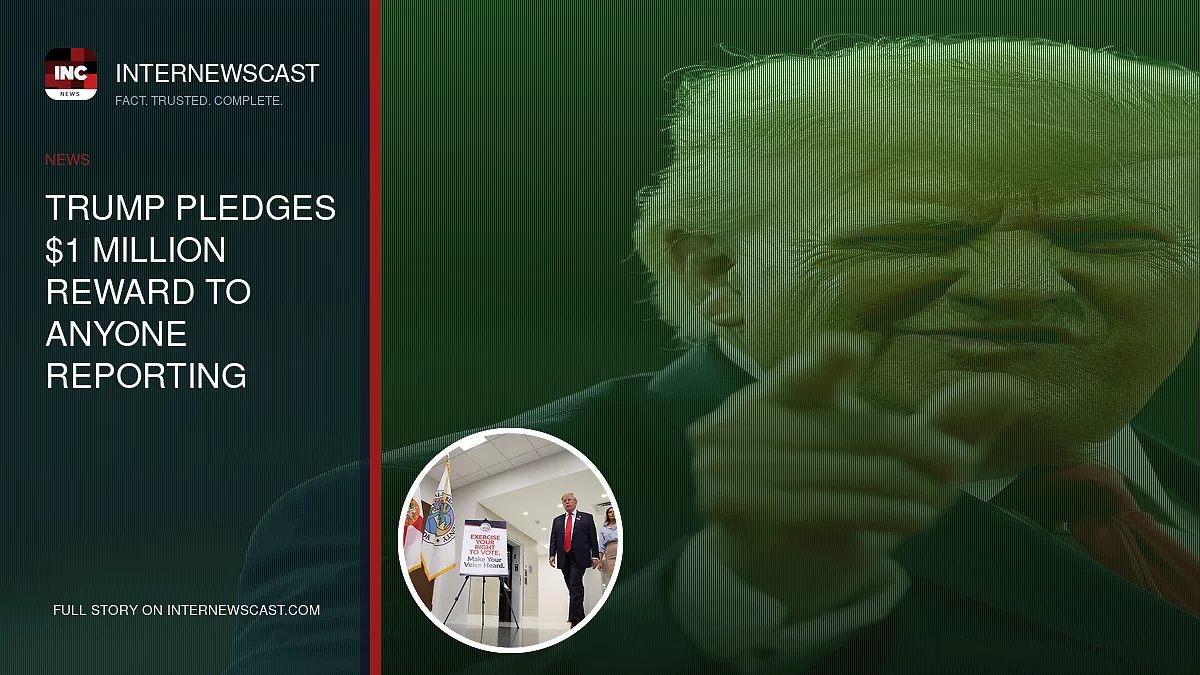

President Donald Trump is pushing an aggressive campaign against alleged voter fraud ahead of the midterms, offering a multimillion-dollar incentive to people who report suspected offenders.
In a Truth Social post Monday, Trump said he would pay $1 million to anyone whose tip leads to a suspect’s arrest and conviction.
The president did not identify the source of the reward money or say which government agency would oversee the payments.
Under federal law, certain election-fraud offenses—including casting a fraudulent ballot or paying another person to vote in a federal election—can carry prison sentences of up to five years.
The announcement followed the administration’s launch of a separate $25 million whistleblower initiative focused on fraud. Officials have not said whether the two programs are related.
Trump’s call for tips comes as he has expressed growing concern that Republicans could lose congressional seats in next Tuesday’s midterm elections.
Texas Lieutenant Governor Dan Patrick offered the same $1 million reward after the 2020 election. The only person known to receive money under that program was Eric Frank, a Democratic poll worker in Pennsylvania who reported a 72-year-old Republican for allegedly voting twice.
Patrick awarded Frank $25,000—far less than the promised $1 million.

“Anybody reporting Voter Fraud in the past Elections, or the upcoming 2026 Midterm Election, will be paid $1,000,000 upon the arrest and conviction of those that created the Fraud,” Trump wrote on Truth Social Monday afternoon

Democrats and voting-rights organizations are preparing to send tens of thousands of election observers to the November midterms, while the Justice Department plans its largest-ever polling-place monitoring operation

Earlier this month, the administration said it had identified more than 20,000 people it believed were noncitizens registered to vote in California and sought to have their mail ballots held while eligibility checks were conducted
More than 153 million ballots were cast in the 2024 election. So far, the administration’s noncitizen-voting crackdown has resulted in charges against 131 people accused of illegally registering or voting as noncitizens, according to a New York Times review of federal court records.
Democrats and voting-rights groups are organizing tens of thousands of observers for the November midterms as the Justice Department prepares its broadest-ever effort to monitor polling locations.
The Associated Press reported Monday that state Democratic parties have trained roughly 10,000 volunteers. Common Cause, a voting-rights organization, has trained an additional 16,000.
A separate coalition of 300 organizations has prepared tens of thousands more election observers.
Several Democratic-led states are taking steps to watch the federal monitors themselves.
Minnesota assigned about 40 state employees to track federal observers during its August primary, and officials say the state expects to continue monitoring them in November.
The preparations come as the Justice Department plans to deploy approximately 1,000 federal monitors to polling sites across the country.
The Republican National Committee is running its own election operation. The committee says it has recruited nearly 22,000 poll workers and is coordinating poll watchers in competitive districts.
Democrats have warned that the expanded monitoring could contribute to voter intimidation. The administration, however, says its observers are intended to verify compliance with federal election laws.
The Justice Department announced in August that it planned to deploy a record 1,000 federal monitors to polling places across the country for the November 3 midterms, raising concerns among Democrats and some election officials about federal involvement in the voting process.
Democrats have been preparing their own response for months.
Senate Minority Leader Chuck Schumer and Senator Alex Padilla launched an election-observer program in June, announcing on October 14 that more than 100 trained Democratic Senate staffers would be sent to polling sites and ballot-counting facilities across nine states to document potential interference and threats against election workers.

Minnesota deployed around 40 state employees to track federal observers during its August primary, and state officials say they expect to continue that effort in November

At the GOP’s convention in Dallas in September, Trump promised a $5,000 payment to every American adult if Republicans hold on to both chambers of Congress in November, urging voters to back his party

House Speaker Mike Johnson has acknowledged that Congress would need to authorize the payments, which could cost more than $1 trillion
Earlier this month, the administration claimed more than 20,000 people it believed were noncitizens were registered in California and sought to have their mail ballots set aside pending eligibility checks.
California officials challenged the federal government’s evidence and refused to comply with the demand as presented.
In July, Trump claimed his administration had found roughly 278,000 noncitizens registered to vote in federal elections, including about 250,000 across California, Nevada, Pennsylvania and New Jersey.
State officials questioned the figures and the administration’s methodology.
This isn’t the first time Trump has dangled a cash incentive during the midterm campaign.
At the GOP’s convention in Dallas in September, he promised a $5,000 payment to every American adult if Republicans hold on to both chambers of Congress in November, urging voters to back his party.
The pledge immediately raised legal questions, with critics accusing Trump of effectively trying to buy votes.
However, election-law experts said the proposal was unlikely to violate federal law because the promised payments would go to all eligible adults, rather than being conditional on how any individual voted.
Trump has continued touting his $5,000 ‘Trump dividend’ ahead of the midterms, but the proposal remains unapproved.
House Speaker Mike Johnson has acknowledged that Congress would need to authorize the payments, which could cost more than $1 trillion.


