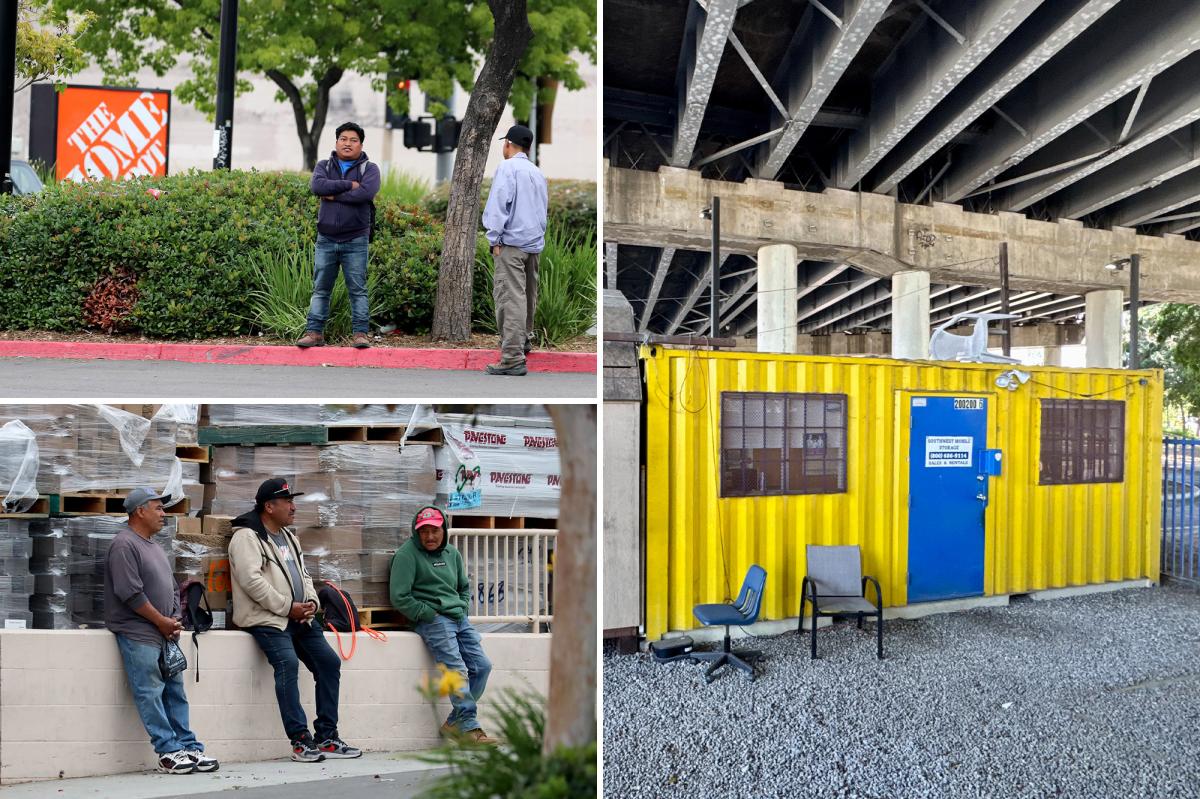

Groups advocating for the rights of undocumented immigrants are calling for increased financial support from Los Angeles residents, seeking millions of dollars to counteract ICE activities and establish work centers near Home Depot locations.
These organizations, currently receiving $1 million annually from the LA City Council, are pushing for an additional $2 million each year. The funds would be used to bolster their efforts against ICE operations and to maintain facilities near hardware stores.
At these centers, day laborers can access amenities such as restrooms, free legal assistance, and job counseling, all supported by nonprofits financed through taxpayer money.
Eunisses Hernandez, a councilmember known for her socialist views, supports the initiative, which would channel more public funds to organizations like the Central American Resource Center (CARECEN) to aid undocumented immigrants.
“These work centers have been vital given the conditions we face,” Hernandez stated during meetings with the City’s Budget and Finance Committee. “That’s why I’m advocating for an increase in funding to $3 million for these centers.”
This request comes amid discussions over LA’s $15 billion budget, where law enforcement officials have expressed concerns about inadequate staffing and resources needed to ensure security for the upcoming 2028 Olympic Games.
Susan Collins, a Sherman Oaks resident who has repeatedly spoken out on city spending, pushed back sharply on the proposal to increase funding for day laborer trailers.
“I’m a first-generation American. I support immigration and value what immigrants contribute,” Collins said. “But when the city tells taxpayers there isn’t enough money to keep streetlights on or fix our roads, this is not the moment to triple funding for these trailer programs.”
Luis Hernandez, from CARECEN which runs an operation at Home Depot in Cypress Park, said demand for his services has surged from illegal workers seeking help.
“The demand for deportation defense has never been greater,” CARECEN rep Diana Camilla told the budget committee in City Hall meetings.
The cost to taxpayers for running just one day worker center at a Home Depot in Cypress Park is $121,684 per year. City records show taxpayers paid $77,000 to set up the center, which was supposed to run up to seven days a week from 6am in the morning.
Pablo Flores, who works out of Cypress Park daily and claims he’s legal, told The California Post the center is only open Monday to Friday between 7am and 3pm.
He says about 20 to 25 workers at that location have been detained by ICE in recent months.
He said the center is staffed with one employee when open — although he wasn’t sure what they did.
Home Depot was pulled into the program by city officials in the ’90s to curb chaos from day laborers gathering outside its stores — even leasing parking spaces to the city where the hubs were built.
When The Post visited a West Los Angeles Home Depot, a worker said he used to regularly see employees from Instituto de Educación Popular del Sur de California, the nonprofit funded by the city to operate at that location, present on site.
He said he rarely sees them anymore and when they do show up, they are often accompanied by attorneys.
At a recent visit to the Westlake Home Depot, The California Post found the official center largely empty, while day laborers gathered across the lot near the entrance, waiting where contractors actually pull up and hire.
Los Angeles City Council already spends $1 million a year paying nonprofits to provide authorized shelters for day laborers — of whom 80% are in America illegally.
The system traces back to the 1990s and early 2000s, when day laborers gathered outside hardware stores and along busy corridors, waiting for work and drawing complaints over traffic congestion, disorder and public disturbances.
City leaders responded by formalizing the system, moving hiring into designated, city-backed spaces with oversight and basic amenities.
City records show Los Angeles required several home improvement stores, through land-use approvals, to set aside space for these centers, in some cases leasing parking lot land to the city for as little as $1 a year.
That approach dragged private companies like The Home Depot into the center of a volatile immigration fight, tying them to enforcement activity they don’t control while exposing them to legal risk and public backlash.
“We aren’t notified that immigration enforcement activities are going to happen, and we aren’t involved in the operations,” a spokesperson for Home Depot told The Post. “We aren’t coordinating with ICE or Border Patrol. We cannot legally interfere with federal enforcement agencies, including preventing them from coming into our stores and parking lots.”
Over time, millions have been poured into a system that still doesn’t function the way it was sold.
Still, progressive policy makers like State Assemblymember Jessica Caloza, who represents the 52nd District covering East Los Angeles, Northeast Los Angeles, and South Glendale, has called for a boycott of Home Depot.
“I urge Angelenos to boycott Home Depot and support our local small businesses,” Caloza has said.
She tied the company directly to the enforcement climate, adding, “This eviction is not a coincidence. The Trump Administration has been terrorizing our state and is in our backyards thanks to Home Depot.”
But some say the system the city set up is why these areas are being targated.
“The city forced this model into place,” said Scott Meyer, a candidate for California’s 30th Congressional District. “They built it, paid for it, and now they’re attacking the business hosting it.”
Meyer said the failed system reflects a broader pattern of city, county and state spending without measured outcomes.
“It’s difficult to find a single idea, policy or program from the Mayor’s office or City Hall that’s achieved any beneficial results,” he said.
The Home Depot, meanwhile, remains a major employer and taxpayer in Los Angeles and througout the state, generating billions in economic activity, supporting more than 292,000 jobs, contributing $4.6 billion in tax revenue, and giving back through nearly $85 million in charitable investments and more than 283,000 volunteer hours.
We reached out to Hernandez and Caloza for comment on the story.
Download The California Post App, follow us on social, and subscribe to our newsletters
California Post News: Facebook, Instagram, TikTok, X, YouTube, WhatsApp, LinkedIn
California Post Sports Facebook, Instagram, TikTok, YouTube, X
California Post Opinion
California Post Newsletters: Sign up here!
California Post App: Download here!
Home delivery: Sign up here!
Page Six Hollywood: Sign up here!


