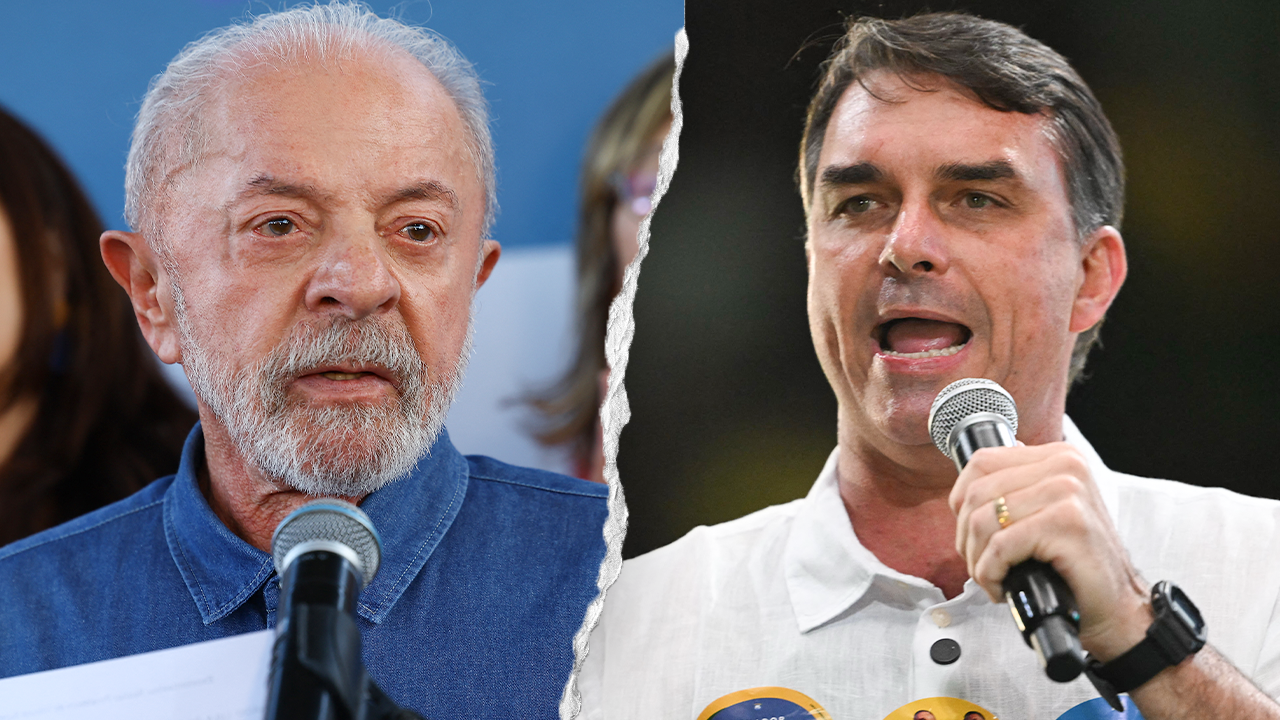

Brazil’s roughly 158 million voters could strengthen Latin America’s conservative shift on Sunday, with the region’s largest country potentially choosing conservative Senator Flávio Bolsonaro as its next president.
The first-round vote three weeks ago delivered a major surprise and challenged pre-election polling. Although surveys had projected President Luiz Inácio Lula da Silva, known as Lula, to finish ahead by a single-digit margin, Bolsonaro captured 47% of the vote compared with Lula’s 45%. Because neither reached an outright majority, the contest advanced to a runoff.
Brazil’s presidential race is unfolding after a series of right-leaning victories across Central and South America, a trend that began with the 2023 election of Argentina’s libertarian outsider Javier Milei.
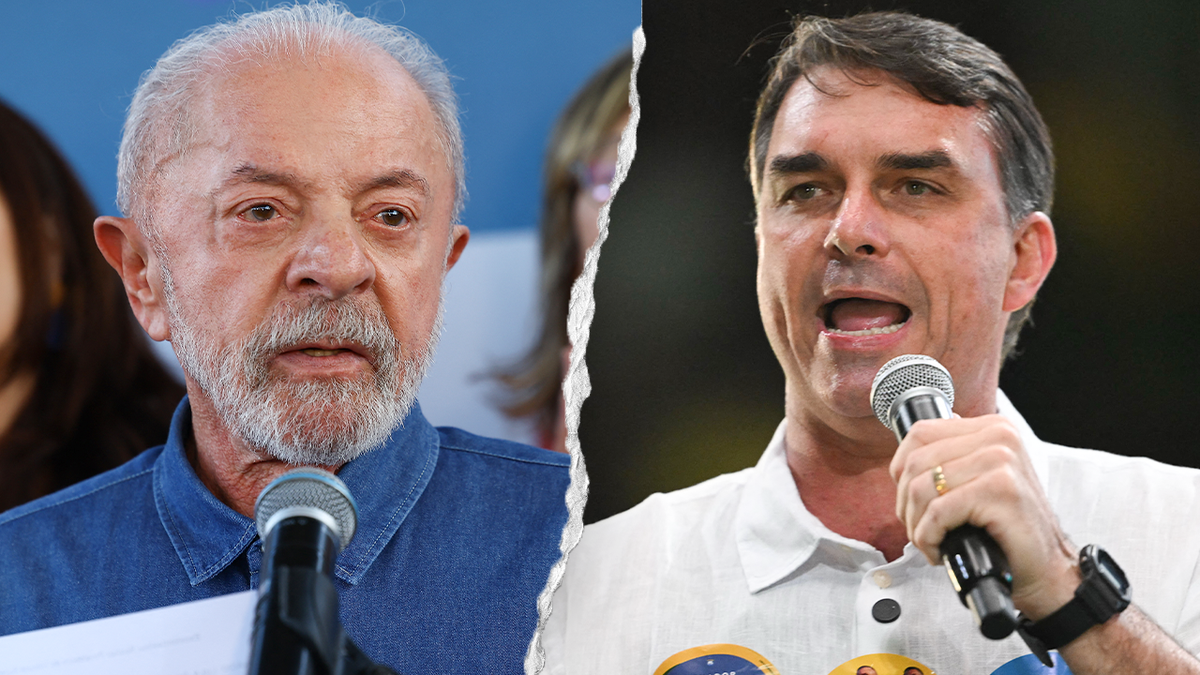
Brazilian President Luiz Inácio Lula da Silva, left, and Sen. Flávio Bolsonaro, right, face off in a presidential election runoff. (Getty Images)
That momentum accelerated in 2025, when voters in Ecuador, Bolivia, Honduras and Chile elected conservative presidents in a broad regional shift to the right.
The pattern continued in 2026. Keiko Fujimori narrowly defeated a left-wing opponent in Peru, and, most recently, conservative attorney Abelardo de la Espriella defeated left-wing Senator Ivan Cepeda in Colombia.
Bolsonaro’s congressional allies also performed strongly, setting the stage for one of Brazil’s most conservative legislatures in years. That could give a Bolsonaro administration crucial support—or provide lawmakers with the numbers to block Lula’s policy agenda.
The candidates faced one another Friday night in their final debate, held in Rio de Janeiro and structured around questions tied to Brazil’s five geographic regions. The exchange included sharp personal attacks, but appeared unlikely to significantly alter the dynamics of an extremely close race.
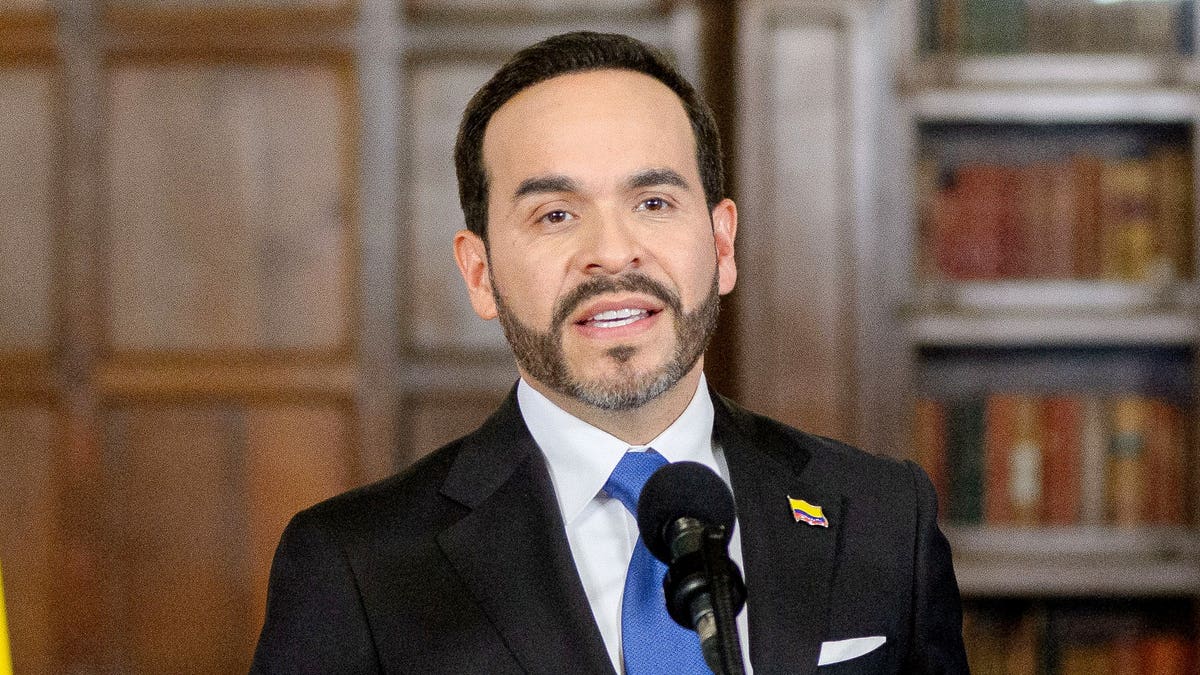
Colombian President Abelardo De la Espriella holds a press conference with the mayor of Bogota and newly appointed city manager Clara Lucia Sandoval in Bogota, on Aug. 25, 2026. (Sebastian Barros/NurPhoto via Getty Images)
President Donald Trump has pointed to the regional results as evidence that voters support his tough positions on crime, security and immigration, as well as his new Shield of the Americas initiative.
Compared with the start of Trump’s second term, the administration now has a substantially larger group of closely aligned governments across the region.
Still, a central question remains: What is driving Latin America’s increasingly forceful rejection of left-wing and progressive politics?
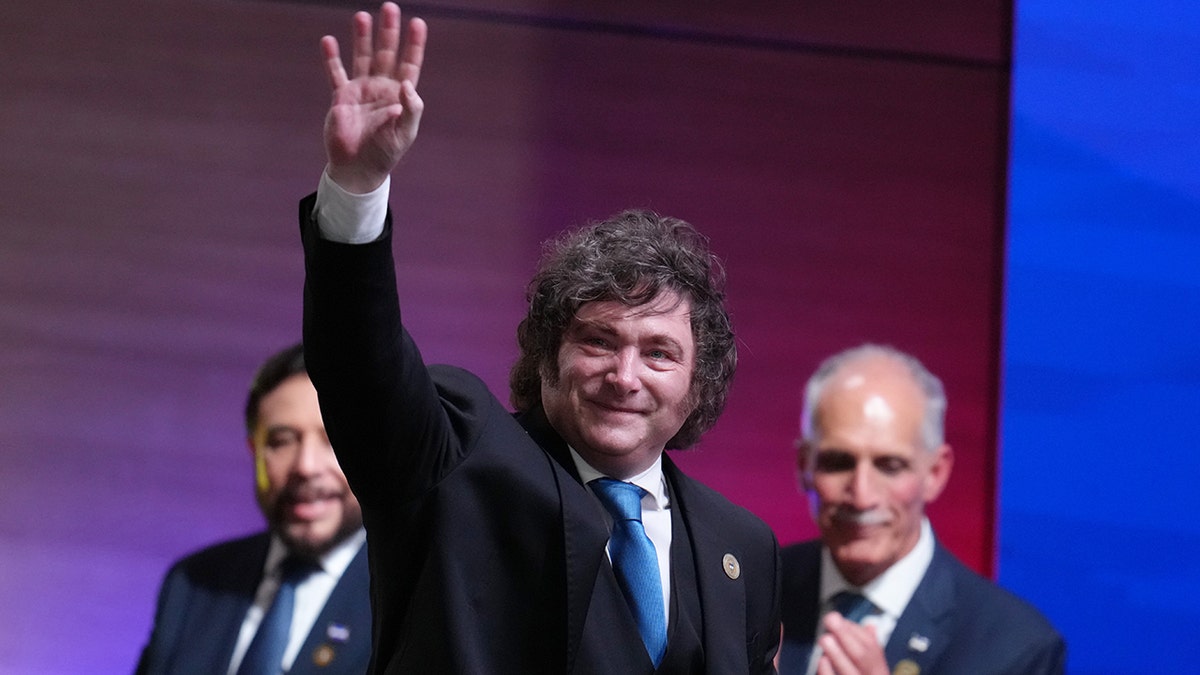
Argentina’s President Javier Milei arrives for the inauguration of Colombia’s President Abelardo de la Espriella in Cali, Colombia, Friday, Aug. 7, 2026. (Matias Delacroix/AP Photo)
Several of these elections have been decided by razor-thin margins. Brazil offers a clear example: Lula defeated Jair Bolsonaro in 2022 by only 1.8 percentage points. Despite deep polarization throughout much of the region, the broader resurgence of conservative politics is unmistakable.
Political analysts say voters appear increasingly frustrated with progressive movements as concerns about public safety intensify. That frustration has boosted support for candidates promising a major expansion of police and military operations against organized crime and drug trafficking.
At the same time, left-wing parties have struggled to turn persistent economic anxiety into electoral support. Inflation and household finances remain dominant concerns, while rising prices for food, housing and energy have pushed many working- and middle-class voters toward conservative alternatives.
The legacy of Jair Bolsonaro is another defining factor in the campaign. Flávio Bolsonaro has promised to secure his father’s release. The former president is currently serving a 27-year sentence under house arrest after allegedly plotting a coup following the 2022 election.
MUST READ: Ed Sheeran Raises $1 Million for Suffolk Children at NYC Benefit Amid Macklemore Row
Lula, meanwhile, was once sentenced to 12 years in prison on corruption charges linked to the notorious Operation Car Wash investigation. Brazil’s Supreme Court later freed him on a technicality, allowing the veteran leftist to make a political comeback and win the 2022 presidential election.
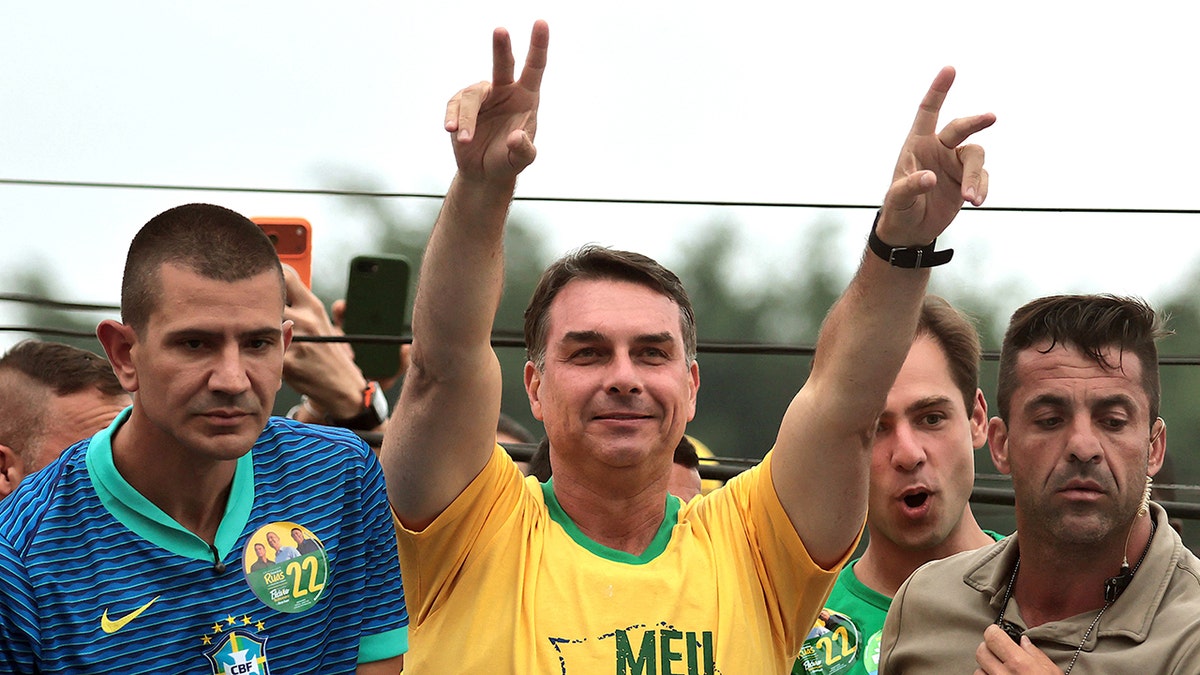
Brazil’s right-wing senator and presidential candidate Flavio Bolsonaro of the Liberal Party (PL) gestures next to federal deputy and candidate for governor of Rio de Janeiro, Douglas Ruas (L) during a campaign rally on the eve of the general election, in Campo Grande neighborhood, in the western zone of Rio de Janeiro, Brazil on October 3, 2026. Brazilians go to the polls on Oct.r 4, 2026 (Douglas SHINEIDR / AFP via Getty Images)
Recent polls have given Bolsonaro a narrow advantage, and he enters the runoff with important structural support. Most significantly, three of the four other leading candidates who failed to reach the second round have endorsed his campaign.
Self-help author Augusto Cury, former Goias Governor Ronaldo Caiado, and former Minas Gerais Governor Romeu Zema all officially backed Bolsonaro in the second round.
Entrepreneur Renan Santos, candidate for the Mission Party, declined to endorse either candidate. However, as his political movement is characterized as free-market and libertarian, these voters are also more likely to trend to Bolsonaro.
Thus, Lula needs to win a significant majority of first round voters who backed right-wing or center-right candidates. It’s a daunting, but not impossible, proposition.
The entire election may hinge on voters who are voting against a candidate, as much as for a candidate.
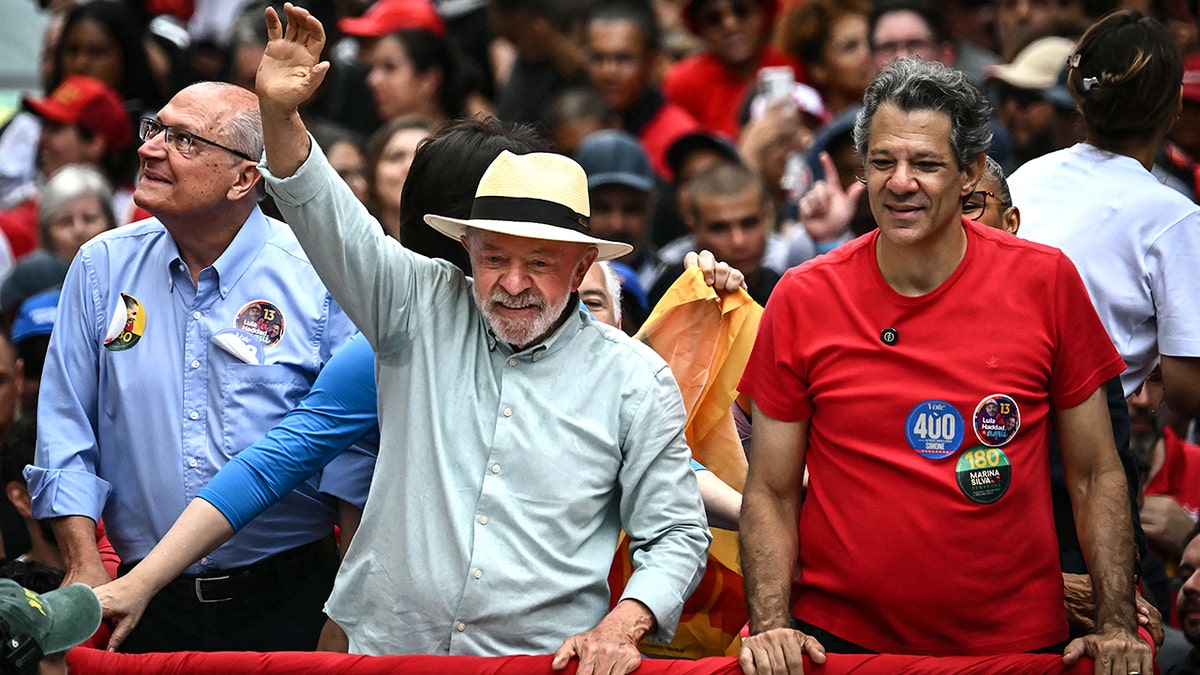
Brazil’s President and presidential candidate Luiz Inacio Lula da Silva (C) waves next to Vice-President Geraldo Alckmin (L) and to his candidate for Sao Paulo’s governor, Fernando Haddad during a campaign rally on the eve of the general election, in Sao Paulo, Brazil on October 3, 2026. Brazilians go to the polls on October 4, 2026, in a tight race led by leftist President Luiz Inacio Lula da Silva and right-wing senator Flavio Bolsonaro, son of former president Jair Bolsonaro, who is serving house arrest. (Luis Robayo/AFP Via Getty Images)
Another question looming over the election: has Lula finally worn out his welcome with the Brazilian electorate?
This will be Lula’s seventh time in 40 years appearing on a presidential ballot: he lost elections in 1989, 1994, 1998, won in 2002, 2006, and 2022.
Lula famously promised to serve only one term when he ran to oust Jair Bolsonaro in 2022.
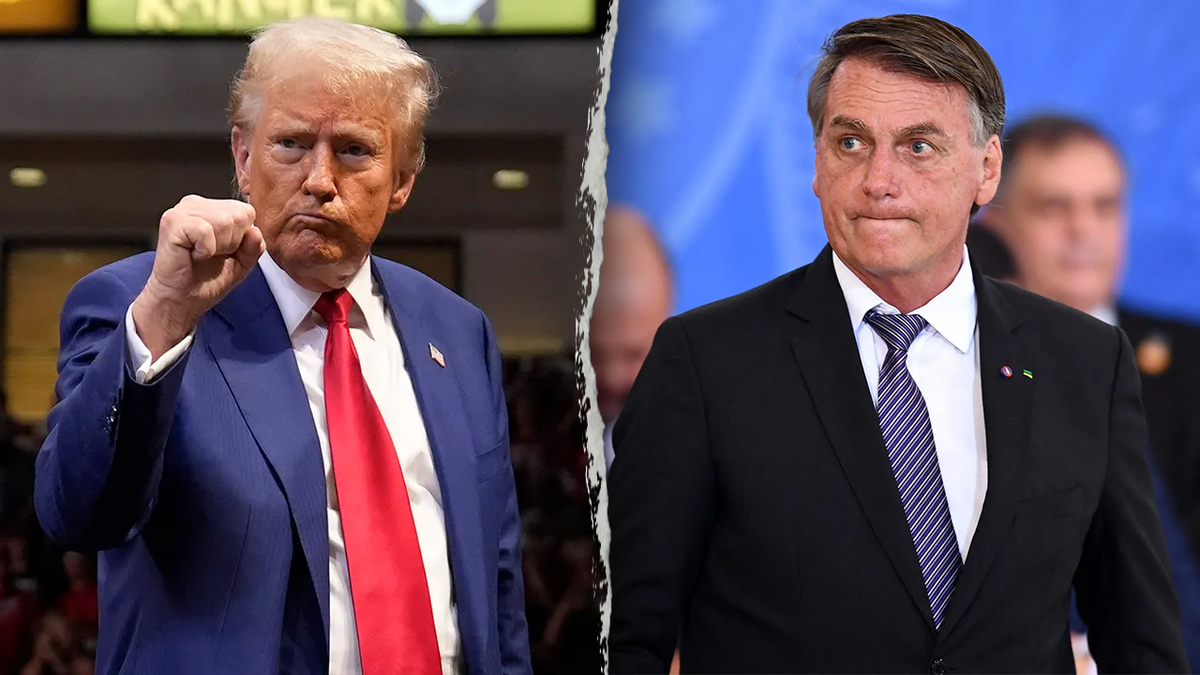
President Trump sent a letter to former Brazilian President Jair Bolsonaro calling for an immediate end to the ‘unjust’ trial against him for allegedly starting a coup. (AP Photo/Evan Vucci and Evaristo Sa/AFP via Getty Images)
On October 25, 2022, just five days before the last second round presidential election, he posted on his official X account: “If elected, I will be a single-term president.”
It was a promise that he did not keep.
Various polls have shown that voters are not happy with the course of Lula’s third term, and even a sizable percentage of Lula backers in 2022 responded with pessimism on the prospect of an unprecedented fourth term.
However, a large percentage of the Brazilian electorate also consistently rejects the prospect of voting for another Bolsonaro for president.
Lula is unquestionably the dominant figure in Brazilian politics over the past half-century. But will his magnetism and charisma be enough to overcome the right-wing resurgence sweeping the continent?