

As the United States gears up to commemorate its 250th anniversary, the iconic bald eagle will be a prominent symbol, embodying the nation’s ideals of freedom and resilience.
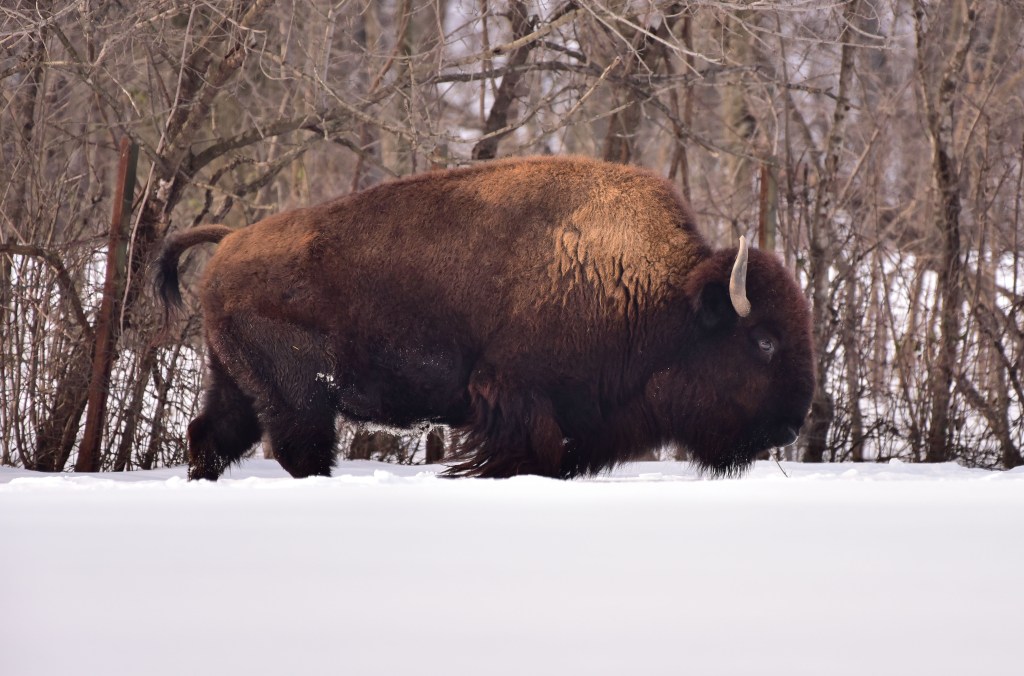
However, on this National Bison Day, it’s time to reflect on another national emblem: the American bison, often referred to as the buffalo. This majestic creature holds the title of the national mammal, and its journey from near extinction to recovery is a significant chapter in American history.
Once numbering around 30 million, bison were pivotal to the ecosystem of the American prairie. Their movements aerated the soil, their grazing promoted plant diversity, and they supported a wide range of bird and insect species. Their dust-bathing habits formed small basins that collected rainwater, providing habitats for amphibians.
Beyond their ecological role, bison were integral to the cultural and spiritual lives of Native American tribes, supplying essential resources such as food, clothing, and shelter through their meat and hides.
By the late 19th century, the bison population had dwindled dramatically due to westward expansion, overhunting, and governmental efforts to destabilize Indigenous communities. From tens of millions, their numbers plummeted to fewer than a thousand, threatening to erase a way of life rooted in the land.
This crisis sparked one of the earliest conservation movements in the U.S. In 1905, William Hornaday, director of the Bronx Zoo, and President Theodore Roosevelt established the American Bison Society, aiming to rescue this species from the edge of oblivion.
Within two years, the Bronx Zoo sent 15 bison west by train to the newly created Wichita Reserve in Oklahoma — a symbolic homecoming and a logistical feat for its time. Trains provided by American Express and Wells Fargo carried more than these majestic animals; they carried an idea that the nation had an obligation to repair what it had nearly destroyed.
A century later, the herds had stabilized, but most surviving bison had been crossbred with cattle, diluting the wild genes adapted over millennia for survival on the North American prairie.
In 2005, working with the Intertribal Buffalo Council (ITBC), the National Bison Association (NBA), and other partners, the Wildlife Conservation Society revived the American Bison Society with a broad mission: to restore some of the original genetically hardy bison stock and the species’ ecological and cultural role along with it.
Since then, working with partners like the Assiniboine and Sioux tribes, WCS has helped return genetically pure bison bred at the Bronx Zoo to tribal lands. When six Bronx Zoo-born bison were delivered to the Osage Nation in Oklahoma in 2022, Osage ranchers affectionately called them “the Bronxies.” For the Osage people, their arrival represented an act of healing that linked ecological renewal with cultural survival.
It was that same spirit of unity that came together to make the bison the national mammal of the United States. In 2011, scientists, tribal leaders, and ranchers united to push for federal recognition of the species. What began as a modest idea grew into a bipartisan campaign — “Vote Bison” — that bridged divides from the Bronx to the Great Plains.
I had the privilege of leading the effort to pull together members of Congress of both parties, whose support reflected a recognition that this animal’s story belonged to every American.
The bill’s House champions at the time ranged from the South Bronx Congressman Jose Serrano to South Dakota’s Kristi Noem, who celebrates her state’s annual Buffalo Roundup, and Missouri’s Lacy Clay, who shared with me that one of his ancestors had been a Buffalo Soldier. Senators included North Dakota Republican John Hoeven and New Mexico Democrat Martin Heinrich. A true political mosaic. President Barack Obama signed the National Bison Legacy Act into law in 2016.
That cooperation continues today, as public lands, tribal territories, and private ranches pursue ways to let bison shape the land again while supporting local economies and communities.
As America nears its 250th birthday, the bison offers a fitting lesson. National strength is not only about the challenges we surmount or the progress we build upon; it’s about what we restore. While the eagle, deft in flight and unbounded in its reach, remains an enduring symbol of our loftiest ideals, the bison embodies our grounded ones — resilience, patience, and the possibility of second chances.
This National Bison Day, look to the Bronx to remember the animal that sustained countless peoples, survived destruction, and still shapes the land we share. In its quiet power lies the best of who we have been and who we might yet become.
Calvelli is executive vice president for public affairs at the Wildlife Conservation Society and served as the campaign director for the American Bison Coalition.