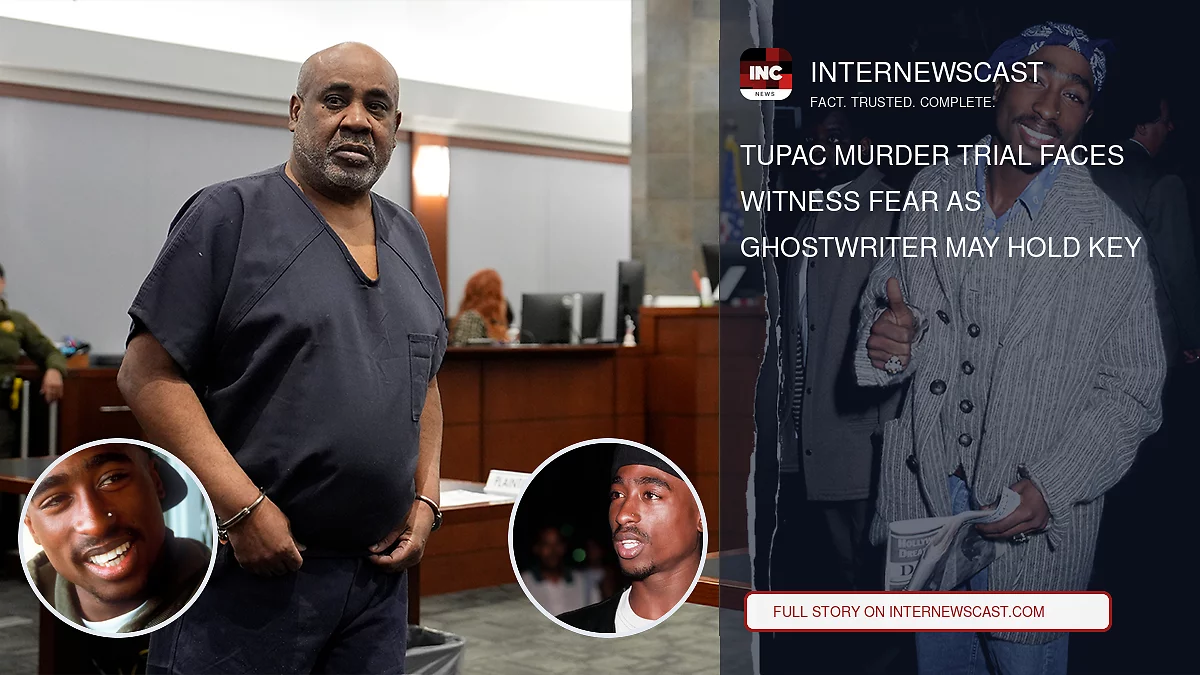

The long-awaited murder trial tied to Tupac Shakur’s 1996 killing may hinge on two highly scrutinized sources: the statements of the man accused in the case and the ghostwriter who helped shape the memoir that renewed law enforcement interest, a retired LAPD detective says.
Despite the street-code warning that “snitches get stitches,” Duane “Keffe D” Davis has repeatedly described his alleged role over the years — including in interviews with police, some conducted while he was working as a confidential informant, as well as in a television appearance and later in his own book.
Davis’ defense team has suggested that ghostwriter Yusef Jah may have embellished or invented portions of the memoir and has maintained that Davis was not part of the fatal shooting. Prosecutors, however, have included Jah among the witnesses they may call at trial.
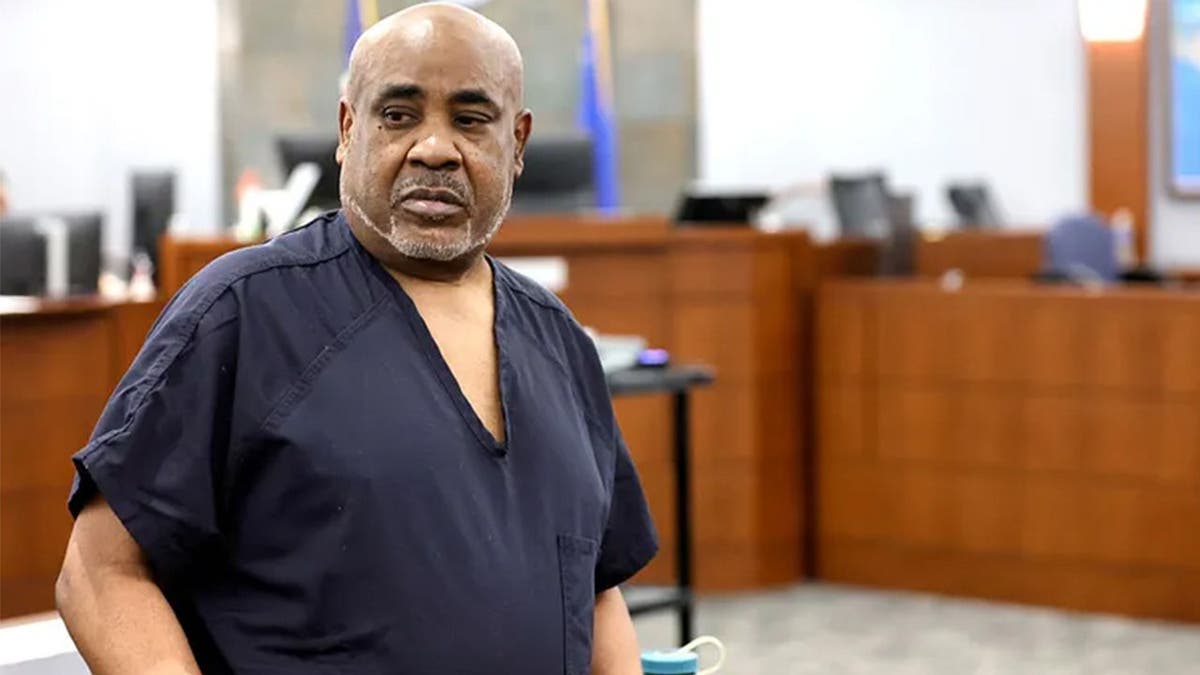
Duane “Keffe D” Davis walks into a Clark County District Court courtroom for a trial readiness status check at the Regional Justice Center on June 17, 2025, in Las Vegas, Nevada. (Steve Marcus-Pool/Getty Images)
“I suspect that the prosecution is going to have to call the writer of this book and ask him point blank and directly: Did you write this based on what Davis told you?” retired LAPD detective Moses Castillo said. “And then if he says yes, and this is what he told me, then it’s gonna be very hard to dispute that fact.”
Castillo told News Outlet that prosecutors still face a difficult path in the Tupac Shakur murder case, largely because the Las Vegas drive-by shooting took place almost three decades ago and cooperation from witnesses was limited in the immediate aftermath.
One key figure, Marion “Suge” Knight, the Death Row Records co-founder who was riding with Shakur and was injured in the attack, has already indicated he does not want to take the stand if summoned. Knight, like Jah, appears on the prosecution’s witness list.
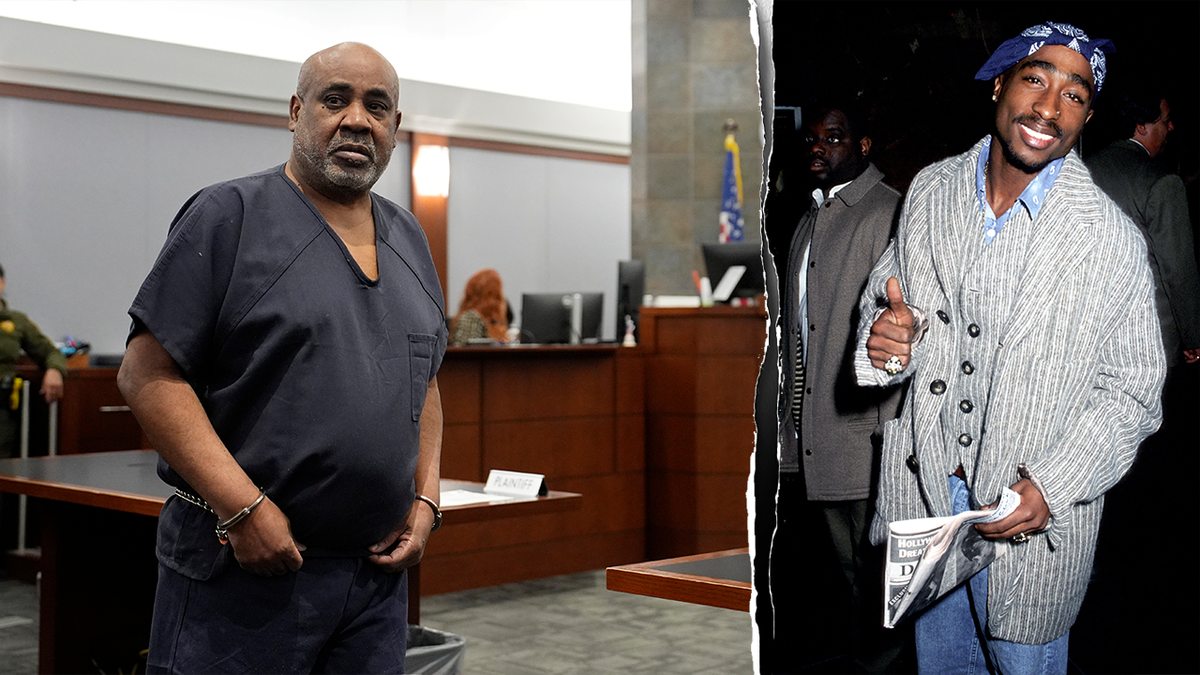
Left: Duane “Keffe D” Davis appears in court for a hearing connected to his indictment in the 1996 killing of rapper Tupac Shakur on February 18, 2025, at District Court in Las Vegas, Nevada. Right: Tupac Shakur attends the 1994 premiere of “I Like It Like That” at the Paris Theater in New York City. (John Locher-Pool/Getty Images, Ron Galella/Ron Galella Collection via Getty Images)
“When you’re in this circle of gangs and gang involvement, you don’t want to be a snitch,” Castillo added. “You don’t wanna be that person that’s being classified as a rat. Because as they say: snitches get stitches, and that is really true.”
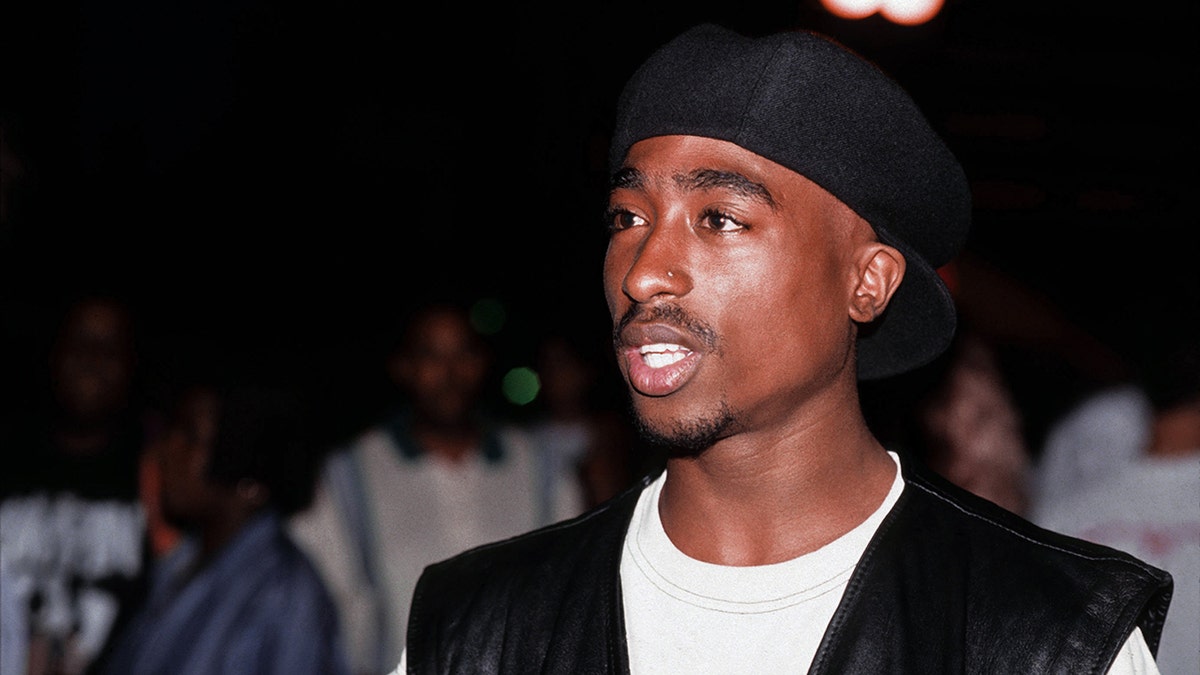
Rapper Tupac Shakur poses for a portrait at Club Amazon on July 23, 1993 in New York, New York. (Photo by Al Pereira/Michael Ochs Archives/Getty Images)
But as Clark County Chief Deputy District Attorney Binu Palal said in his opening statement Monday, one person did talk. That was Davis, who sat for interviews with investigators in 1998, 1999, 2008 and 2009, in addition to sitting for a BET documentary and discussing details in his book.
Prosecutors played some of his statements from 2008 in court on Monday — including his account of obtaining the gun and his claim that his nephew, who has since died, fired the shots.
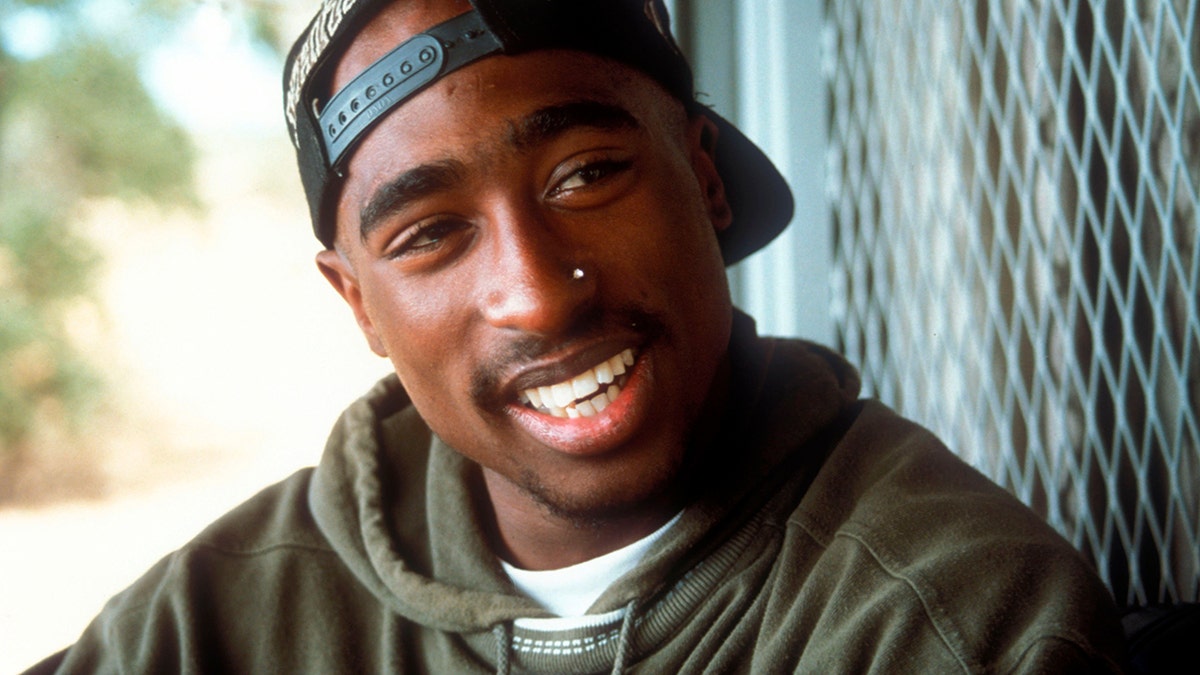
Tupac Shakur in Poetic Justice. Picture by: Shutterstock USA: 1 646 419 4452 UK: 020 8068 3593 eamteam@shutterstock.com World Rights (Columbia/Kobal / Shutterstock)
Defense attorney Michael Sanft countered that it’s up to jurors to decide what the facts are, based on evidence shown in court.
“What they are telling you, they’re representing it to be a fact when it really is fiction. And it’s up to you to determine what the facts are in this case,” he said in his own opening.
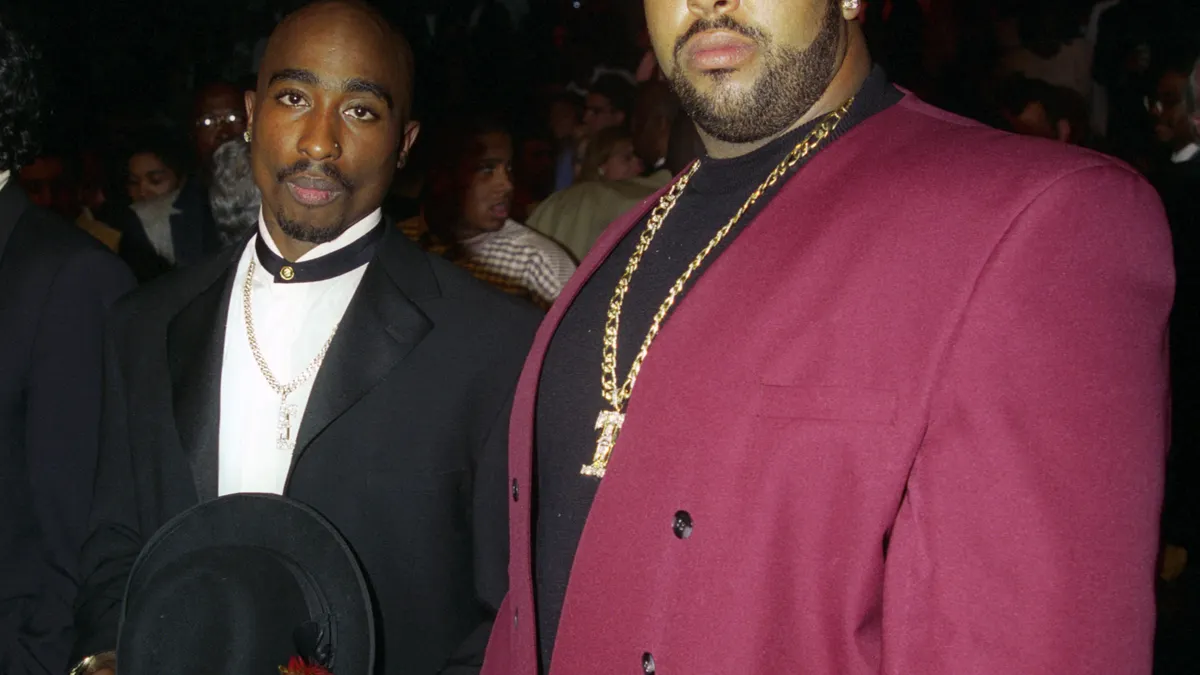
The late Tupac Shakur and Marion “Suge” Knight were pictured in 1996. Knight is currently serving a 28-year prison sentence after pleading no contest to voluntary manslaughter in 2018. (Jeff Kravitz)
Sanft said investigators never vetted the claims in Davis’ book, not even interviewing other witnesses allegedly in the suspect vehicle before they died.
A gunman in a white Cadillac opened fire on a BMW carrying Shakur and Knight on Sept. 7, 1996, on the Las Vegas Strip. Knight recovered from minor injuries. Shakur succumbed to his injuries six days later at 25 years old.