
Share this @internewscast.com
The primary goal of any educational system is to shape young adults into individuals equipped with skills that are in demand in the job market. At the collegiate level, one of the essential skills should be the capacity to engage with differing opinions respectfully and with a sense of humor. The ability to partake in informed discussions is a critical skill, not only in professional environments but in life in general.
Unfortunately, our higher education institutions have drifted from this ideal. Rather than nurturing independent thought, many educators seem more focused on imparting specific viewpoints. Students who hold differing opinions often feel pressured to remain silent.
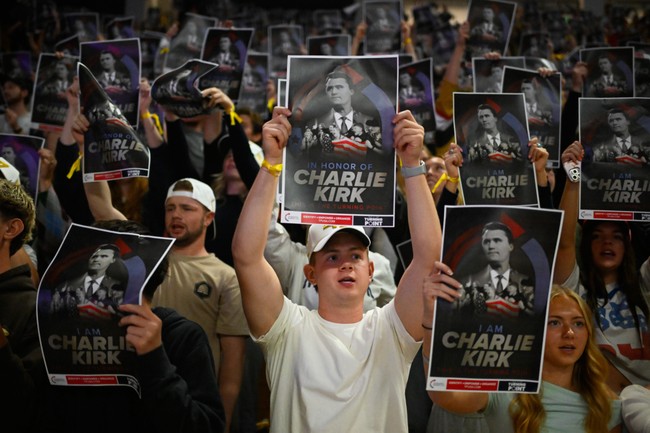
Recent findings from a survey conducted by the Foundation for Individual Rights and Expression (FIRE) highlight a growing discomfort among students regarding “controversial” topics and speakers, particularly in the aftermath of Charlie Kirk’s assassination.
In the context of today’s academic climate, “controversial public events” often implies events with a conservative leaning. Similarly, “controversial subjects” are frequently associated with conservative ideologies. This trend underscores a broader issue within higher education, where the exploration of diverse perspectives is increasingly stifled.
Chief Research Advisor Dr. Sean Stevens at the Foundation for Individual Rights and Expression told The Center Square that Charlie Kirk’s September assassination at Utah Valley University “has had a chilling effect — not just at UVU, but across the country.”
The Foundation for Individual Rights and Expression (FIRE) surveyed 2,028 undergraduates nationwide – including an “oversample” of 204 students from Utah Valley University – in order to “understand how the assassination is shaping student attitudes and behavior.”
Stevens told The Center Square that “some of the data from Utah Valley University students are encouraging – revealing signs of increased tolerance, and even relative trust in administrative protections for free speech.”
Given the modern state of higher education, we can presume that “controversial public events” means “conservative public events.” And, by “controversial subjects,” we can also likely presume they mean “conservative subjects.”