Share this @internewscast.com
The Department of Transportation (DOT) has taken decisive action to close a significant loophole in the commercial trucking industry, which had previously allowed unqualified individuals, including illegal immigrants, to operate large commercial trucks. This move comes in response to several tragic accidents last year involving drivers who were not domiciled in the United States.
“America has long been vulnerable to the dangers posed by unqualified foreign drivers taking advantage of our truck licensing systems,” remarked U.S. Transportation Secretary Sean P. Duffy. “Today marks the end of this safety loophole. Unqualified foreign drivers will no longer be able to obtain licenses to operate 80,000-pound big rigs on our roads,” he asserted.
The new policy specifically targets drivers with only a work permit, who will now be barred from acquiring a commercial trucking license. The Employment Authorization Documents (EADs) these drivers possess do not provide sufficient information regarding their driving records, including past traffic violations, accidents, or license suspensions in other countries.
This reform, which formalizes the policy into federal regulation, builds upon Secretary Duffy’s emergency measures from last September. At that time, he halted the issuance of non-domiciled commercial driver’s licenses (CDLs) to drivers whose driving histories could not be verified.

The urgency of this regulatory change is underscored by a series of deadly accidents last summer. In 2025 alone, 17 crashes involving non-domiciled drivers claimed at least 30 lives, according to DOT statistics. Federal authorities have since intensified their enforcement of trucker licensing rules, noting that at least 30 states had previously issued commercial licenses to drivers who should have been deemed ineligible.
During a press briefing held at the Capitol in Washington, Transportation Secretary Sean Duffy expressed the department’s commitment to enhancing road safety, emphasizing the importance of responsible licensing practices to protect all road users.
The DOT clarified that while states can screen U.S. drivers through national databases for past violations, such as Driving Under the Influence or crash history, they lack the ability to access records of foreigners and illegal immigrants.
Under the reforms, officials will prevent State Driver’s Licensing Agencies (SDLAs) from issuing CDLs to foreign drivers without verifying their driving history, and will end reliance on EADs, which the DOT said has led to more than 30 states to illegally issue tens of thousands of licenses to ineligible drivers.
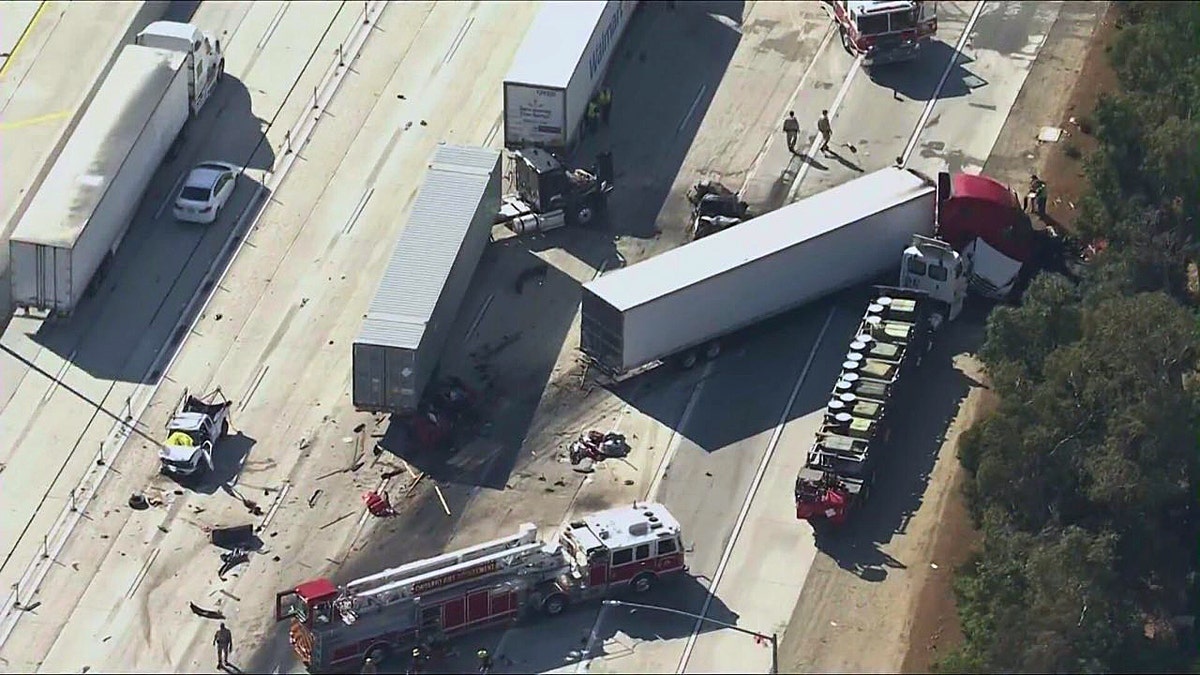
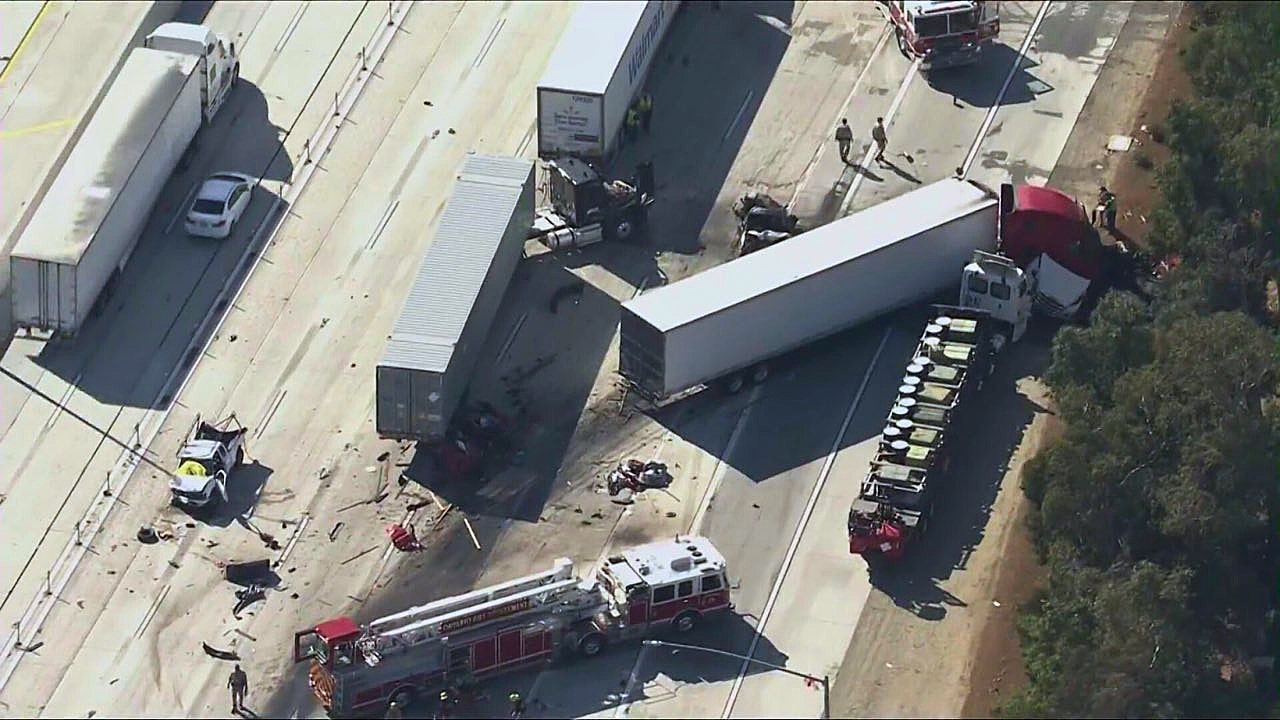
Emergency crews responded to a multi-vehicle crash involving semi-trucks on the I-10 Freeway in San Bernardino County, Calif., on Oct. 21, 2025. (@BillMelugin via X)
While EADs will no longer be accepted as proof of eligibility, applicants seeking a CDL must present an unexpired foreign passport along with the appropriate Form I‑94, the document used to track a noncitizen’s entry and exit from the United States.
Under the provisions, only foreign nationals holding temporary work visas, such as H‑2B, H‑1B, or temporary investor visas from treaty countries, known as E‑2 visas, may be eligible.
In addition, states must verify the lawful immigration status of every applicant by checking the Systematic Alien Verification for Entitlements (SAVE) system.

Photo of Dalilah Coleman, provided by DHS. She was five years old when she was injured in a 2024 California crash and lives with lasting injuries. (DHS)
The DOT emphasized that the crackdown on roadway safety came in response to a string of harrowing crashes, in which truckers holding non-domiciled CDLs engaged in reckless and dangerously negligent driving.
In August, a driver attempting an illegal U-turn on the Florida Turnpike reportedly triggered a crash that killed three people. In October, another driver failed to stop at a California highway, causing an eight-vehicle collision that also claimed three lives, according to the DOT. Last December in Ontario, California, a truck reportedly collided with a train at a marked crossing, killing a crew member.
“This is for Dalilah Coleman and all the Americans killed or hurt in crashes caused by UNQUALIFIED foreign truck drivers,” Duffy said in a post on X, referring to the 5-year-old girl who suffered life-altering injuries after an illegal immigrant driving an 18-wheeler reportedly slammed into her family last September.
“These trucker drivers should NEVER have received a commercial driver’s license. And this rule makes sure that it won’t happen again.”
The final rule is expected to take effect in one month, around March 15.
Duffy praised the reform as one of several steps the Trump administration is taking to bolster transportation safety, including enforcing English-language standards for drivers.
“Under President Trump’s leadership, we are putting the safety of the driving public first,” Duffy added. “From enforcing English language standards to holding fraudulent carriers accountable, we will continue to attack this crisis on our roads head on.”
In May, Secretary Duffy signed an order establishing new guidelines to strengthen English-language enforcement for commercial truck operators. Under the standards, commercial motor vehicle (CMV) drivers who fail English proficiency tests will be placed out of service.