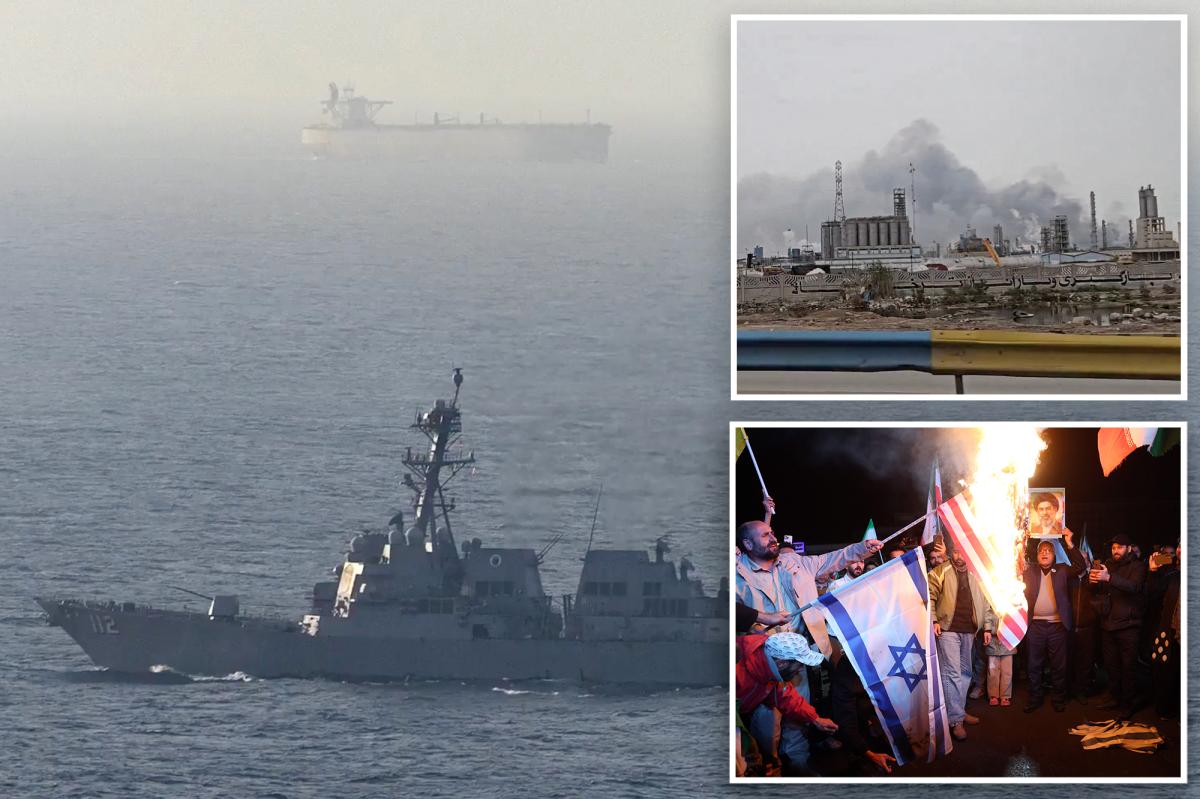


Iran faces a critical deadline of just two to eight weeks to reduce its oil output, a move necessary to avoid potential long-term harm to its oil fields, according to industry specialists.
Due to a U.S. embargo targeting Iranian ports, Tehran is quickly exhausting its storage options. The country has shifted its oil to onshore storage facilities, which can hold up to 122 million barrels, as reported by FGE NextantECA, a consultancy in energy and chemicals.
Currently, Iran produces roughly 2 million barrels daily, leaving it with a mere two months before all available storage is filled, the consultancy noted.
“When these tanks reach capacity, Iran will have no choice but to halt its oil extraction, posing a risk of lasting damage to the oil fields,” explained Annika Ganzeveld, Middle East Portfolio Manager for the Critical Threats Project at the American Enterprise Institute, in a statement to The Post.
Sudden and prolonged stoppages at oil production sites can lead to irreversible harm to fuel reservoirs, complicating efforts to resume operations and achieve previous output levels.
Additionally, both the American Enterprise Institute and Energy Aspects, a fuel analysis firm based in the UK, suggest that Iran’s actual storage capacity might be smaller, potentially leaving the country just two weeks away from reaching its limit.
“The blockade may not have a significant impact on Iranian production in April, but if it continues into May then output would need to be reduced substantially,” Richard Bronze, co-founder of Energy Aspects, told Reuters.
Iran may attempt to lower production for the remainder of the month or deploy oil tankers along its ports as temporary storage space to delay the production cuts.
“Iran’s limited storage capacity highlights the difficult position the US blockade has put Iran in,” the Critical Threats project said.
The US launched a full blockade to Iran’s ports on Monday morning, halting the Islamic republic’s exports traveling through the Strait of Hormuz.
Iran had effectively shut down the strait, with only a handful of ships passing the oil chokepoint each day, the majority of which were linked to Tehran’s shadow fleet.
With the blockade now putting a complete end to Iran’s crude export, the majority of which went to China, Tehran is likely to face steep financial woes on its already pained economy.
A halt to Iran’s oil production, however, would also lead to soaring fuel prices in the global market, adding to the already 12 million barrels a day disrupted by the war.
With Post Wires