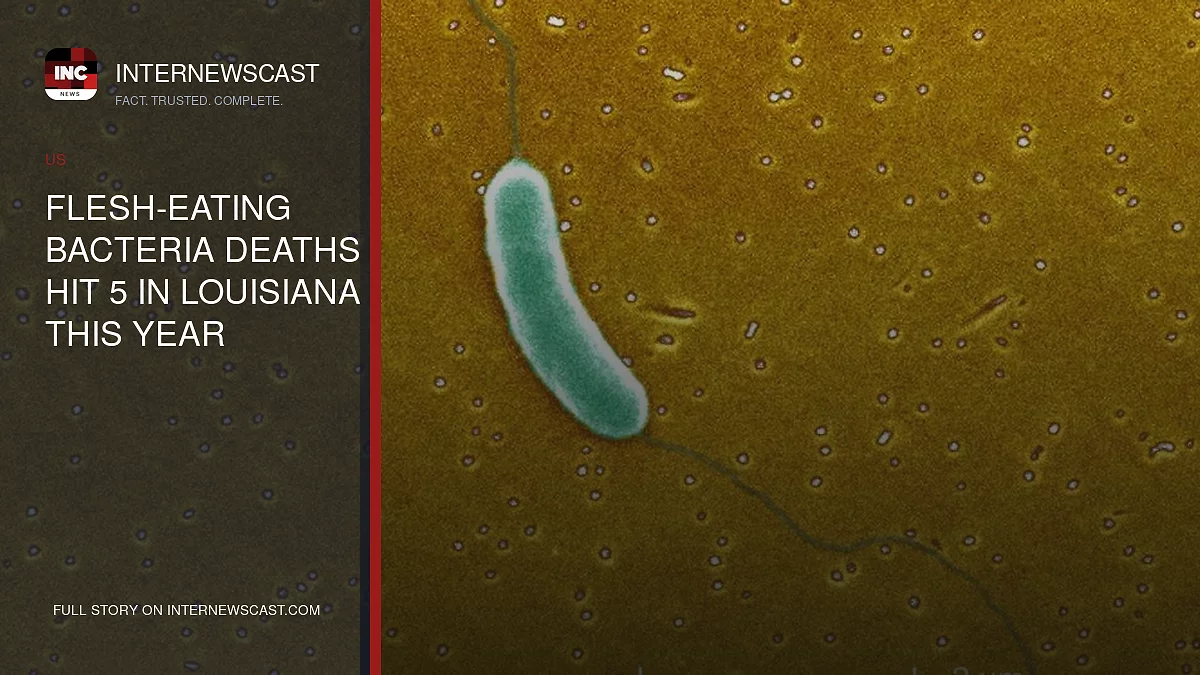

Louisiana health officials say a flesh-eating bacterium found in warm coastal waters has been linked to at least five deaths in the state so far this year.
The Louisiana Department of Health reported Thursday that at least nine Vibrio vulnificus cases have been identified in 2026, with every patient requiring hospitalization.
According to the department, all nine infections occurred after open wounds were exposed to seawater. Each patient also had underlying health conditions, which can increase the risk of severe illness.
The latest figures are well above Louisiana’s typical annual numbers. Over the past decade, the state has averaged seven Vibrio vulnificus cases and one death per year, health officials said. In 2025, Louisiana recorded at least 26 cases and five fatalities.
Florida has also reported fatal cases this year. The Florida Department of Health has recorded two Vibrio vulnificus deaths so far in 2026, after reporting 19 deaths in 2024 and five more in 2025. The agency noted that infections tend to rise after major storms, including Hurricane Helene in 2024, when floodwater and standing water spread through communities.
Experts warn that climate change is adding to the threat, as warming waters create conditions that allow Vibrio vulnificus to appear in areas where it was once less common.
This spring, the bacterium was detected in water samples collected from coastal areas of Long Island, New York.
Vibrio vulnificus is one of roughly a dozen Vibrio species that can cause vibriosis, but it is considered the most dangerous. Data from the U.S. Centers for Disease Control and Prevention show that about one in five people infected with Vibrio vulnificus die, and severe cases can also result in amputations.
Vibrio infections are most commonly contracted between May and October, when ocean water temperatures are warmest, according to the CDC.
They can be contracted when an open wound is exposed to seawater, or through the consumption of raw or undercooked shellfish, specifically oysters, the CDC said.
Those with preexisting conditions are most susceptible to serious illness from Vibrio vulnificus, the Louisiana Health Department said. Those conditions include cancer, liver disease, HIV, thalassemia and those receiving immune-suppression treatments.
Symptoms of a Vibrio wound infection can include fever, skin discoloration, drainage or discharge, or pain and swelling around the wound. Symptoms of a Vibrio bloodstream infection can include fever, chills, dangerously low blood pressure and skin lesions.
Gastrointestinal symptoms of Vibrio can include diarrhea, stomach cramps, nausea and vomiting.
To avoid infection, the Louisiana Health Department advises the public to stay out of salt or brackish water, which are areas where saltwater and freshwater mix. After a possible exposure, wash wounds with soap. When preparing seafood, cook it thoroughly and keep cooked seafood separate from raw seafood.


