Crews search Grand Canyon for hikers after deadly flash floods
Fox News senior national correspondent William La Jeunesse detailed the emergency response at the Grand Canyon after powerful flash flooding turned deadly and left hikers unaccounted for. National Park Service crews used helicopters to evacuate dozens of people while search teams combed the Kaibab Trail and stretches near the Colorado River in an effort to find those still missing.
The flooding also dealt a major blow to the Grand Canyon’s only water pipeline, a critical system that serves millions of park visitors. The damage has created a difficult repair challenge in steep, remote terrain where even routine maintenance often requires helicopter support, while also complicating an ongoing multiyear effort to modernize the aging line.
After aerial assessments, park officials said roughly 40% of the Transcanyon Waterline appears to have been damaged. The 12.5-mile pipeline has experienced dozens of breaks in recent years, and crews were already deep into a repair-and-replacement project costing more than $200 million when the flooding hit.
Officials have not yet determined the full long-term consequences for park infrastructure, visitors or the residents who live and work at the Grand Canyon year-round.
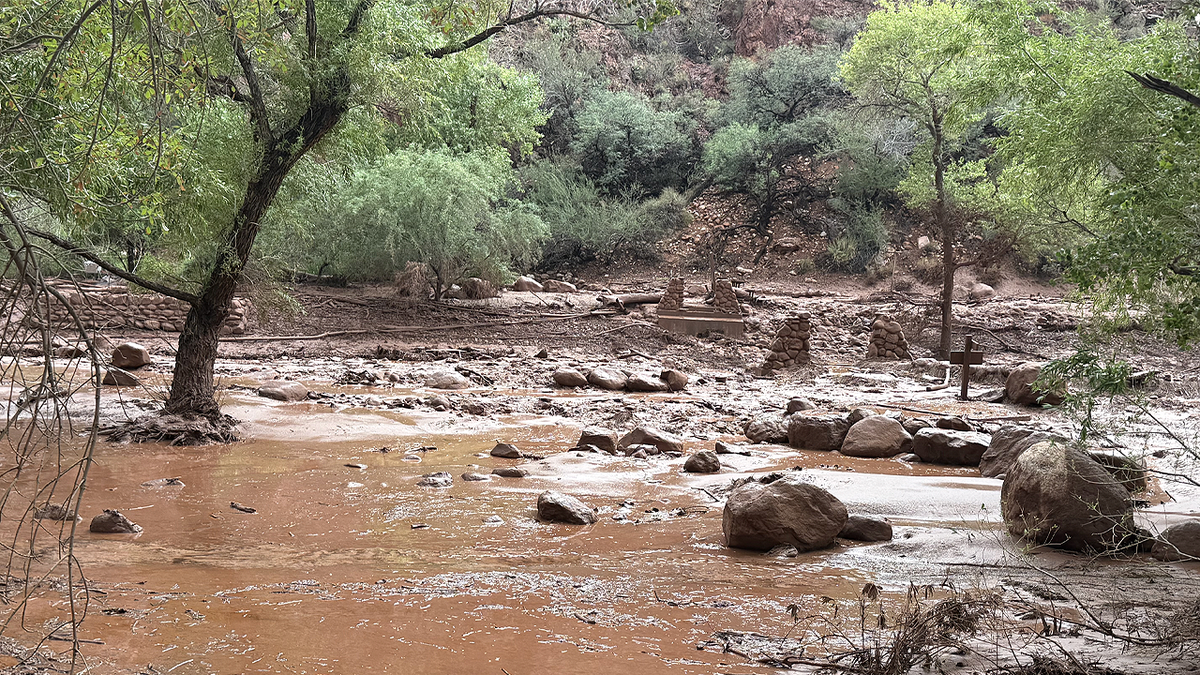
Floodwater and debris filled Bright Angel Canyon following a major flash-flood event near Phantom Ranch on Aug. 29, 2026. (J. Thompson/NPS Photo)
“We anticipate miles of the pipeline being destroyed,” Grand Canyon Deputy Superintendent Brian Drapeaux said.
A complete assessment of the damage is not expected to be finished until Tuesday at the earliest.
Officials said at least two people were killed in the floods, and one person remained missing as of Monday night. About 80 people were rescued over the weekend.
The park stopped overnight accommodations, with officials saying significant water reductions are needed. This includes limiting shower time, turning off the tap while brushing teeth and flushing toilets selectively to protect the limited stored water on the South Rim, where most visitors frequent.
“They have got to keep law enforcement going, they have to keep rescue operations going, backcountry operations, park admin going, the clinic and the campground,” longtime river runner and Grand Canyon hiker Tom Martin said, adding that the park has hauled water in tanker trucks in the past.
The pipeline, which was completed in the 1970s, has broken more than 85 times since 2010.
The pipeline moves water from one side of the canyon, down to its base, across a bridge and back up the other side of the rough landscape. Any attempt to fix a break from rock falls or flash floods is precarious and costly and can take time, so fixing the latest damage will be complicated.
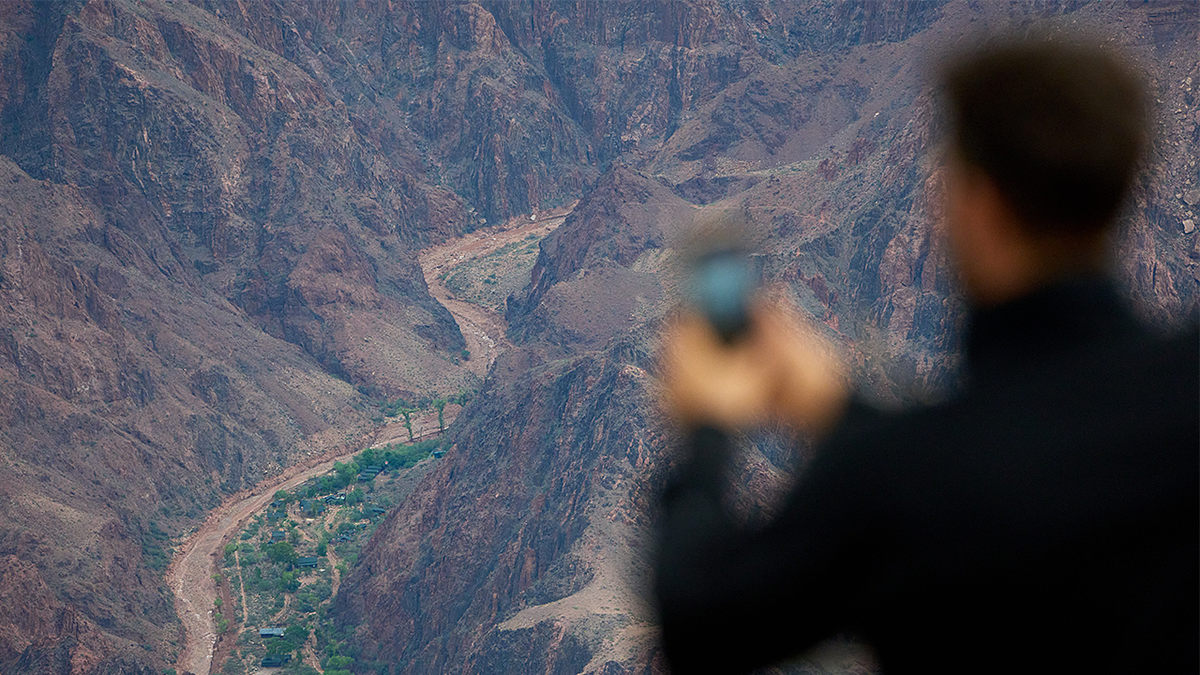
Buildings are seen in a flood damaged Bright Angel Canyon at the Grand Canyon, Monday, Aug. 31, 2026, in Grand Canyon National Park, Arizona. (AP Photo/John Locher)
The pipeline upgrade project, which began in 2023, took more than a decade to design and fund. The project involves installing helicopter pads, building water treatment facilities and replacing several miles of pipeline. It also seeks to move the water intake for the pipeline further down the canyon to Bright Angel Creek, which would put it closer to Phantom Ranch, a popular lodge at the base of the canyon.
A 2018 evaluation of the project said key infrastructure for the intake would be outside of areas likely to flood.
Officials said even basic decisions proved to be complicated.
For example, the original pipe was aluminum, which is lighter and easier to move into the steep canyon but is more susceptible to breaking. Engineers chose a flex-steel material to balance weight and durability.
Even routine pipeline breaks lead to water restrictions. A decade ago, a hotel on the canyon’s rim that offers luxury dining and highlights its history hosting presidents had to reduce dishwashing and use paper plates and plastic utensils.
In 1995, a nearly month long repair on the pipeline required officials to truck in water.
The park had water conservation initiatives in place even before the latest flooding and damage.
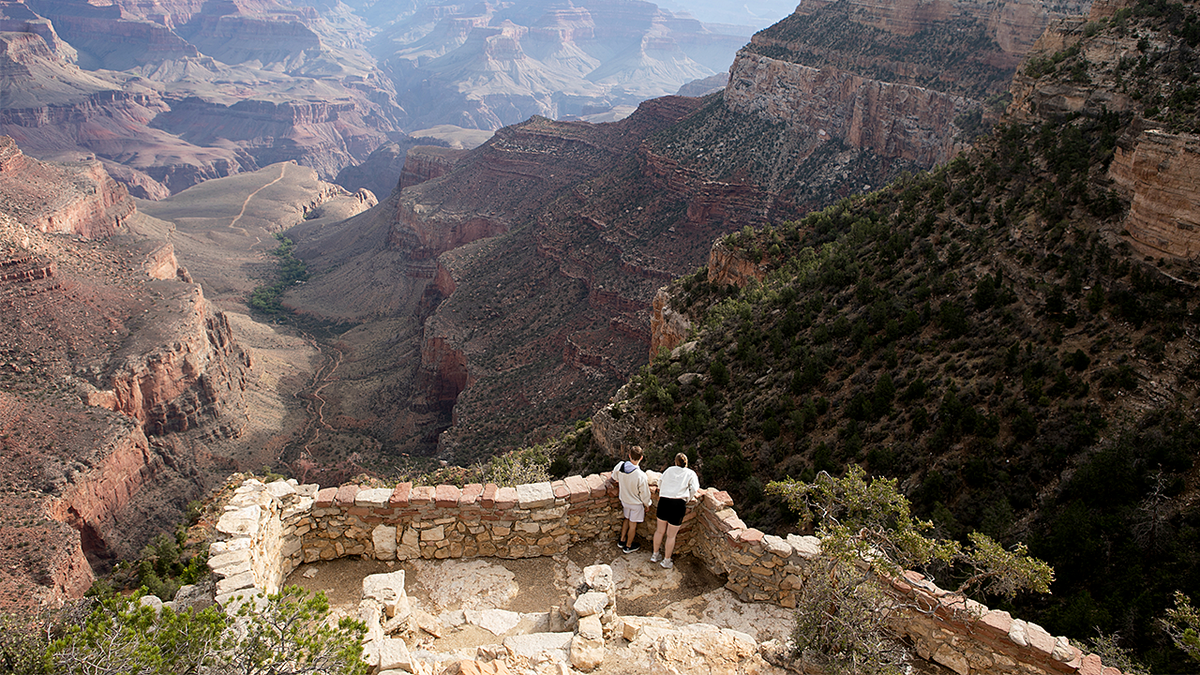
Tourists look down into the Grand Canyon off of the south rim, Monday, Aug. 31, 2026, at Grand Canyon National Park, Arizona. (AP Photo/Josh Biggs)
The flooding has forced parts of the park to close, and more flooding was possible on Monday, according to the National Park Service.
“Consider changing your plans if you were going to hike, boat, or paddleboard to a slot canyon or normally dry wash. If you do still decide to recreate, check in at a nearby visitor center or ranger station,” the park website reads.
Officials previously said that the repair and replacement project would allow the park to meet its water supply needs for at least the next 50 years.
As the original pipeline was nearing completion in the 1960s, more than a foot of rain fell, which flooded the inner canyon and caused 40% of the project to be destroyed, according to officials.