Washington — The House gave its approval on Wednesday to the SAVE America Act, a bill that proposes more stringent guidelines for voter registration and ballot casting. Democrats argue that these changes could potentially disenfranchise millions of eligible voters.
The bill passed narrowly with a 218 to 213 vote. Notably, Rep. Henry Cuellar of Texas was the sole Democrat joining Republicans in support of the legislation.
Having cleared the House, the bill now moves to the Senate, where its future remains uncertain.
Under the SAVE America Act, prospective voters in federal elections would need to provide documentation such as a passport or birth certificate to prove citizenship. Additionally, the bill mandates photo identification at the polls, reflecting a long-standing Republican priority. This proposal is the latest in a series of efforts by House Republicans to have similar legislation enacted.
Republicans praise the bill as a sensible measure to ensure that only citizens participate in elections, despite the fact that cases of noncitizens voting are very rare.
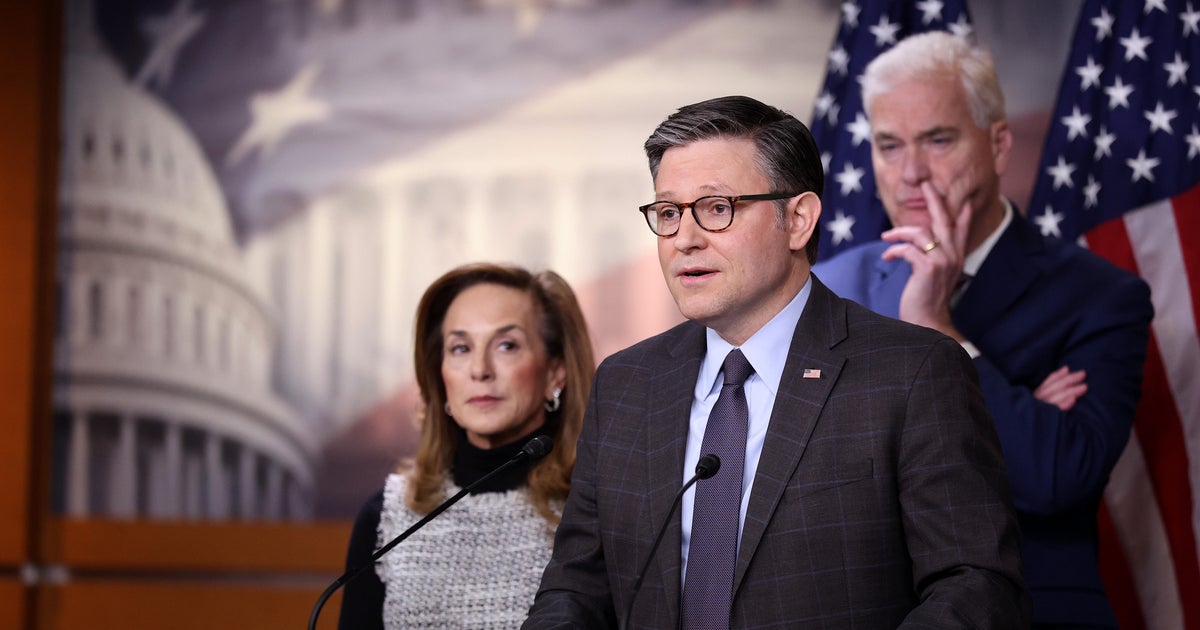
“It’s simply about making sure that the electoral decisions are made by American citizens,” stated House Speaker Mike Johnson, a Republican from Louisiana, on Tuesday.
Johnson pointed to polling that shows high levels of support for showing proof of citizenship and photo ID to vote. An October 2024 poll from Gallup found that 83% of Americans back a policy to require people who are registering to vote for the first time to provide proof of citizenship. And a poll from the Pew Research Center published last August found 83% of Americans favor requiring voters to show government-issued photo ID to vote.
But Democrats and some experts have argued that the bill would have implications for millions of Americans who don’t have access to documents proving their citizenship.
“If you’re one of the 50% of Americans who doesn’t have a passport, or if you’re one of the tens of millions of Americans who can’t quickly access your birth certificate, the SAVE Act could, in effect, take away your right to vote,” Senate Minority Leader Chuck Schumer, a New York Democrat, said on the Senate floor Monday, calling the legislation “extreme.”
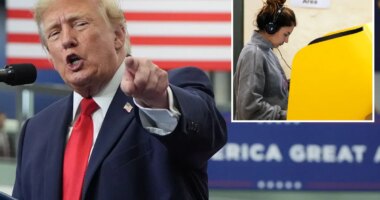
President Trump has called on Republicans to support the legislation, saying “we won’t have a country any longer” if it’s not enacted. Mr. Trump has said it’s essential that all voters show identification and proof of citizenship. But he’s also gone a step further and demanded an end to mail-in ballots, with some exceptions.
Kevin Dietsch / Getty Images 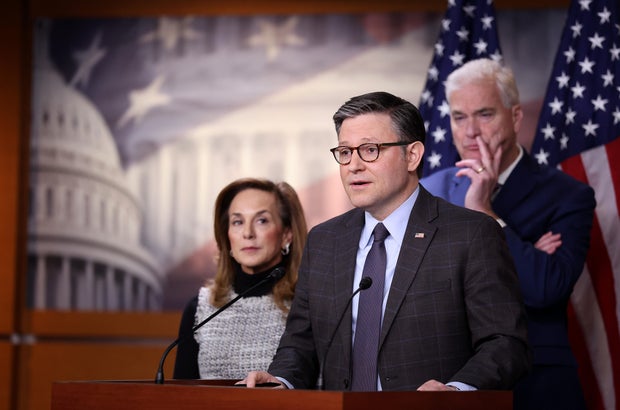
House Republicans celebrated its passage in a news conference after the vote and chastised their Democratic colleagues for their lack of support.
“This has become a bitter partisan fight and it’s madness to us,” Johnson said. “We’re hoping that some Democrats in the Senate will come to their senses and do the right thing for the people.”
House Minority Leader Hakeem Jeffries criticized the legislation Monday and accused Republicans of adopting “voter suppression as an electoral strategy.”
“That’s what the so-called SAVE Act is all about,” he said. “And this version is worse than the last version.”
The New York Democrat insisted that “it’s not going to pass,” adding that if it “squeaks by the House, it’s dead on arrival in the Senate.”
Earlier versions of the bill have passed the House twice, with support from a handful of Democrats. But a 60-vote threshold for advancing most legislation in the Senate makes passage in the upper chamber unlikely, and GOP leaders have yet to take up the measure.
Senate Majority Leader John Thune, a South Dakota Republican, has faced intense pressure in recent weeks to move forward with the bill. The legislation’s proponents have called on him to use a maneuver known as a talking filibuster to sidestep the 60-vote threshold for ending debate, but doing so would eat up valuable floor time and enable Democrats to offer unlimited amendments.
Senate Republicans discussed how to move forward with the legislation at their conference lunch Tuesday, multiple senators said. Sen. Mike Lee, a Utah Republican who’s led the push on the talking filibuster in the upper chamber, said a presentation on the maneuver was well-received.
Sen. Mike Rounds, a South Dakota Republican, told reporters “it’s been a good discussion,” but he called the talking filibuster “very unworkable.”
“Nonetheless, it’s one of those things that some of the folks have got an interest in,” Rounds said. “We’re going to continue to do some more research on it. Reality is, I’d love to be able to see this particular SAVE Act brought in and voted on, and make our Democrat colleagues vote on the issue.”
To reach the 60-vote threshold, Senate Republicans would need support from at least seven Democrats. And already one Republican, Sen. Lisa Murkowski of Alaska, has come out against it, citing concerns about changes to elections too close to the midterms.
“Election Day is fast approaching. Imposing new federal requirements now, when states are deep into their preparations, would negatively impact election integrity by forcing election officials to scramble to adhere to new policies likely without the necessary resources,” Murkowski said on X on Tuesday. “Ensuring public trust in our elections is at the core of our democracy, but federal overreach is not how we achieve this.”
Thune said Tuesday that Senate Republicans are having a “very robust conversation” about the path forward for the legislation.
“How we get to that vote remains to be seen,” Thune added.
Johnson said he met with Thune on Tuesday about the legislation and the Senate leader is “committed” to bringing it up for a vote.
“I don’t tell him how to run the Senate, but I trust that he is committed to it, and they’re trying to figure that out, figure out the right path,” Johnson told reporters Wednesday night.