Put the fireworks aside — this Independence Day, the weather may be the main attraction.
With a punishing heat dome pushing temperatures toward triple digits across the Northeast, it raises a timely question: what was the weather like on July 4, 1776?
As it happens, the Founding Fathers had far more comfortable conditions. Philadelphia saw what many today would call ideal summer weather, according to Fox Weather.
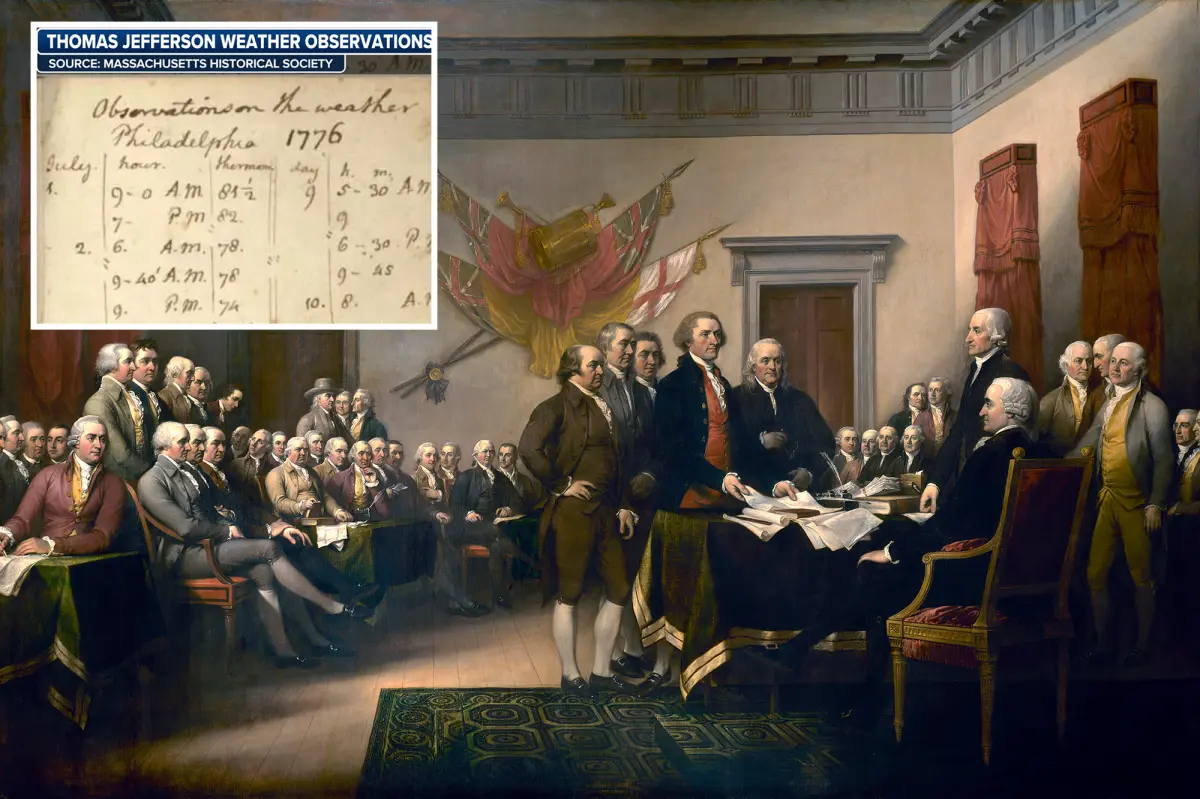
The temperature was 68 degrees Fahrenheit at daybreak, rose to 72.25 by 9 a.m., reached a pleasantly breezy 76 degrees around 1 p.m., and slipped back to 73.5 by evening.
Thomas Jefferson, who would later become the nation’s third president in 1801, was something of an 18th-century weather enthusiast and carefully recorded daily temperatures.
On July 4 — the day the Continental Congress approved the final wording of the Declaration of Independence, formally breaking from Britain’s King George III and setting the United States on its path as an independent nation — Jefferson apparently had enough time to step away for a few errands.
ALSO READ: Unexpected New Chapter: Texas AG's Mistress After Scandal Unraveled
He used the opportunity to leave the Pennsylvania State House, now known as Independence Hall, and purchase a new thermometer from Philadelphia apothecary and bookseller John Sparhawk for three pounds and 15 shillings — about $600 in today’s money — according to CNN.
Jefferson also kept meticulous records of every shilling he spent.
His meticulous bookkeeping showed that on the very same day he also picked up seven pairs of women’s gloves (for wife Martha and the ladies back home in Monticello, Va.) and donated one shilling and six pence to charity.
“It’s a mundane day, except it’s a revolutionary one,” Andrew Davenport, vice president of research at Jefferson’s estate, Monticello, told CNN. “It’s a reminder for us that even during the most frenetic times in our history, that daily business still needs to be attended to.”
The five men from the original 13 colonies chosen to draft a statement of independence included Thomas Jefferson, John Adams, Benjamin Franklin, Robert R. Livingston and Roger Sherman.
Jefferson wrote most of the history-making document between June 11 and 28, before fellow committee members John Adams, Benjamin Franklin, Roger Sherman and Robert R. Livingston polished the final working copy.
Congress adopted the document on July 4, printers rolled off copies the next day and on Aug. 2, delegates formally signed the Declaration under another pleasant summer sky, when temperatures peaked around 80 degrees.
Jefferson recorded a few more expenditures during his time in Philly. On July 6, after drafting a document that would guide the future of America — he bought himself a couple beers.