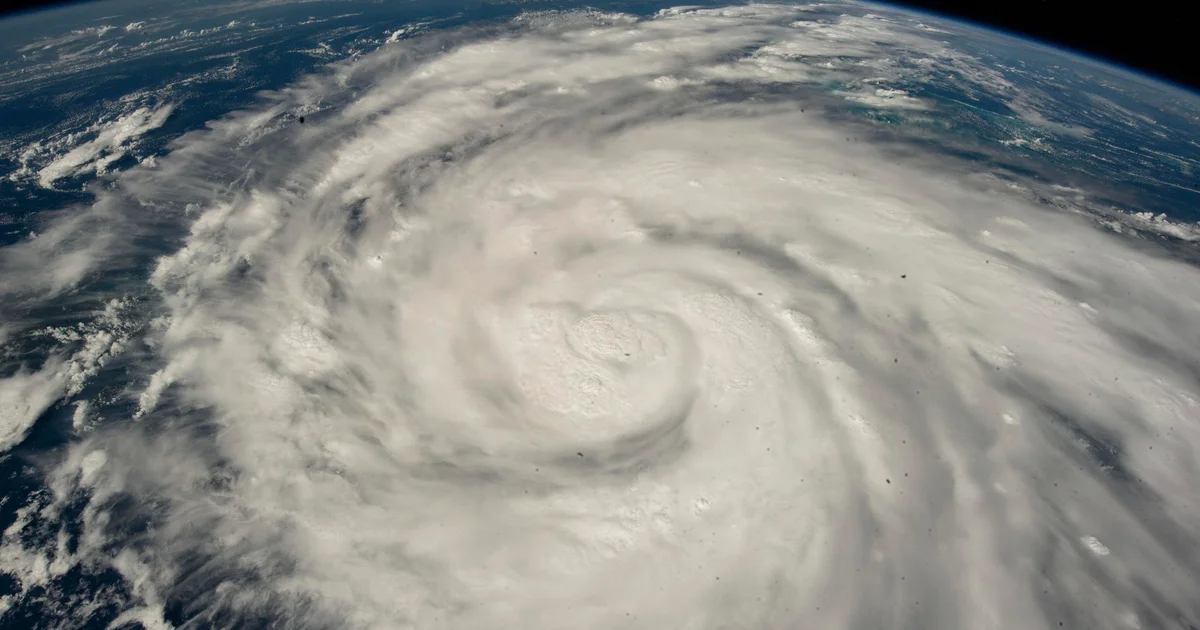

The Atlantic hurricane season officially runs from June 1 through Nov. 30. Storms are classified using the Saffir-Simpson Hurricane Wind Scale, a five-category system based on sustained wind speed. The scale also describes the potential property damage, from “some damage” to “catastrophic.”
So far, the 2026 season has been below average in the Atlantic, largely because of El Niño, a climate pattern associated with warmer Pacific waters. The Pacific, however, has produced more powerful storms, including Hurricane Lowell, which caused flooding in Hawaii, and Hurricane Polo, which strengthened to Category 5 status off Mexico’s west coast.
What is a “major hurricane?”
The National Hurricane Center classifies Category 3, 4 and 5 storms as “major” hurricanes because they can cause “significant loss of life and damage.” Category 1 and 2 hurricanes are also dangerous and can produce serious impacts.
What are the categories of hurricanes and what do they mean?
Here is a category-by-category look at the hurricane wind scale, beginning with the most powerful storms, according to the National Hurricane Center:
Category 5
Sustained winds of 157 mph or higher
Category 4
Sustained wind speed of 130-156 mph
- “Catastrophic damage will occur: Well-built framed homes can sustain severe damage with loss of most of the roof structure and/or some exterior walls. Most trees will be snapped or uprooted and power poles downed. Fallen trees and power poles will isolate residential areas. Power outages will last weeks to possibly months. Most of the area will be uninhabitable for weeks or months.”
- Notable storms: Hurricane Harvey made landfall as a Category 4 storm in Texas and Louisiana in 2017, leaving catastrophic flooding in its wake; 2021’s Hurricane Ida came ashore in Louisiana as a Category 4, where it caused severe flooding, knocked out power to more than a million people and spawned tornadoes as it moved northeast.
Category 3
Sustained wind speed of 111-129 mph
- “Devastating damage will occur: Well-built framed homes may incur major damage or removal of roof decking and gable ends. Many trees will be snapped or uprooted, blocking numerous roads. Electricity and water will be unavailable for several days to weeks after the storm passes.”
- Notable storms: The busy 2020 hurricane season saw late-season Hurricane Zeta strengthen to a Category 3 storm just before making landfall in Louisiana as a Category 2 storm; 2005’s Hurricane Wilma, which had achieved a peak of Category 5, was a Category 3 when the storm hit Florida.
Category 2
Sustained wind speed of 96-110 mph
- “Extremely dangerous winds will cause extensive damage: Well-constructed frame homes could sustain major roof and siding damage. Many shallowly rooted trees will be snapped or uprooted and block numerous roads. Near-total power loss is expected with outages that could last from several days to weeks.”
- Notable storms: Hurricane Floyd made landfall North Carolina in 1999 as a Category 2 storm, causing widespread flooding as it traveled up the coast and leading to the cancellation of schools in New Jersey and New York City; when Hurricane Ike made landfall as a Category 2 storm in Texas in 2008, it had weakened from its peak strength as a Category 4 storm.
Category 1
Sustained wind speed of 74-95 mph
- “Very dangerous winds will produce some damage: Well-constructed frame homes could have damage to roof, shingles, vinyl siding and gutters. Large branches of trees will snap and shallowly rooted trees may be toppled. Extensive damage to power lines and poles likely will result in power outages that could last a few to several days.”
- Notable storms: Hurricane Sandy was only a Category 1 storm when the superstorm came ashore in New Jersey in 2012, its storm surge flooding New York City; 2011’s Hurricane Irene was a Category 1 storm when it hit North Carolina, but had weakened to a tropical storm by the time it returned to land in New Jersey, causing widespread flooding there, in New York and as north as Vermont.
Should there be a Category 6?
In the midst of an unusually ferocious string of hurricanes in 2017, there was some speculation about whether storms could hit a Category 6. There is officially no such thing as a Category 6 hurricane. But the idea of revising or adding to the scale has been discussed by some climate scientists who believe the current categories may not be adequate for increasingly extreme storms in the future.
What category was Hurricane Katrina?
Hurricane Katrina, in 2005, reached Category 5 over the Gulf of Mexico but made landfall as a Category 3 storm, ultimately flooding more than 80% of New Orleans and killing more than 1,200 people — making it one of the deadliest hurricanes to strike the U.S. It is one of the costliest hurricanes in U.S. history, doing more than $75 billion in damage. Louisiana, Mississippi, Alabama and Florida all saw destruction from Katrina.
What category was Hurricane Ian?
Hurricane Ian was a strong Category 4 as it made landfall on Florida’s west coast in 2022. The deadly storm knocked out power to millions. Experts said the storm’s rapid intensification, thanks to warm sea temperatures — and warming seas are linked to climate change, which will likely not only make strong hurricanes occur more frequently, make storms move more slowly and allow them to hold more water, leading to more rain.