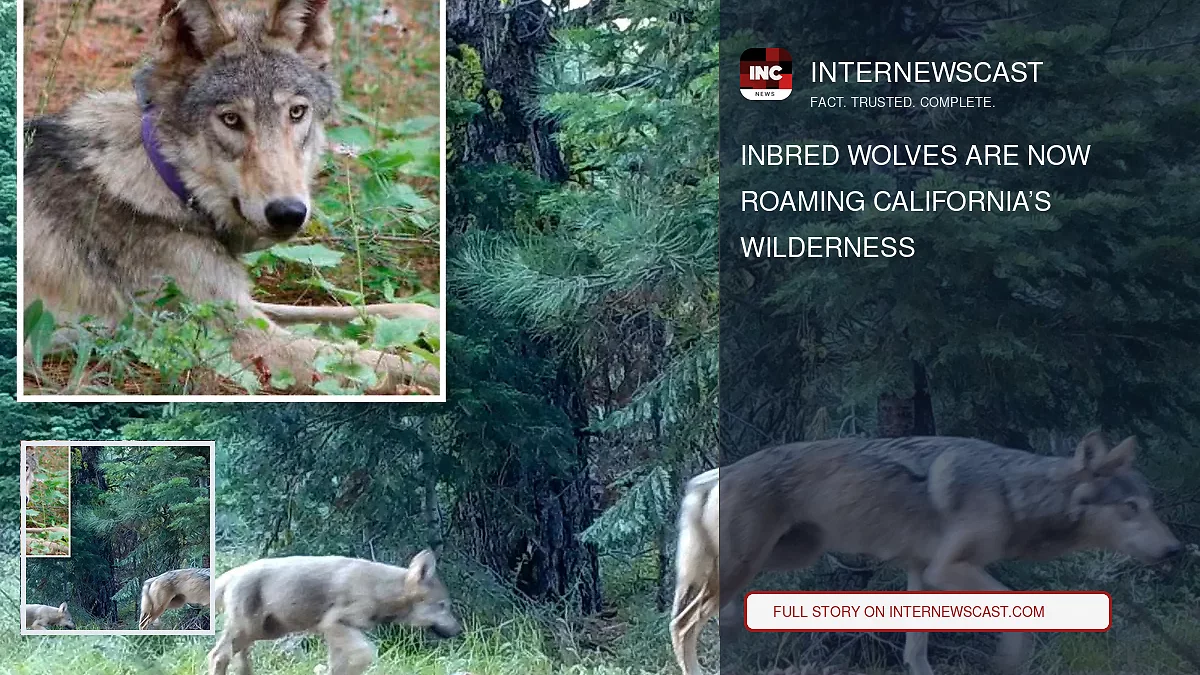

California’s small wolf population is showing signs of inbreeding as the animals struggle to expand their genetic pool.
Nearly one-quarter of the wolves documented in the state were born to sibling pairs from Northern California’s Whaleback Pack, according to California Wolf Watch.
“The first confirmed pack identified with inbreeding in California in 2026 was the Ashpan Pack,” California Wolf Watch said. “Female wolf WHA29F, also known as CA124, a gray wolf born in 2024 to the Whaleback Pack, produced five pups with male wolf WHA07M, also known as CA051, a black male wolf born in 2021 to the Whaleback Pack.”
“The second confirmed pack identified with inbreeding in California in 2026 was the Ice Cave Pack,” the group added.
Records maintained by the California Department of Fish and Wildlife (CDFW) under the title “California’s Known Wolves” also document inbreeding among the state’s wolves. CDFW data identify the Beyem Seyo and Ashcan packs among the groups involved.
Although roughly one-quarter of the wolves are believed to have resulted from inbreeding, one state official said the development does not currently pose an immediate danger to California’s wolf population.
IN CASE YOU MISSED IT: Fed-Up Locals Push E-Bike Ban as Reckless Riders Turn NYC’s Central Park Into Danger Zone
“At this point, I would not characterize inbreeding as an immediate threat to the viability of California’s wolf population,” Axel Hunnicutt, a CDFW gray wolf expert, told KTLA 5.
“California wolves remain connected to the larger western wolf population, and wolves continue to disperse into California from Oregon and breed with animals representing different genetic lineages. We continue to document that gene flow annually,” Hunnicutt added.
Inbreeding is uncommon among established wolf populations, but it can occur in small, isolated groups where finding unrelated mates is more difficult.
Wolves are not the only species known to experience inbreeding after population numbers fall to dangerously low levels. Cheetahs, for example, have faced similar genetic challenges.
“Cheetahs (Acinonyx jubatus) have faced extinction at least two times in the past after their populations were reduced, leading to inbreeding,” National Geographic wrote.