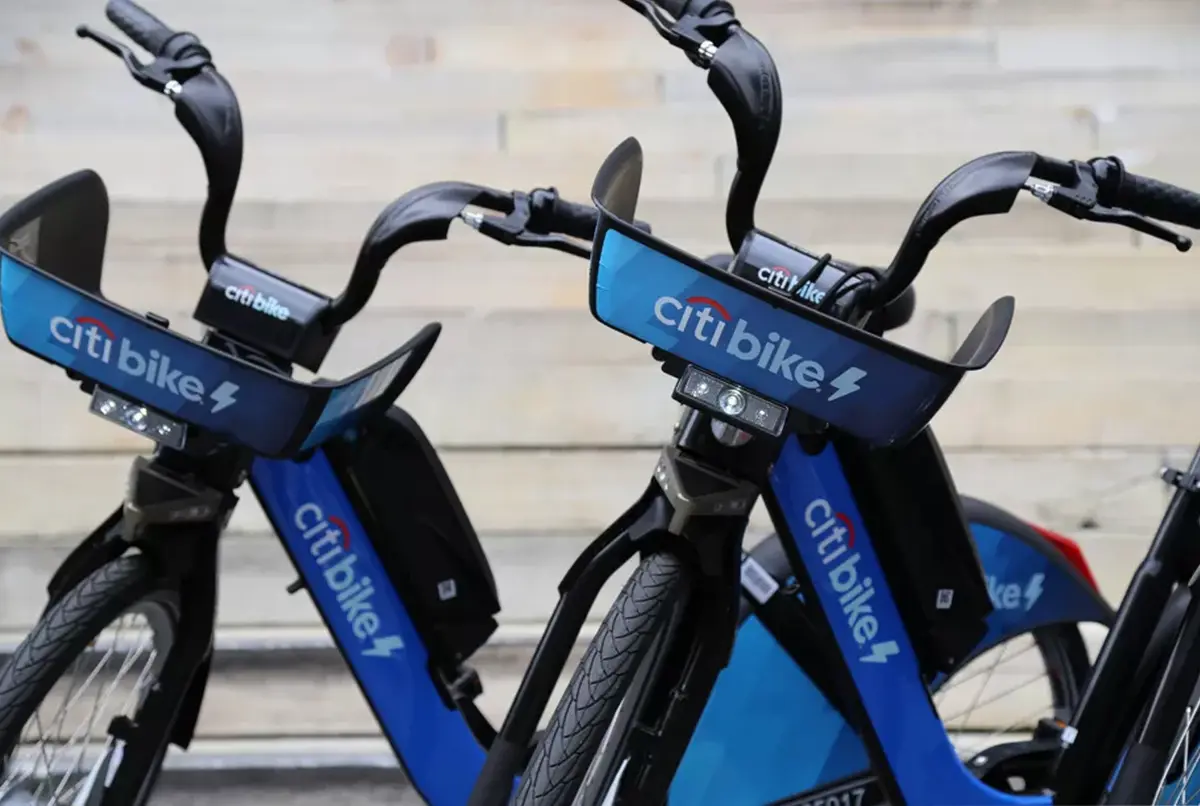
New Yorkers who suffered lifelong injuries in e-bike crashes accused the city of showing more concern for reckless riders speeding through traffic than for the dozens of residents killed or injured in collisions.
The City Council is weighing a series of bills aimed at strengthening enforcement against high-powered e-bikes and scooters. At a hearing Wednesday, however, officials from the Mamdani administration warned that the measures could unfairly affect food delivery workers, whom they referred to as “deliveristas” — “many of whom are immigrants.”
Pedestrians struck by e-bike riders pushed back, saying city officials were losing sight of who is responsible for transforming bike lanes and streets into a dangerous, high-speed free-for-all.
“For some reason, it’s more important for someone’s chicken sandwich to be delivered than anyone’s life,” said Carrie Michaels, who was injured in two separate crashes involving e-bike riders.
During the hearing, the City Council pressed the Department of Consumer and Worker Protection, NYPD and Department of Transportation over what lawmakers described as shockingly lax e-bike policies. Members also reviewed a package of bills intended to address the damage caused by reckless riders.
“We share the council’s goal to rid our streets of unsafe micromobility devices,” DCWP Commissioner Sam Levine said. “However, we have strong concerns of unintended consequences that would most heavily impact delivery workers, many of whom are immigrants with limited English proficiency and other vulnerabilities.”
Levine shifted some responsibility for the crashes away from delivery riders and toward what he called “unrealistic” demands imposed by the companies behind delivery apps.
“I cannot underscore enough that at the end of the day all the training in the world will not be sufficient if a worker goes out on the street and feels that they’re gonna lose their job if they don’t hit these unrealistic times that the delivery apps are insisting on,” Levine said.
Council Member Crystal Hudson, a member of the progressive caucus, expressed a similar concern.
“As a governing body, we have a responsibility to make our streets safer but,” Hudson said. “Perhaps more importantly, we have a responsibility to protect the workers who use those streets every day.”
“I worry that some of the rhetoric around this package risks putting the blame on deliveristas when they are often the ones facing the greatest risks.”
The Council remained divided. Republican Council Member Vicki Paladino criticized the city for allowing the “bike industry” to treat “Central Park as some sort of Tour de France.”
New York City already has rules barring delivery companies from imposing unrealistic delivery deadlines on workers.
Levine’s agency is scheduled to begin enforcing that rule in January. But when questioned about stopping delivery companies from pressuring workers to speed or take illegal routes, he also raised concerns that drivers could be “deactivated” by delivery apps.
CHECK THIS OUT: Dame Esther Rantzen, Broadcaster and Campaigner, Dies Aged 86
“I can assure you that our agencies have been working hand in hand and will continue to work hand in hand to ensure that this is a holistic and coordinated strategy to ensure safety on our streets and to prevent arbitrary deactivations,” Levine said.
Lawmakers are considering nearly two dozen e-bike proposals. Some would restrict high-powered e-bikes, while others would introduce additional licensing and safety requirements for delivery companies.
Speaker Julie Menin is backing a resolution urging the state Legislature to require e-bike registration and licensing through the DMV. She has not supported a proposal from Republican Councilwoman Inna Vernikov that would establish city-level registration and licensing requirements.
Priscilla’s Law would require e-bikes to be registered with the Department of Motor Vehicles and riders to display rear license plates. The measure has emerged as the preferred option among crash victims and their families.
Ahead of the hearing, victims gathered on the steps of City Hall to call for tougher enforcement against e-bikes and the riders they say operate them recklessly.
According to a Council report, police issued only two speeding tickets to e-bike riders between January 2025 and March 2026.
They also issued just five tickets since 2023 to businesses whose workers used illegal scooters to make deliveries, with none recorded this year.
The city once brought at least 1,000 cases a year against delivery businesses for breaking rules such as failing to give workers helmets and ID cards, but since 2021, that number has fallen to fewer than 25 a year.
The DOT admitted it has no clue how many e-bikes are on the street because they are not required to be registered.
The NYPD has, however, seized more than 10,000 illegal mopeds and 1,200 illegal e-bikes so far this year.
Store inspections have slowed and council investigators found this summer that illegal high-powered devices were easy-to-buy in stores and online.
City inspectors checked 410 e-bike shops during a September 2023 crackdown, but have scaled back to only around 15 to 50 per month since then.
There was a devastating string of e-bike crashes this summer, including Gabriel Nacato, 17, who died after his e-bike collided with an SUV near City Hall on July 29, police said.
Several victims testified about the life-altering destruction the lax rules have caused.