
The U.S. Army has postponed a planned demolition at an Iowa ammunition facility until Monday as officials assess concerns over a potentially toxic dust cloud.
The warning came after the Army advised people living near the plant to leave their homes Friday. Officials had expected the plume to be released within hours before the operation was delayed.
The dust cloud could contain lead azide, an extremely unstable compound used in detonators—the small devices that trigger larger explosions inside ammunition.
In an emergency notice issued Wednesday, the Army said it planned to destroy 68 barrels of lead azide. The material has deteriorated over time and was deemed too dangerous to transport elsewhere.
The stockpile weighs almost 10,000 pounds and is being stored at the Iowa Army Ammunition Plant in Middletown.
The original plan called for two controlled blasts beginning at about 1 p.m. Eastern time Friday, but the Army later postponed the operation.
Depending on wind conditions, the detonations could propel a large amount of dust into the atmosphere and scatter fine lead particles across nearby areas for at least an hour.
Army officials said lead concentrations in the air would rise temporarily, but insisted they would remain below the level the U.S. Environmental Protection Agency classifies as hazardous.

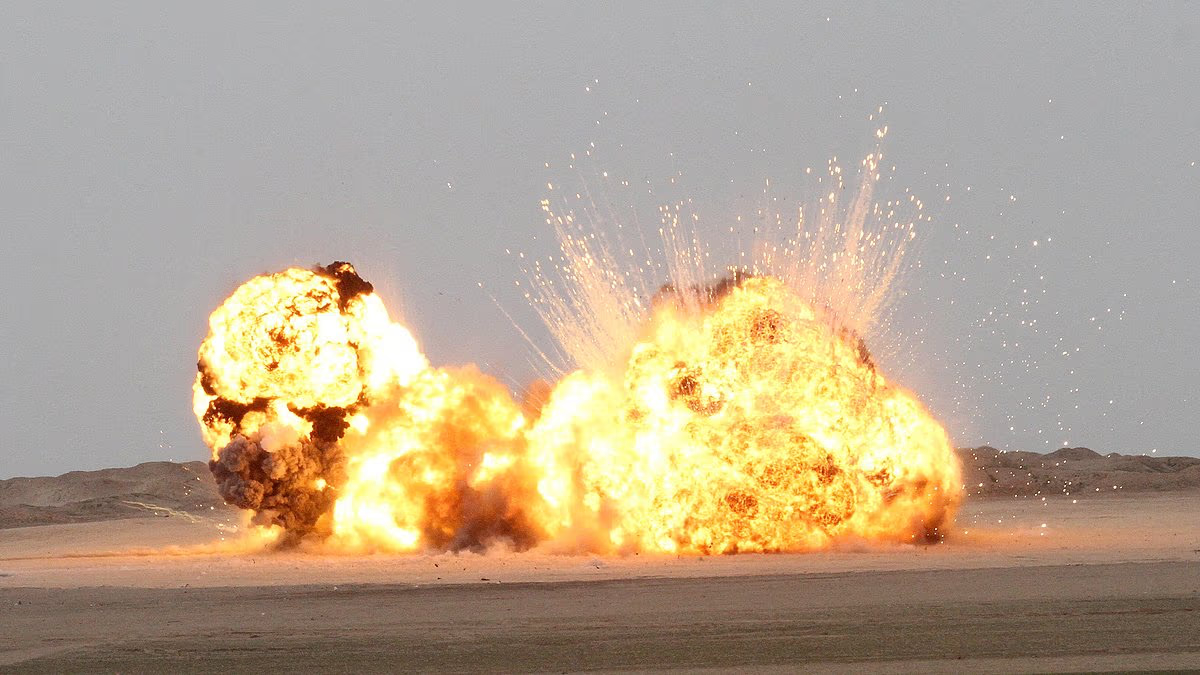
The US Army will set off two controlled explosions in Iowa on November 20 (Stock Image)

The explosion of lead azide is expected to send a toxic plume into the air in Iowa
Military officials noted that the lead azide kept at the site had recrystallized, making it more sensitive to shock, friction and movement.
Moving the stockpile to a more secure location could have further disturbed the containers and set off an accidental explosion while on the road or in a more populated area.
The Army therefore chose to ignite the barrels at its munitions plant in Middletown, which has a population of less than 400 people.
The military destroying old explosives is not a rare occurrence, but this particular situation has been described as an ’emergency’ due to the dangerous nature of lead azide.
As for the fallout from the explosion, meteorologist Ryan Hall told Our News Outlet the forecast on Friday agreed with the Army’s projections for the dust cloud.
CONTINUE READING: Thuy Boland Wikipedia And Age, Whatever Happened To Her?
Hall said: ‘Friday looks sunny and dry with a south wind, so the dust should head north-northeast, up the west side of Muscatine and west of the Quad Cities.’
‘There’s no front or rain in Friday’s forecast. By Friday evening, the wind turns a little more southeasterly, which would push anything still up there more straight north,’ he added.
The Army plans to continue updating their evacuation projections in case there are any last-minute shifts in the wind patterns that could endanger other parts of Iowa.

The explosions will destroy unstable stockpiles of lead azide at Iowa Army Ammunition Plant
Lead is toxic to humans and animals. The greatest danger will be to anyone within the Army’s projected plume within the first hour after the explosions.
There will also be a danger to children who touch any settled dust which falls to Earth later on, potentially covering local playground surfaces, toys left outside, windowsills and other high-traffic areas.
The Army chose to ask residents to evacuate over staying indoors because of the possible danger from shattering glass during the explosions.
According to the military, the blasts will be powerful enough to possibly cause local window damage for residents near Middletown City Park and Butterfly Park.
Although the lead exposure in the air is projected to be far below the hazardous threshold of the EPA, health officials with the CDC have maintained that there is no safe level of lead exposure for children.
Multiple local school districts will be closed on Friday in the general vicinity of the Iowa explosion, including the Burlington Community School District, which serves Middletown.
In a statement, the district said: ‘This decision was not made lightly and comes after conferring at length with neighboring school districts, Des Moines County Emergency Management, and Army officials.’
‘Precautionary cleaning measures, such as washing down playground equipment and exterior surfaces, may be deployed prior to the start of school Monday, [November] 23, depending upon wind direction.’


