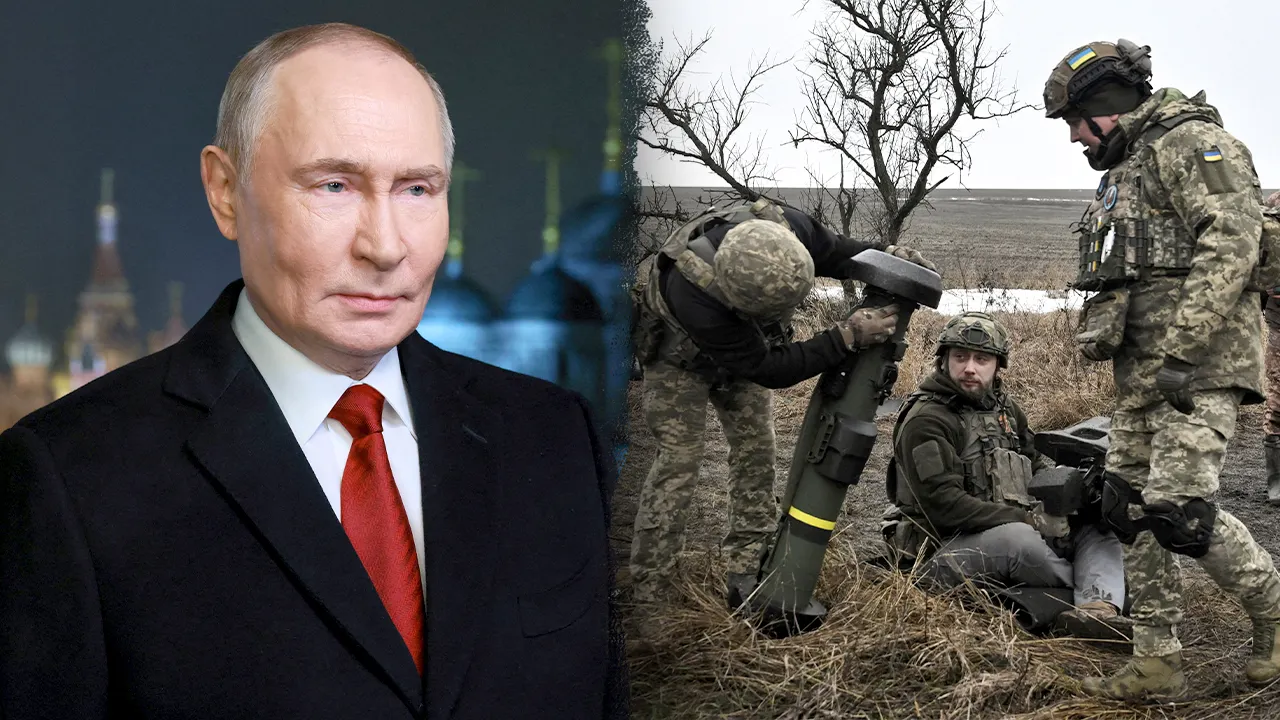

Latvia’s intelligence service is cautioning that Russia may be laying the groundwork for provocations aimed at the Baltic states or Poland, potentially involving drones or other forms of hybrid aggression, as part of an effort to push NATO members to scale back support for Ukraine.
Latvian intelligence told News Agency it has detected signs that Moscow is preparing military-style provocations against Poland or the Baltic countries — not a conventional war, which Russia is currently not positioned to wage, but hybrid operations such as missile incidents, drone activity or other actions meant to deliver a warning: stop backing Ukraine or face problems of your own.
Officials in Latvia say the more urgent danger is not an imminent Russian campaign against NATO, but the possibility that President Vladimir Putin could make a serious miscalculation because institutions around him are presenting the version of events he prefers to hear.
Because Poland and the Baltic states are NATO members, any Russian provocation in the region could rapidly challenge U.S. treaty obligations and raise the danger of a wider clash. The warning also arrives as Washington and allied governments debate the extent of continued military and economic backing for Ukraine, as well as further sanctions on Russia.
Latvian intelligence believes Putin is searching for ways to intimidate NATO countries into reducing support for Kyiv, while also relying on potentially skewed internal assessments — a combination that could lead Moscow to underestimate Western determination.
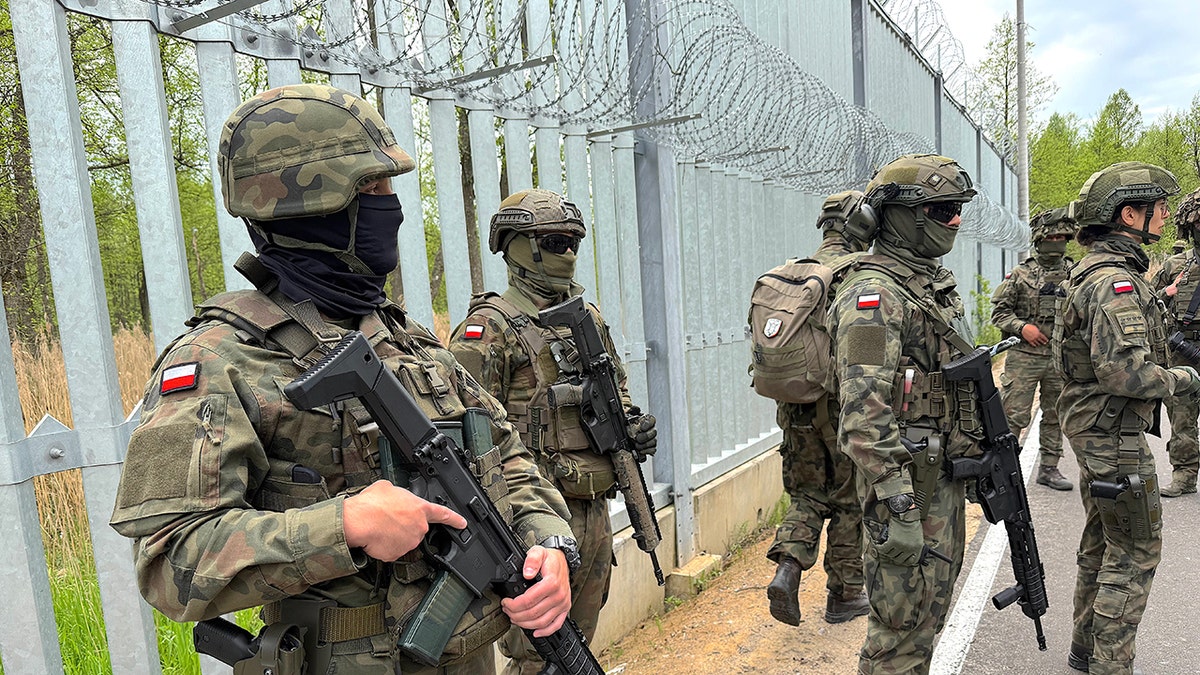
Latvian intelligence has warned that Russia may be preparing possible military provocations targeting the Baltic states or Poland, including drones, missiles or other hybrid tactics. (Efrat Lachter)
According to Latvian intelligence, the greatest risk is miscalculation, as Russian institutions increasingly tell Putin what he wants to hear, creating a dangerous feedback loop that can produce reckless and irrational decisions.
The service added that there are growing indications Putin wants to receive only favorable information, leaving him isolated and making decision-making more hazardous because it is not grounded in the real situation.
The Latvian warning tracks with concerns raised by Polish officials during News Agency reporting in June in Poland, where officials described Russia’s hybrid war against NATO’s eastern flank as already underway. Polish Deputy Foreign Minister Marcin Bosacki pointed to assassinations, drone activity, cyberattacks and attacks on critical infrastructure on NATO territory, including what he described as a Russian-instigated cyberattack on Polish energy infrastructure intended “to black out part of Poland.”
Amb. Krzysztof Olendzki also described the Belarus border as part of a Russian and Belarusian campaign to weaponize illegal migration against NATO countries.
Latvian intelligence also assessed that Western sanctions are having a real impact inside Russia, despite Moscow’s public claims that it has absorbed the pressure.
“Russia says publicly that sanctions do not matter, but its own internal assessments show that sanctions are biting,” Latvian intelligence told News Agency. “They may not change Putin’s mindset, but they limit Russia’s financial resources and thus opportunities and force to make difficult choices regarding recruitment, military spending, and pressure on businesses. Its war economy is a crumbling ‘house of cards.’”
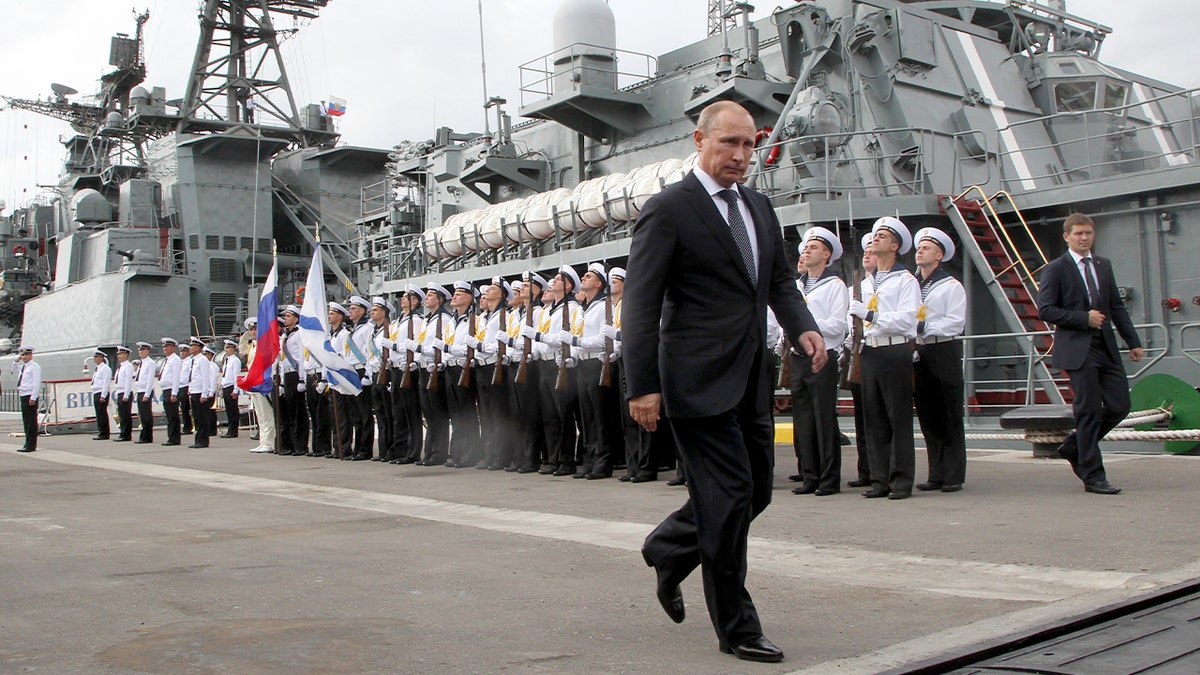
Latvian intelligence also assessed that Western sanctions are having a real impact inside Russia, despite Moscow’s public claims that it has absorbed the pressure. (Sasha Mordovets/Getty)
EXCLUSIVE: Lawsuit Claims Unstable Park Monument Crushed 3-Year-Old Boy
The assessment comes as Latvia’s Constitution Protection Bureau, known as SAB, released a public report detailing how Russia is intensifying “lawfare” against the West — using courts, legal claims and international institutions to pressure Western governments, weaken support for Ukraine and create possible justification for more aggressive actions.
The report outlines Russian efforts to study Iran’s experience challenging Western sanctions through international legal mechanisms.
Russian experts have analyzed Iran’s 2016 case against the United States at the International Court of Justice and are looking for ways to adapt similar tactics against Western countries, according to the Constitution Protection Bureau.
“If you want to push Russia toward a peace deal that is acceptable to Ukraine and the West, sanctions are the right mechanism,” Latvian intelligence said. “We need more international pressure on Russia through sanctions.”
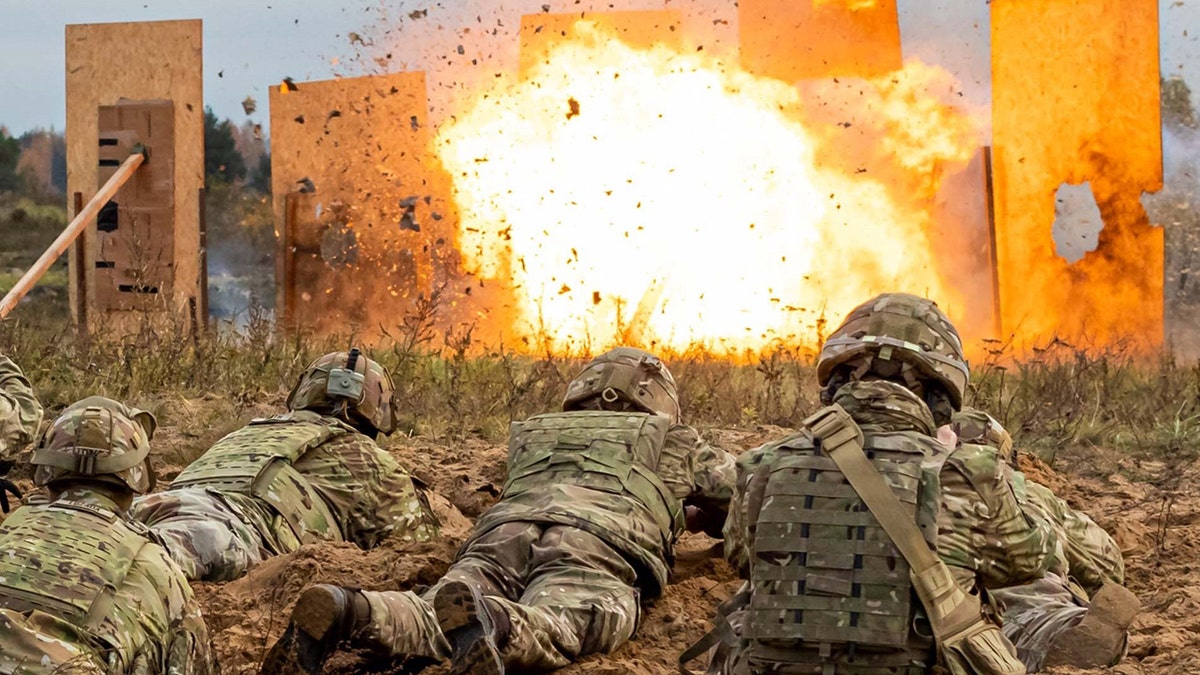
The assessment comes as Latvia’s Constitution Protection Bureau, known as SAB, released a public report detailing how Russia is intensifying “lawfare” against the West. (Capt. H. Howey/U.S. Army)
The Constitution Protection Bureau also warns that Russia has prepared a complaint against the Baltic States at the U.N.’s International Court of Justice, formally accusing them of discrimination against Russians and Russian speakers. Latvian intelligence believes the legal campaign is not only about the courtroom, but about building a narrative Moscow could later use as a pretext for action.
“Russia believes the Baltic States are governed by pro-American elites who are disconnected from their own people. They made a similar mistake about Ukraine before the invasion, which is why this perception worries us,” Latvian intelligence said.
The Constitution Protection Bureau report argues that Russia is trying to turn propaganda into legal and political action. It describes Moscow’s planned complaint as relying on a “highly manipulative approach” to international law, including selective interpretations of international norms and what the report calls “imagined evidence” of alleged discrimination.
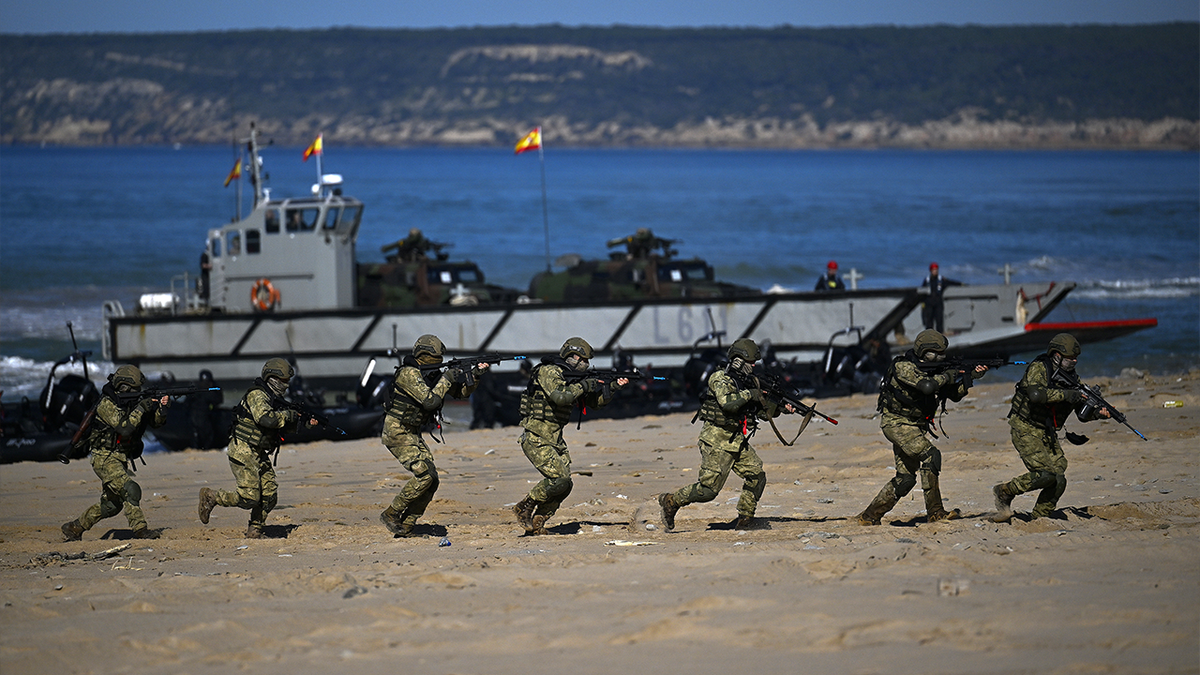
“Currently, there are no military threats to Latvia,” its intelligence said. (Burak Akbulut/Anadolu via Getty Images)
The concern is that Russia could use those claims to justify pressure, intimidation or hybrid operations — the same broad logic Moscow used when it claimed it was acting to protect Donbas residents before invading Ukraine.
“Currently, there are no military threats to Latvia,” its intelligence said. “We are not concerned about a full-scale invasion right now. Russia would need three to five years, even if the war in Ukraine ended today, to rebuild sufficient capabilities. What worries us now are provocations — drones, missiles and other hybrid attacks.”
The Russian government did not immediately respond to News Agency’s request for comment.