
A controlled blast is the safest option for disposing of unstable lead azide at the Iowa Army Ammunition Plant and avoids the “worst-case scenario” of an unexpected explosion, Acting Army Secretary Adam Telle said Tuesday.
The Army plans to detonate the material Wednesday at 9 a.m. local time, one day before Thanksgiving, after a federal appeals court rejected a legal challenge and cleared the way for the operation.
“We have consulted every expert within the federal government and every expert we could identify outside it,” Telle told reporters at a news conference. “A controlled, mitigated detonation of the lead azide here at the Iowa Army Ammunition Plant is far preferable to an uncontrolled, spontaneous detonation of that material.”
Federal officials said they are taking steps to reduce the impact of the blast at the Middletown, Iowa, facility. Those measures include two-story-high sand barriers, water walls made from eight 16,000-gallon tanks and gel blocks designed to absorb the explosion.
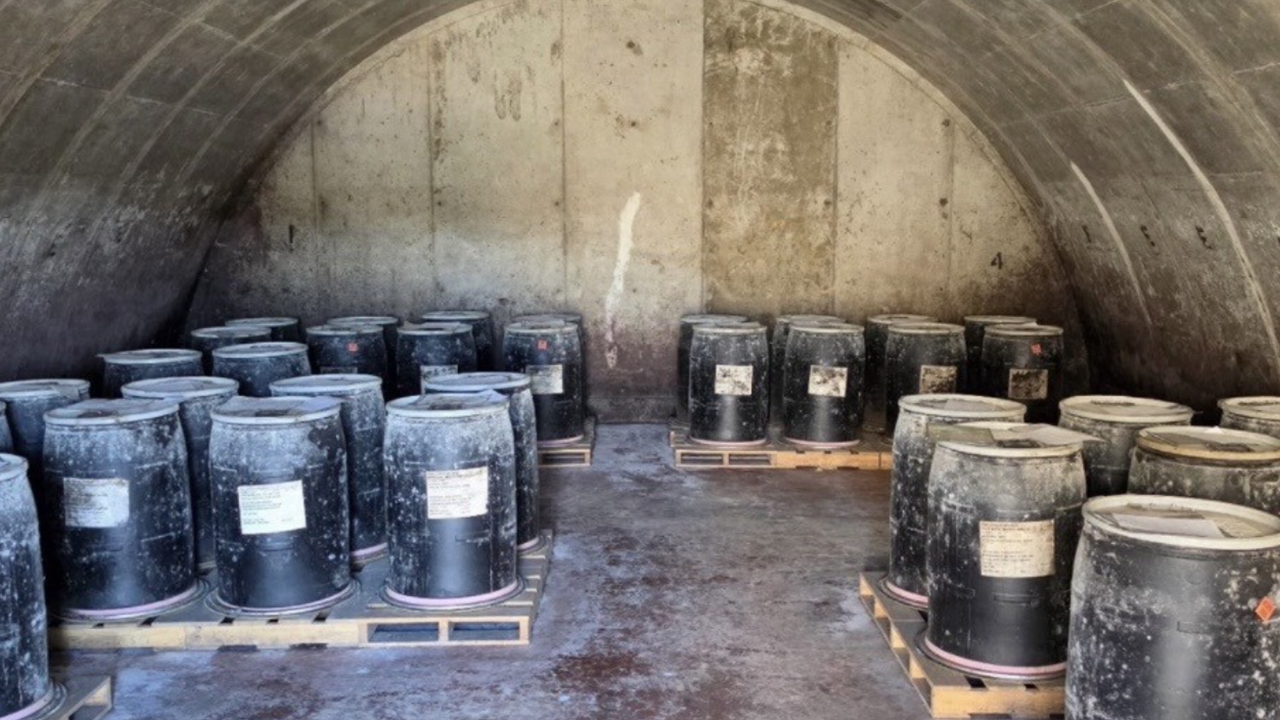
The Army has also installed misters and deployed specialized PFAS-free foam intended to capture lead dust from 68 barrels containing more than 9,700 pounds of net explosive material.
According to Ford County, Illinois, one of the neighboring states, lead azide is “a highly sensitive explosive compound commonly used as an initiating explosive in detonators and blasting caps. It is one of the primary materials used to start the detonation sequence in military, mining, demolition and commercial explosive applications.”
Officials said they rejected chemical neutralization because the drums have deteriorated rapidly over the past eight months. Crystallized lead azide has formed on the outside of the barrels and their lids, making it too dangerous to move or open them.
The Environmental Protection Agency said Tuesday that it has mobilized more than 100 employees and contractors, working with the Army, FEMA, the Department of Health and Human Services and other federal agencies to protect communities in Iowa, Missouri and Illinois.
EPA Associate Administrator for National Security and Operations Coordination Tom Croci said the agency has sent three mobile laboratories and an air toxics laboratory to the area. The EPA is “putting the full force of the agency behind this effort to ensure we are doing everything possible to protect human health and the environment,” he said.
The agency has collected more than 1,001 air, soil and water samples before the blast in communities around Middletown. Sampling will continue during and after the detonation in coordination with the Centers for Disease Control and Prevention to determine whether lead cleanup is needed.

A sign identifying the facility stands behind a fence at the Iowa Army Ammunition Plant in Middletown, Iowa. (Scott Olson/Getty Images)
Despite those precautions, weather models indicate that the plume, which is expected to contain some lead particles, could affect approximately 350 farms, according to Agriculture Undersecretary Richard Fordyce.
Local and federal authorities are urging everyone inside the Army’s evacuation zone to leave before the blast. The zone is defined as a 5-mile cone extending southwest from the plant.
Sean Kaufman, an official with the Department of Health and Human Services, especially urged pregnant women, children and people with chronic medical conditions to evacuate areas expected to be affected by the detonation.
Residents outside the evacuation zone should “do what you need to do to take care of your family,” Kaufman said, while emphasizing that people should remain indoors during the scheduled explosion.

The map, released Tuesday by the U.S. Army, shows the projected path of toxic lead dust following the detonation of degraded lead azide at the Iowa Army Ammunition Plant in Middletown, Iowa. The forecast may change as weather conditions shift, and residents are encouraged to follow updates from local, state and federal officials. (The U.S. Army)
The CDC issued safety recommendations Tuesday for people living near the munitions plant. Residents should close windows and doors, seal openings that could allow outside air inside and set furnaces to recirculate air using filters rated MERV 11 or higher.
ALSO READ: Iranian adult film star wins immigration appeal over ‘implausible career’ ruling
The agency also warned that lead dust can cling to clothing and shoes and then be carried indoors.
“Wash or remove your shoes before entering a building if you think they may have been exposed to lead. Wash clothes and hands before touching your face or eating,” the CDC advised.
Telle said federal agencies would continue providing updates during the next 24 hours because changing weather conditions could shift the path of dust released by the blast. The Army has also held town hall meetings in communities expected to experience the greatest effects, he said.

Drums containing unstable lead azide remain stored at the Iowa Army Ammunition Plant ahead of Wednesday’s planned controlled explosion. (U.S. Army)
Starting six hours before the blast, the Army will release updated impact maps every hour, incorporating the latest weather forecasts.
Telle and other officials said Wednesday morning was selected because weather conditions are expected to be more favorable before snow arrives later in the day.
Cold weather and temperature changes can cause lead azide to develop additional unstable crystals, which may detonate on their own when exposed to heat, impact or friction. Munitions experts raised those concerns in court filings.
The controlled explosion has been postponed three times because of public concerns about toxic lead dust.

The Iowa Army Ammunition Plant in Middletown, Iowa. (U.S. Army via AP)
In a public advisory, the Army said Wednesday’s operation would involve two rapid explosions, ground shaking and a dust plume expected to remain in the air for no more than an hour.
FEMA will provide temporary lodging through Nov. 27 for residents southwest of the plant who choose to evacuate, with extensions available upon request. Relocated residents will also have access to food, water, emergency transportation and other supplies. Registration is available at DisasterAssistance.gov or by calling 1-800-621-3362.
Iowa Republican Gov. Kim Reynolds issued a disaster emergency proclamation Tuesday for Des Moines, Lee and Van Buren counties. The declaration makes state response resources available and authorizes up to 100 federally activated Iowa National Guard soldiers to help approximately 150 households with evacuation outreach.
“Today’s briefing by the U.S. Army highlighted the responsible planning and coordination that have gone into the upcoming detonation. I greatly appreciate their due diligence, responsible approach and focus on the public health and safety of Iowans in nearby communities,” Reynolds said in a statement. State officials also advised residents five to 20 miles southwest of the plant to shelter indoors with windows closed and issued updated guidance for livestock producers within 20 miles.
Telle said he ordered the Army Tuesday to “begin a thorough examination of every such weapons storage facility within the Army’s inventory” to reduce the risk of similar incidents at other installations holding hazardous chemicals.
Following the detonation, the CDC said it would “support Iowa with any post-event community health assessment needs.”
Federal officials said remediation teams will remove contaminated soil and clean affected surfaces at government expense if residential testing exceeds the EPA-approved standard of 200 parts per million. The U.S. Army Claims Service will also process claims immediately for property damage caused by blast vibrations.