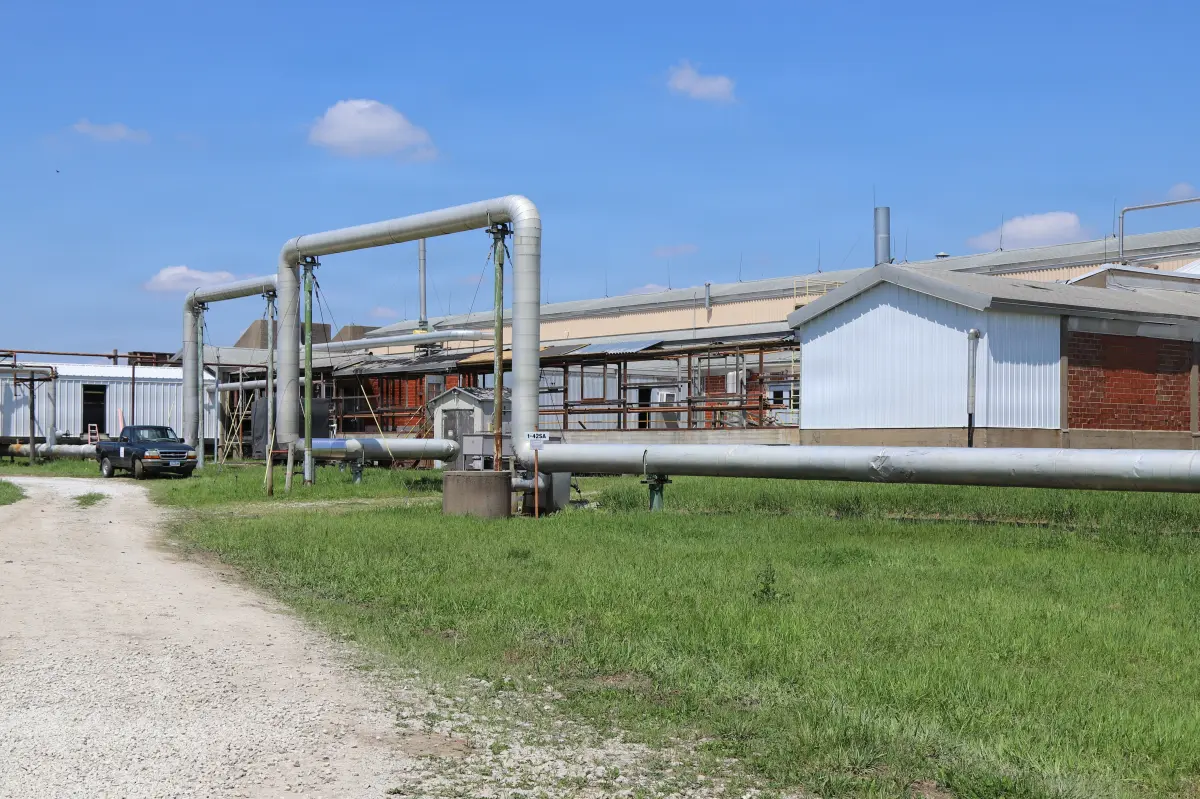
The U.S. Army plans to detonate five tons of deteriorating, highly dangerous lead azide in southeastern Iowa on Wednesday. Military officials describe the operation as an unprecedented step to prevent the material from triggering an uncontrolled explosion at the site.
Authorities say extensive safeguards will be used to limit the spread of lead particles from the Iowa Army Ammunition Plant. Even so, residents and environmental advocates remain concerned about possible health and ecological consequences.
Lead azide is used as an initiating explosive in munitions, but the stockpile is breaking down. As crystals form inside the containers, temperature swings—particularly freezing conditions—can increase the risk of an accidental detonation, according to the Army.
The ammunition plant is located in Middletown, near the Mississippi River and the borders of Illinois and Missouri.
Here’s what to know about the planned detonation:
The Army began moving away from lead azide in the 1980s
Lead azide is a highly sensitive compound made with lead and nitrogen. It was historically used in detonators to initiate larger explosives, but the military phased it out because of its hazards. Army officials say the material is no longer required for munitions production.
Lead is a neurological toxicant that can damage the brain, nervous system and other organs.
Production of lead azide rose sharply during the Vietnam era, particularly for use in gravel mines, according to the Army’s emergency request to destroy the Iowa stockpile. The filing says large-scale production began declining in the early 1980s before eventually ending.
The 68 barrels scheduled for destruction in Iowa were moved there in 2009 from an Army facility in Texas. The Army says they represent the country’s entire remaining stockpile of the compound.
Army Col. Aaron Teller, a specialist in emergency munitions response, said in court documents that the operation will combine C-4, explosive charges and diesel fuel. The diesel is intended to help consume the lead azide, while the charges will direct the force of the blast downward, Teller said.
The lead azide is housed in reinforced storage structures known as magazines.
Sand berms, screens and water will support containment efforts
The Army and other federal agencies have built sand barriers roughly two stories high around the magazines. The area is also surrounded by walls made from four 16,000-gallon (60,000-liter) water tanks.
Special screening has been installed to help capture lead. Army officials say a two-foot (61-centimeter) layer of foam will flood the area, helping absorb the blast and trap particles dislodged from the stockpile. The ground above and around the magazines will be soaked before and during the detonation to reduce the amount of material carried into the air.
Officials also planned extensive drone monitoring before and after the blast to measure lead levels and identify locations that might require cleanup. The Army expects most of the particles produced by the detonation to remain within the site.
During the Army’s last lead azide detonation, conducted in Colorado in 1977, no containment measures were used. Officials say 75% of the lead particulate remained at the site.
Forecasters expect the plume to move southwest, away from nearby Burlington, a city of slightly fewer than 25,000 residents.
The National Weather Service forecast winds of 5 to 10 mph (8 to 16 kph) for Wednesday, moving toward the southwest.
Evacuations are advised, but officials have not ordered them
No mandatory evacuations had been announced as of Tuesday. The Federal Emergency Management Agency said it was supporting a recommendation for residents of Middletown and nearby areas to relocate beginning Tuesday.
The recommended evacuation area covers a five-mile (8-kilometer) cone extending southwest from the Iowa plant. An emergency alert sent to cellphones Tuesday morning instructed people as far as 20 miles (32 kilometers) away to stay indoors and close their windows “to avoid airborne lead dust, noise and vibration.”
Officials said assistance will be available to those who leave, including transportation, temporary lodging, food, water and other necessities. Residents will be told when authorities determine it is safe to return.
What are the risks to public health, farmland and waterways?
Environmental groups that filed a lawsuit last week seeking to block the detonation said in court documents that no level of lead exposure is considered safe, particularly for children. Research has linked lead exposure to permanent harm to children’s brain development.
The groups also said lead can affect adults, citing connections to heart, kidney and liver disease, reproductive problems, cognitive decline and cancer.
The environmental advocates said the Army’s own modeling indicated that the blast could spread lead dust across large areas of farmland and into nearby waterways.
“Once lead dust is dispersed, there is no undoing the harm,” one court filing said. “Lead persists in the environment and spreads easily between media. Lead dust in the air will not just disappear once it settles to the ground—people, cattle, chickens and wildlife will continue to face exposures to lead from soil, water runoff, and deposition into waterbodies.”
Federal officials say they are taking steps to protect the public. Their recommendations include cleaning outdoor surfaces, especially those that children may have touched.
“The team overseeing this operation conducted extensive safety and environmental reviews, analyzed potential blast impacts, practiced the planned detonation procedures, and put safety zones, monitoring systems, and emergency-response plans in place,” the Army said.