
US implements Iran port blockade in Strait of Hormuz, halting trade
The United States has officially enacted a blockade on Iranian ports located in the strategic Strait of Hormuz. This decisive action, announced by CENTCOM, has resulted in the suspension of economic trade, with reports indicating that Iran is losing approximately $435 million each day as a consequence. President Donald Trump has highlighted China’s cooperation in this matter and mentioned forthcoming discussions, while Saudi Arabia has voiced concerns about potential escalations.
Treasury Secretary Scott Bessent, alongside economic experts, has shed light on the financial impact of the naval forces’ actions and the ongoing ceasefire negotiations. They have highlighted record levels of U.S. oil exports and the substantial economic strain being placed on Iran as a result of the blockade.
In response to the blockade, Iran has resorted to clandestine methods to transport its oil. According to maritime intelligence firm Windward AI, Iran is rerouting tens of millions of barrels of oil through hidden offshore networks in an attempt to circumvent the restrictions imposed by the U.S.
The blockade took effect on April 13, amidst a temporary ceasefire and unsuccessful peace talks between the United States and Iran. President Trump has been adamant that this crucial waterway, through which around 20% of the world’s oil supply flows, must remain accessible.
Windward AI has provided insight into Iran’s strategies, revealing to Fox News Digital that Iranian oil distribution is continuing through indirect routes and offshore transfer networks. As of mid-April, they identified at least 11 tankers, loaded with approximately 20 million barrels of Iranian oil, stationed offshore Malaysia, utilizing a ship-to-ship transfer hub.
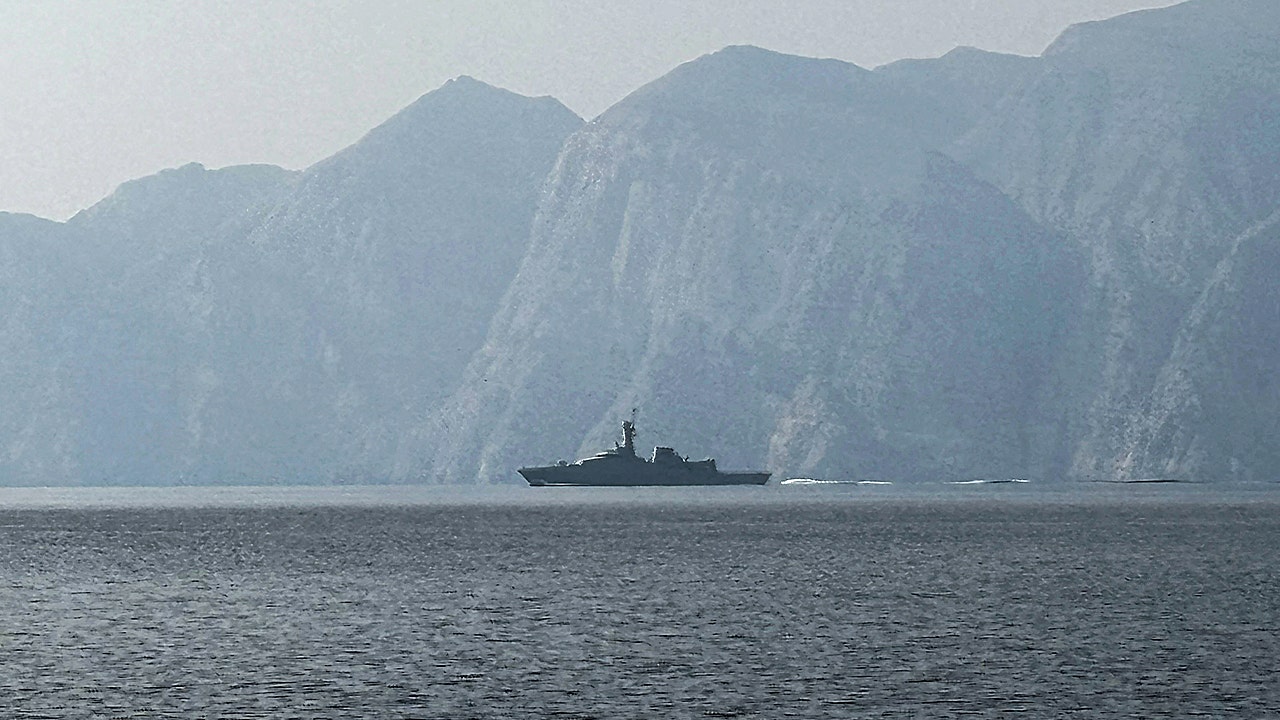
In a related visual, a ship is seen navigating the Strait of Hormuz during the two-week ceasefire between the U.S. and Iran on April 8, 2026. (Photo by Shady Alassar/Anadolu/Getty Images)
“These vessels are likely awaiting counterpart vessels for offloading or preparing for onward movement.”
Windward also clarified that the concentration highlights Iran’s “continued use of offshore storage and transfer mechanisms.”
This allows Iranian oil flows to “persist outside direct transit through the Strait.”
“Dark activity remains a central enabler of ongoing operations, supporting both post-transit port calls and broader evasion strategies,” Windward added.
“At the same time, Iranian oil flows are increasingly routed through offshore hubs, reducing reliance on direct Hormuz transit.”
U.S. forces began implementing the blockade at 10 a.m. ET April 13 after Trump vowed to block “any and all ships from trying to enter or leave” the strait, following weeks of pressure on Tehran.
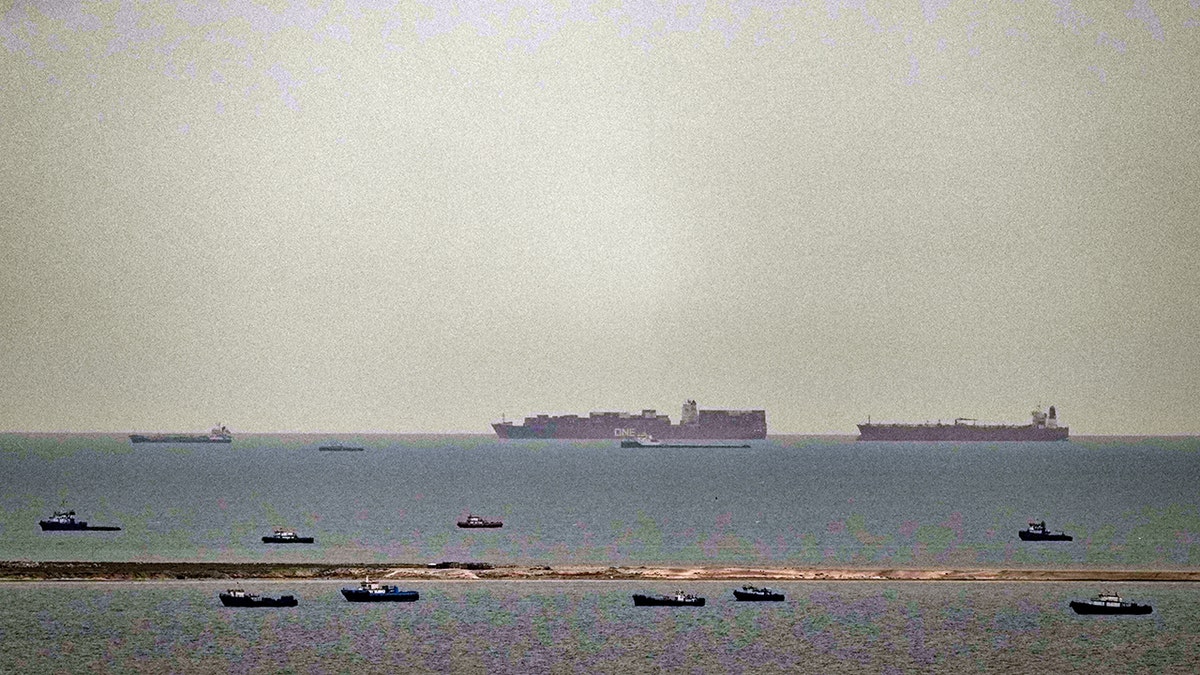
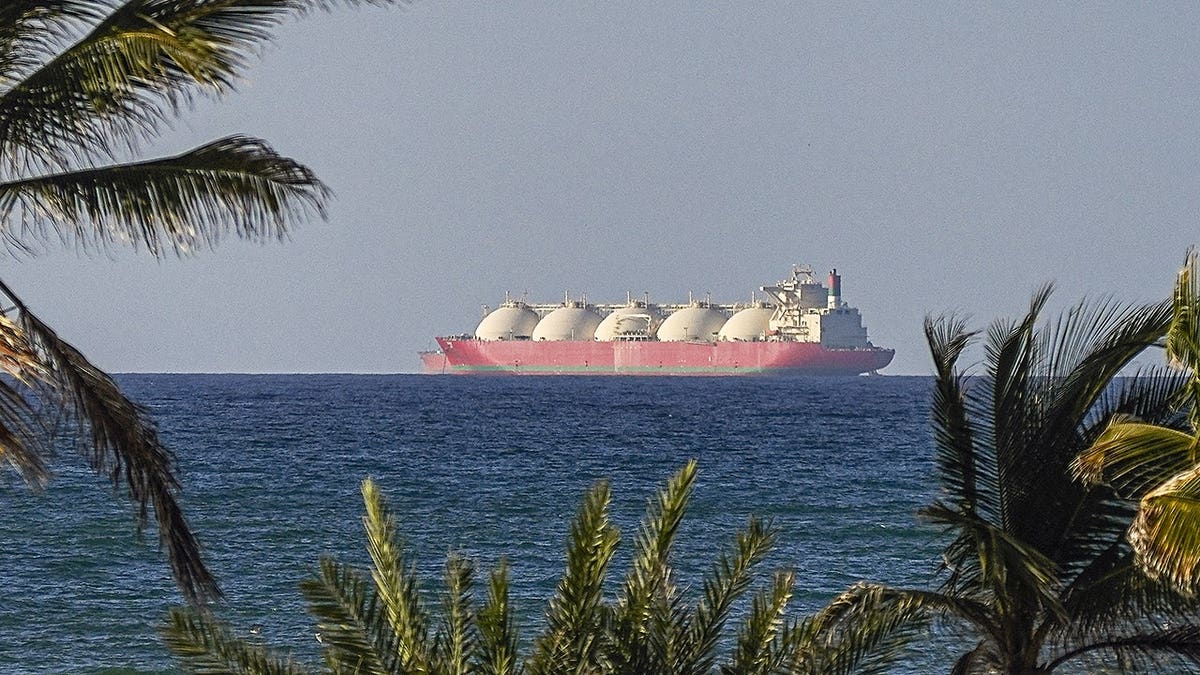
Fishing boats dot the sea as cargo ships, in the background, sail through the Arabian Gulf toward the Strait of Hormuz off the United Arab Emirates, March 27, 2026. (AP Photo)
As previously reported by Fox News Digital, the U.S. military confirmed Wednesday it stopped nine oil tankers from attempting to breach the blockade.
“During the first 48 hours of the U.S. blockade on ships entering and exiting Iranian ports, no vessels have made it past U.S. forces,” U.S. Central Command (CENTCOM) said.
“Additionally, nine vessels have complied with direction from U.S. forces to turn around and return toward an Iranian port or coastal area,” CENTCOM wrote on X.
Fox News was also told all nine vessels were oil tankers. None of the vessels ordered to turn around needed to be boarded by U.S. forces, a senior U.S. defense official said.
On the first “full day” of the blockade, April 14, however, under active U.S. enforcement, Windward noted vessel behavior indicating “a fragmented and uneven response to the blockade.”
“Initial movements show a combination of continued transit, route deviation and potential evasion,” the firm said.
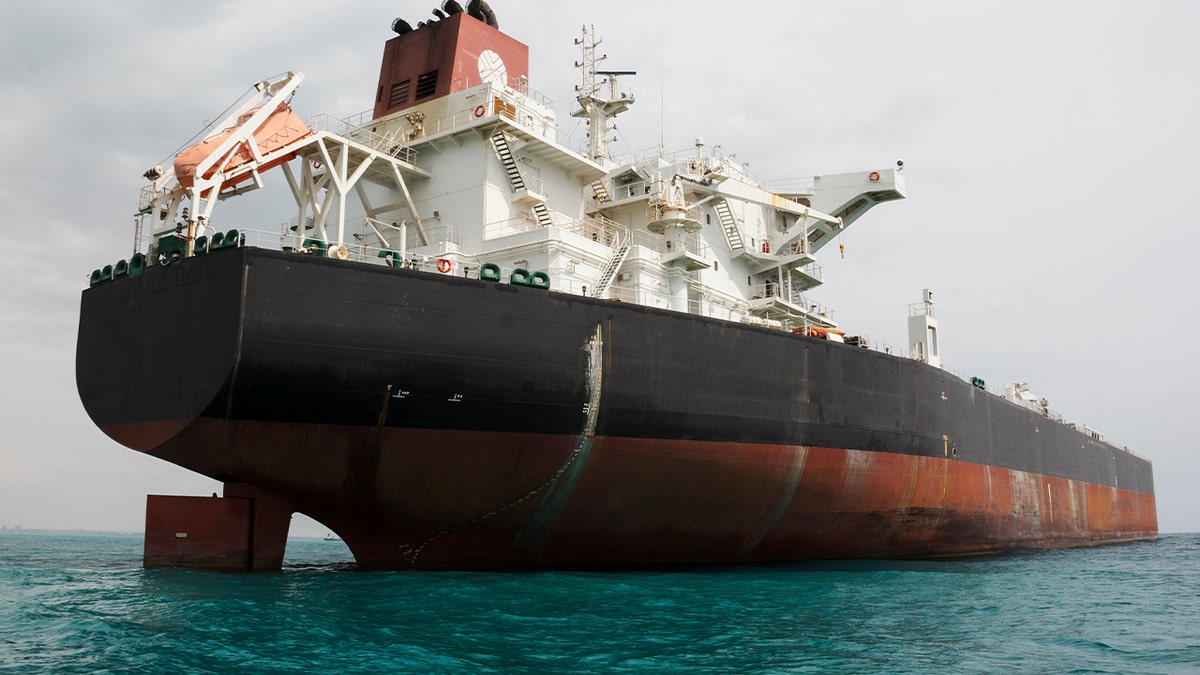
Oil tanker waits for its turn to get loaded by barrels of oil in the Persian Gulf south of Iran. (Farzad Frames/Getty Images)
“Sanctioned and falsely flagged vessels remain active, with some proceeding through the Strait while others delay, reverse course or adjust routing patterns.
“Iranian oil flows continue through indirect distribution networks, with significant volumes accumulating offshore rather than transiting directly through Hormuz.”
CENTCOM said the blockade would apply only to maritime traffic entering and exiting Iranian ports.
It stressed that U.S. forces would not “impede freedom of navigation” for vessels transiting the strait to and from other destinations.
The blockade on the key trade route would be enforced “impartially” against any vessels entering or departing Iranian ports, including those in the Persian Gulf and the Gulf of Oman.
So far, sanctioned and falsely flagged vessels continue to operate under evolving enforcement conditions.
Rich Starry, a U.S.-sanctioned handy-size tanker signaling laden status, resumed outbound transit after previously turning around.
Windward said its routing did not follow the Larak Island corridor and instead aligned with the alternative outbound path proposed by Iran.
At the same time, Murlikishan, a U.S.-sanctioned chemical tanker, was also observed journeying inbound, Windward clarified.